
For the love of tiny things, humans, and mushroom kombucha
Moving to another state doesn't mean you're no longer part of the Genspace community. We caught up with June Sass, who moved to Maryland to obtain her Master of Health Science in Molecular Microbiology and Immunology. She told us about what she's learned, what got her through it, and Summercraft, her mushroom-fermented kombucha business.
What’s your Genspace origin story?
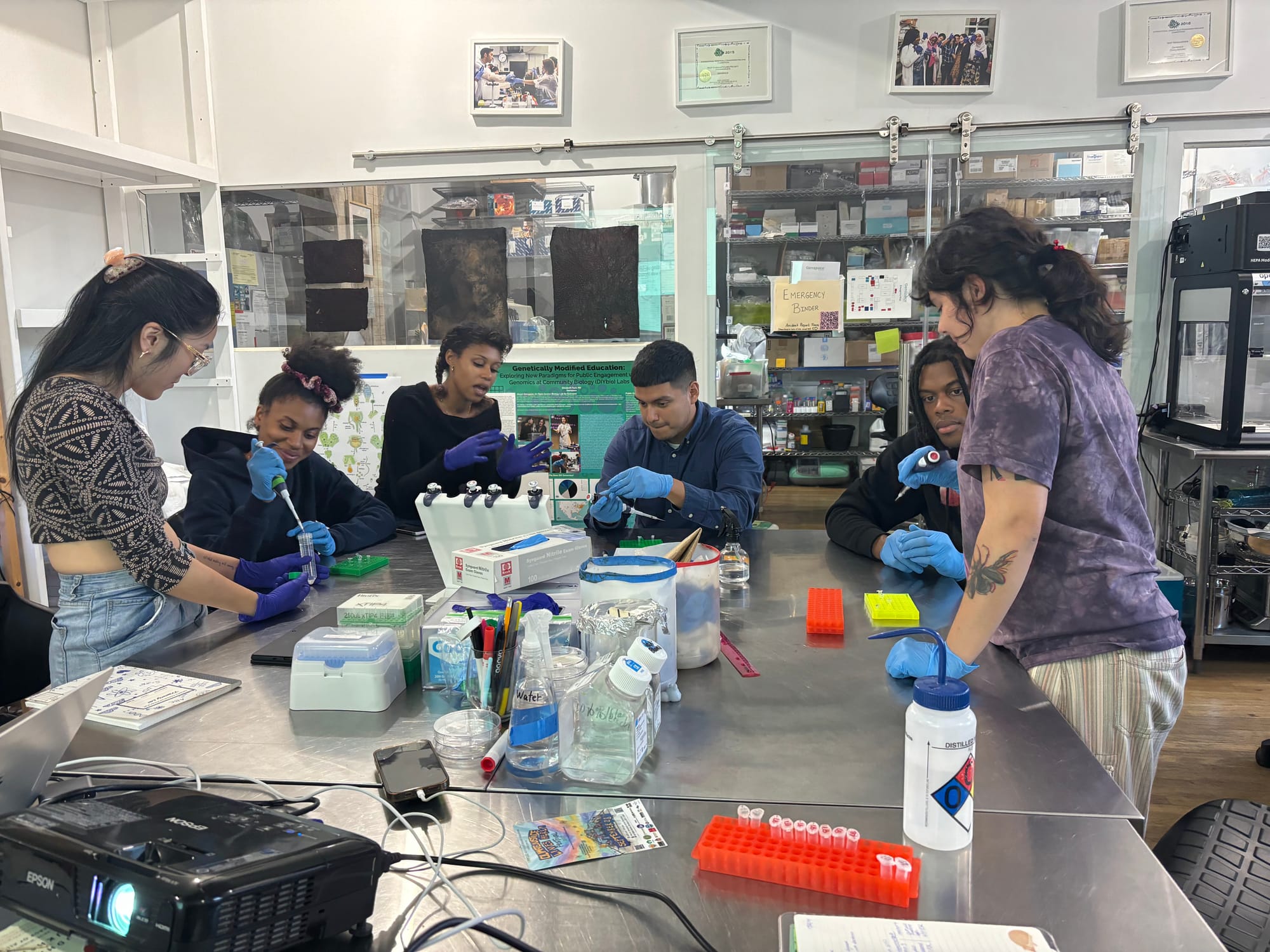
"A friend of mine had introduced me to Genspace, and I think I had been hearing whispers about it in the beginning when I was at my last corporate job. I was really interested in the biomaterials and the biological, creative stuff that was going on. Specifically the kombucha leather and the SCOBY fabrics, and all of the bioart, like Karen Ingram’s work. I saw that I was eligible to volunteer as a scientist, and I thought it was really cool to have the opportunity to give back in a way that was nothing like my corporate job. It just opened up a whole new world that I didn't even know existed."
June had also been looking for a community that reflected more diversity than what she'd found in biotech.
"There's really not a lot (of diversity) in terms of hard biotech startup culture or big pharma. Genspace provides so many opportunities for underrepresented minorities that the kinship was there, which I've honestly never experienced in that setting. There’s also a lot of career diversity and so many different personalities. Genspace is able to foster that in a way I haven't been able to find in academia."
Mentorship, and what it led to
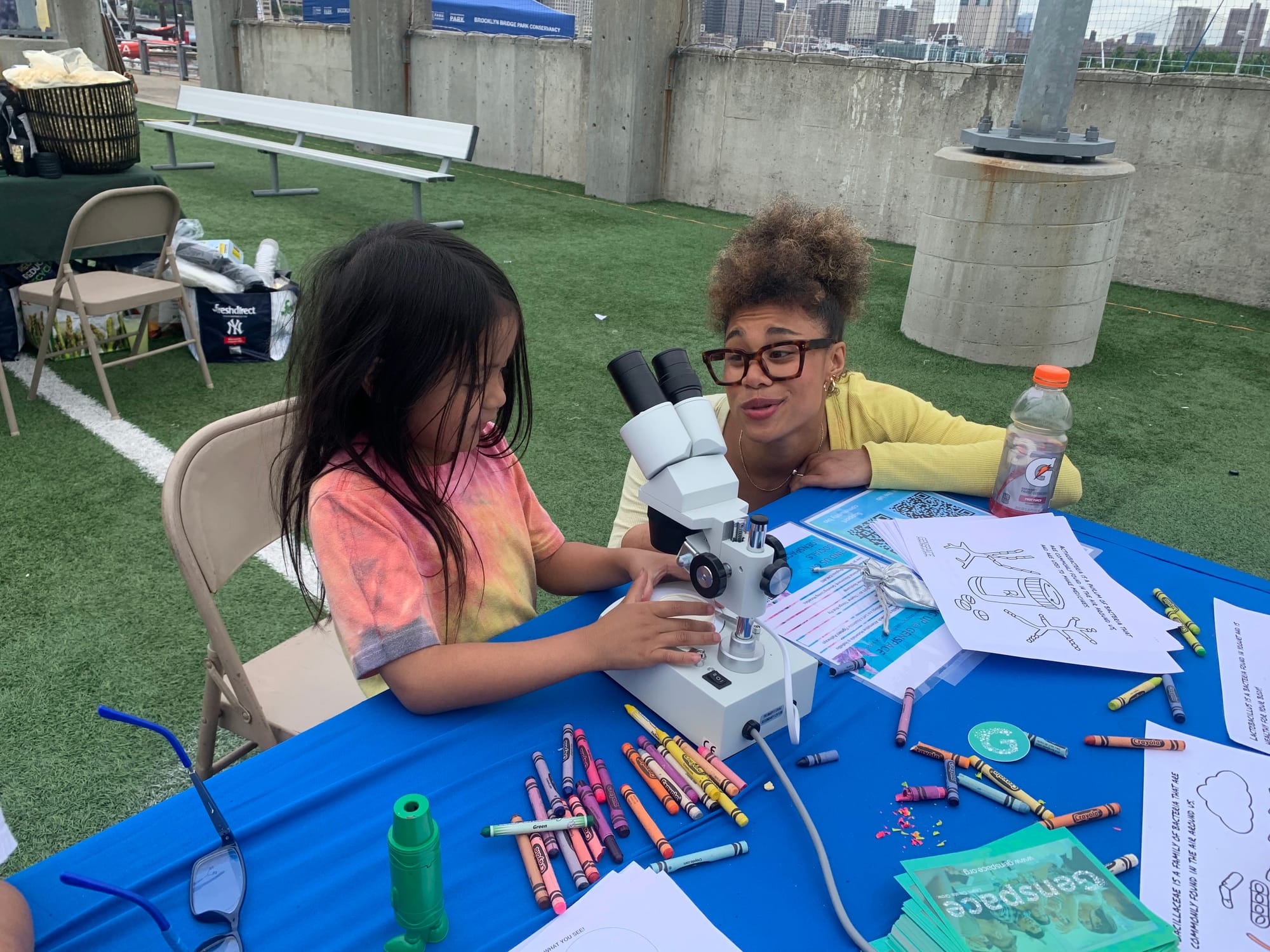
June became a mentor for Break into Biotech's second cohort. "I loved getting to work with people who were really passionate about the sciences and learning, people who didn't have a lot of exposure. Getting them to understand some of the basics was really satisfying. One of the participants emailed me, and I wrote a recommendation for her — she ended up getting the position, a public health-related role, which was also my background. I love being able to share some of the rules and dogma behind science that are gatekept, with people who deserve that information."
"I don't think I would have gone to grad school if I'd stayed at my previous job. Being exposed to alternative science pushed me toward it. I talked about this in my essay — doing science work as a volunteer, not getting paid for it, showed me what it meant to me. Detaching the monetary value from science let me understand if it was something I actually liked. And it crystallized in me that this isn't even a like or dislike. This is how I think about the world, and what I'm supposed to do. I feel like Genspace does that for a lot of people who genuinely like the essence of discovery, curiosity, creation.”
So why Hopkins, and why Microbiology & Immunology?
"I love tiny things, and I care about humans. Those are the two reasons, in a nutshell. Also because it's the #1 public health school. My advisor from college got his PhD from Hopkins, and I knew a number of people I looked up to who went there. I was impressed by all of the invention that's happened there. I had this idea that I am a creator, a creative scientist, and to be taken seriously as such, why not go to the place where all these medicines have been invented?"
When June went back to school, she found that hardest transition was unlearning a corporate instinct.
“My PI told me something that was the opposite of what I'd been told by an employer. In academia, you're supposed to share all of your data, including the failed experiments and the “bad data.” I was almost scolded for not sharing that, for coming to meetings and saying I had no updates. In corporate, I was taught that if you share bad updates, people will think you're wasting their time. We were both frustrated with each other. I was like, wow, this is quite a moment."
Genspace kept showing up in her research, too. "A lot of the ideas for the kombucha came out of that ecosystem. I'm thinking about the soil microbiome project — that came up a lot in my research. A lot of stuff with bioengineered yeast and algae. There's actually someone from my Hopkins business incubator who founded Tasty Tape, doing Indie Bio — I just messaged her, trying to meet up. And Baltimore Underground Science Center overlaps a lot with Genspace too. I bring you guys up all the time."
On the 'booch
Summercraft Kombucha started, in June's words, out of necessity and curiosity.
"I started it out of my home kitchen after I got laid off. I was selling it on Instagram, experimenting with herbs, mushrooms, and probiotics, trying to understand what was going on in the microbial world it was fermenting in. I saw some new stuff happening in the bottle that I wanted to understand in the lab. When I went to Hopkins, I decided to explore the science behind it — what bioactive compounds are in the mushrooms when they're broken down with novel probiotics, and how the probiotics are changed by what they're fermented with.”
“I want to answer those questions and demonstrate the science and efficacy through videos, podcasts, and on the label and QR code of the product. I want to show that it actually works on human health, and how. There's all these claims in food wellness now, and there's no central place to understand if what you're consuming actually works."
What does "mushroom fermented" actually mean?
"This is where the science comes in. I'm developing a novel technology. It's a 2x–3x fermented drink."
“Right now, the mushroom world is largely non-pharmacological — people in their kitchens, foragers, craft scientists, all making their own tinctures and powders.”
In the U.S., mushroom-based products are regulated as dietary supplements, not drugs, meaning they don't go through the same efficacy or dosing review that the FDA otherwise requires for pharmaceuticals.
"What we don't have is the biotech, pharmacological version — a clearly established, science-backed dosing strategy for mushroom-related products, despite there being so much literature on their medical benefits. We say all these things about the American diet, obesity, microplastics — the reality is, we're eating about 80% less mushrooms than people in other countries eat, mostly in Asia and Africa. What I'm trying to do is something novel, in a new wellness market, using food-based mushrooms like reishi, chaga, and lion's mane, and looking at how fermenting them modulates the probiotic bacteria."
For more on some of the the current research and the regulatory landscape, check out this review of medicinal mushroom clinical trials in the International Journal of Molecular Sciences and the University of Illinois Extension's breakdown of how mushroom supplements are regulated in the United States.
Her fascination with fungi traces directly back to her research. "I got interested in how social determinants of health play a role in infectious disease, but specifically in mushrooms as a therapeutic. Penicillin, the first pharmacological medicine, is a fungus and was discovered accidentally. That's fascinating to me. Once I started looking, I was like, this is the most interesting thing in the world. The fungal kingdom is the most fascinating thing to me. It's like a switch turns on, and you realize, this is really cool."
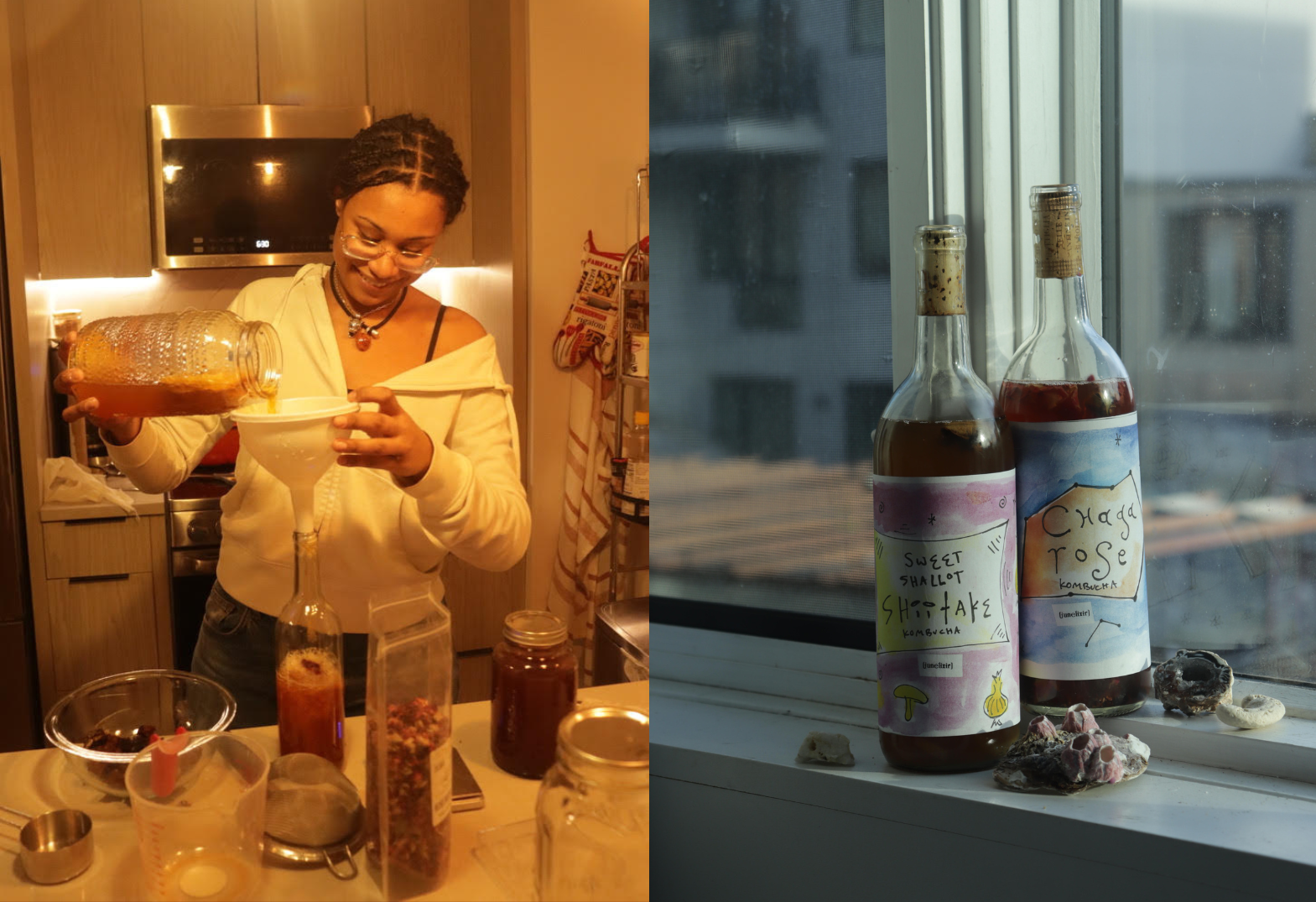
And what does mushroom kombucha taste like? “I worked as a barista and in food service for a long time. Food crafting is something I've done outside of science since I was a young child, so I'm always developing new flavors, usually specific to the mushroom and strain I'm working with. My most popular right now is Reishi Rose — a tart, sweet rose flavor with notes of peach and lemon. It's dry, kind of like a rose wine, with a sophisticated bitterness from the reishi extract. That's what mushrooms add to kombucha that other kombuchas don't have — depth and bitterness. Most mushroom products don't taste good. I found a way to balance the flavors into something that tastes almost like wine."
Funding the business
June secured funding for Summercraft through Johns Hopkins Tech Ventures in three separate awards. "I applied to their accelerator program and got into the semester-long teaching program on business practices. At the end we got a $500 grant, with a chance to compete in the showcase for $2,000. I won the showcase’s first prize with a four-minute pitch. Then I also applied to their summer incubator program, a six-week paid stipend to work on your business, and won the the Blaze Award, their graduate fellowship for $10,000. Another form, then an interview. I used my resources. My PI helped me prepare, I practiced my pitch a lot, attended all the classes, showed up on time. It's crazy how many people don't do the small things to get the money. If you're able to talk to the right people, the money is there."
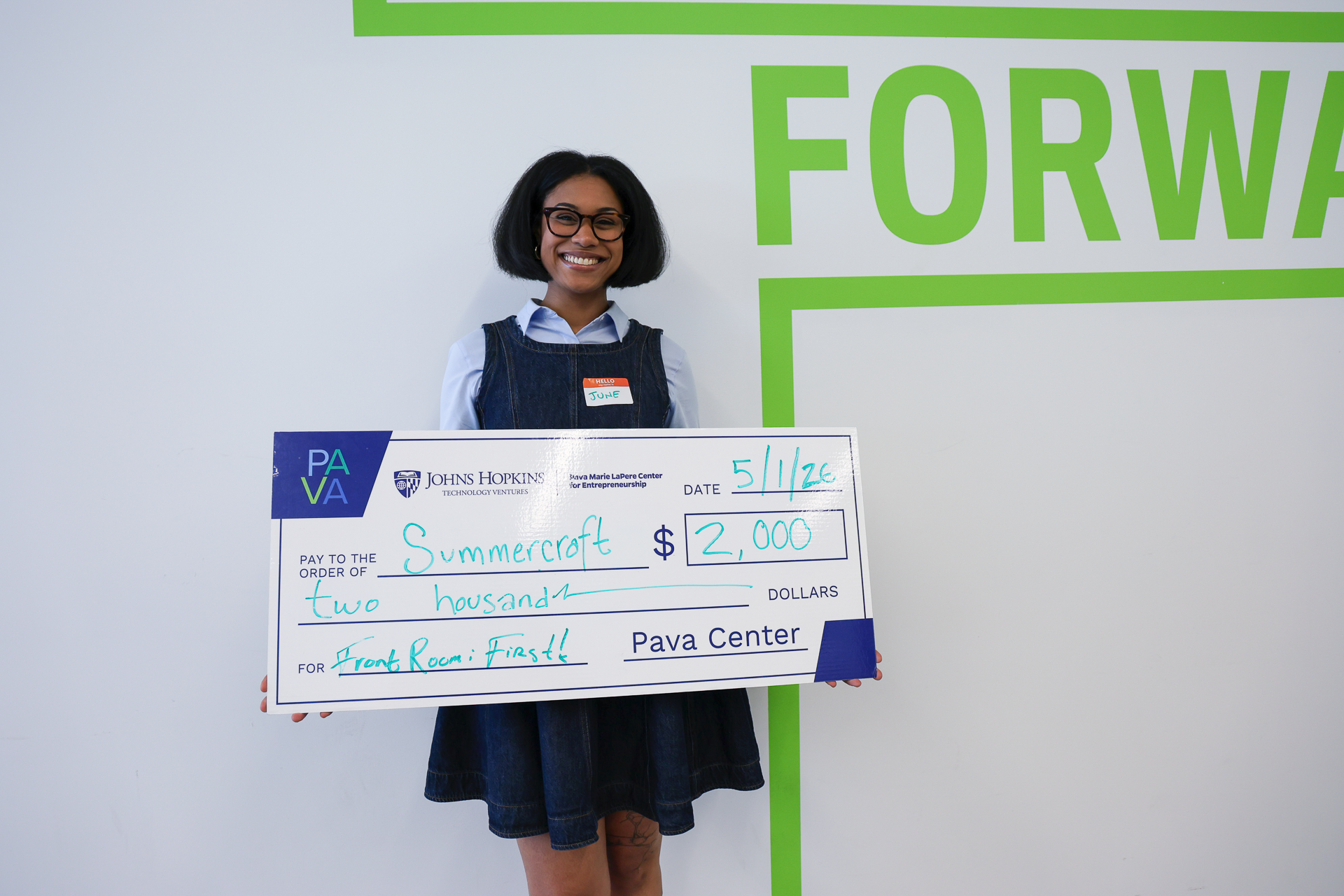
Because the funding came through grants rather than equity, June retains full ownership. "I don't have any IP tied to Johns Hopkins, so all my funding is non-dilutive. A lot of businesses that come out of universities are forever tied to them but I'm only backed by grant funding. People who aren't affiliated with universities should still look into their funding, because some of it is open to the public."
What's next
At 28, with almost a decade of bench science, June is weighing corporate work alongside the business. "I want to build and I want to be wise about it. I'm looking into corporate options for long-term work, more in the executive space. I'd prefer a project management or regulatory strategy role. I'm fascinated by FDA regulatory strategy. At the same time, I'm actively developing Summercraft.”
And when we asked her if she plans on coming back to New York?
“I really love Baltimore, but I think New York has this uniquely flavored ecosystem that's actually working for me with what I'm doing now. It might make sense, within the next year or so, for me to move back. I'm not sure yet."
For the Genspace community
"I would not be where I am without you guys. I know that for a fact. I feel like I owe so much of my success to the organization, and specifically to the people who supported me. I don't think I'd be in this position if it wasn't for you guys. The fact that you exist at all is incredible. When people find you, they know if it's for them. I'm just glad you exist and are doing what you're doing."
You can find June and Summercraft Kombucha (sylvenus.blog) on TikTok (@june.ok) and Instagram (@tattedpipettor, @summercraftkombucha). She's also working on a podcast, so stay tuned.
Coming Up at Genspace

Community Events • Opportunities • Jobs
Community Events
• 7/23 - Science After Dark: Crab Lab
• 7/25 - Friend or Foie Gras? Curating Insects Through Domestic and Cullinary Lenses
7/25 - Gowanus Canal Conservancy City of Water Day
• 7/29 - Fish are Teachers Artist Series at Oko Farms
• 8/9 - Pioneer Works Second Sundays
• 8/20 - Ask a Scientist Hudson River Park Trust
Opportunities
• Genspace Volunteer Infrastructure & Community Engagement CivicCorp Member
• Science Illustration Intern, Xerces Society
• Cientifico Latino Academy Call for Mentors
• Rearc Institute Center for Planetary Pedagogies: 2026 Edition
• Biodesign Challenge 2027
• National Geographic and the Nature Conservancy Community Conservation, Data Visualization, and Mapping Externship
• 2026 Liu Shiming grants for visual artists
Jobs
• Multiple Positions, Grow NYC
• Learning Labs Resource Coordiantor, American Museum of Natural History
• Multiple Positions, Raising Health Partners
• Programs Associate, Arts in Education Roundtable
• Carbon Farm Planner Coordinator, NY Textile Lab
• Senior Bioinformatics Programmer, NYU Grossman
• Multiple Positions, Bridge to Enter Advanced Mathematics
• Part Time STEM Educator, Liberty Science Center
• Part Time Museum Educator, New York Foundation for the Arts
• Multiple Positions, Streetlab