A Day in the Life: Sarai
Hi everyone! So far you’ve read a-day-in-my-life content from Serena and Leyla on this newsletter… and now it’s MY TURN.
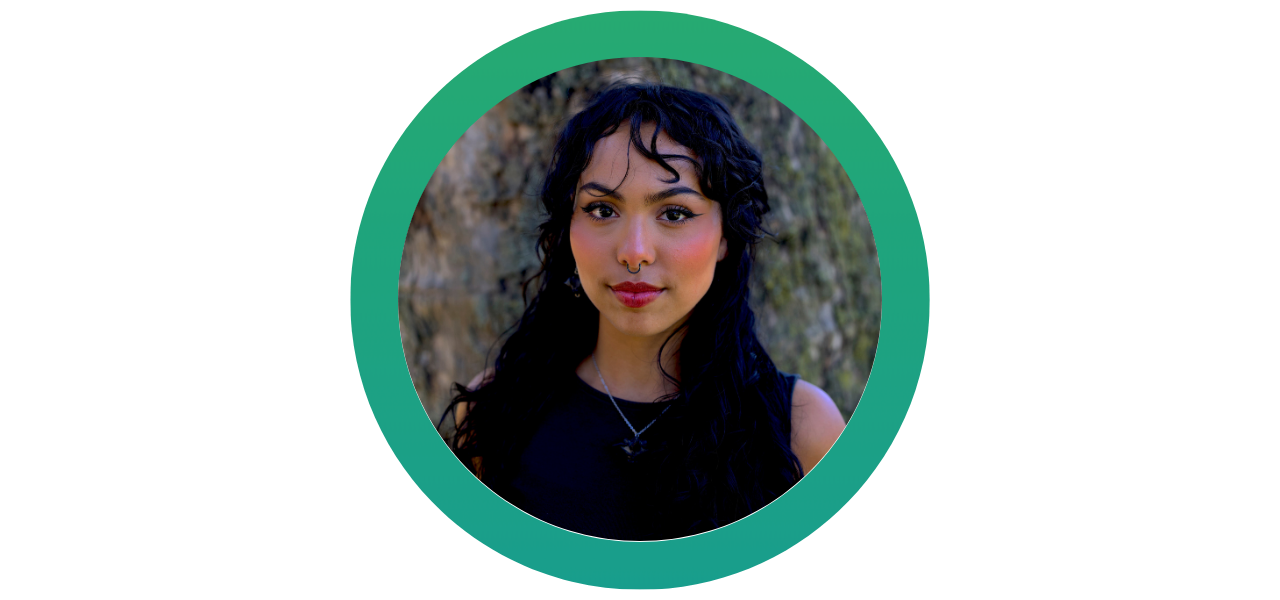
For those of you who don’t know me, I’m the Education and Community Engagement Coordinator at Genspace. I’ve been here for five freaking years, since 2021, and my role has taken all sorts of twists and turns. (Former Executive Director) Beth brought me on as a peer mentor for the Biorocket Research Internship Program during the summer of my junior year of college. Now, I co-facilitate Biorocket, lead our Uncommon Schools after-school youth program, manage Genspace’s social media, write many of the newsletters you get in your inbox every week, and handle a lot of our outreach and fun events at the lab.
Here’s what a typical Thursday looks like for me right now.
8:30 AM - Run, Breakfast, Email
First thing, I go on a run. My morning runs are for manifestation, meditation, marveling, and treasure hunting. I am dangerous on garbage day because I get so distracted by all the free stuff waiting on the curb.
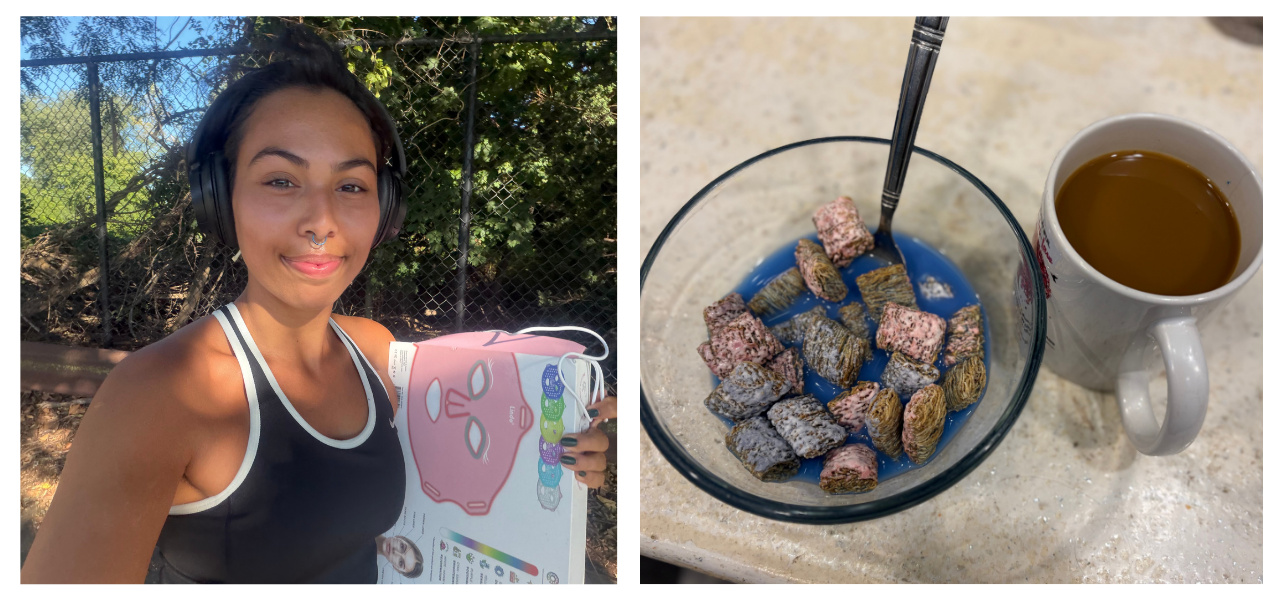
After the run I’m freshly energized, and I eat a highly specific breakfast based on my current food fixation. Right now that’s half strawberry, half blueberry muffin Frosted Mini-Wheats, with spirulina in my milk to turn it blue, plus a cup of coffee with milk and sugar and a liter of water. I check my email while I eat, outside if the weather’s nice. Then I head over to the lab, and I get some reading in on the train.
11:30 AM - Meetings
Now I'm at the lab. Today, I get to sit down with Angela, our Director of Operations, and Lily, our new Volunteer Management Member with NYC Civic Corps. We’re talking through the best ways to get volunteers involved in the lab and make sure they have a great experience while they’re here.
Then I’m meeting with Angeles at Green-Wood Cemetery about Genspace tabling at their Día de Muertos celebration on November 2. This is one of my favorite outreach events of the year, if you know me, you know I’m obsessed with Green-Wood, and also a little bit with death in general. This time we’re making eggshell-based bioplastic skulls seeded with cempasúchil (Mexican marigold) for people to decorate and later plant in their gardens.
12:30 PM - Newsletter Writing
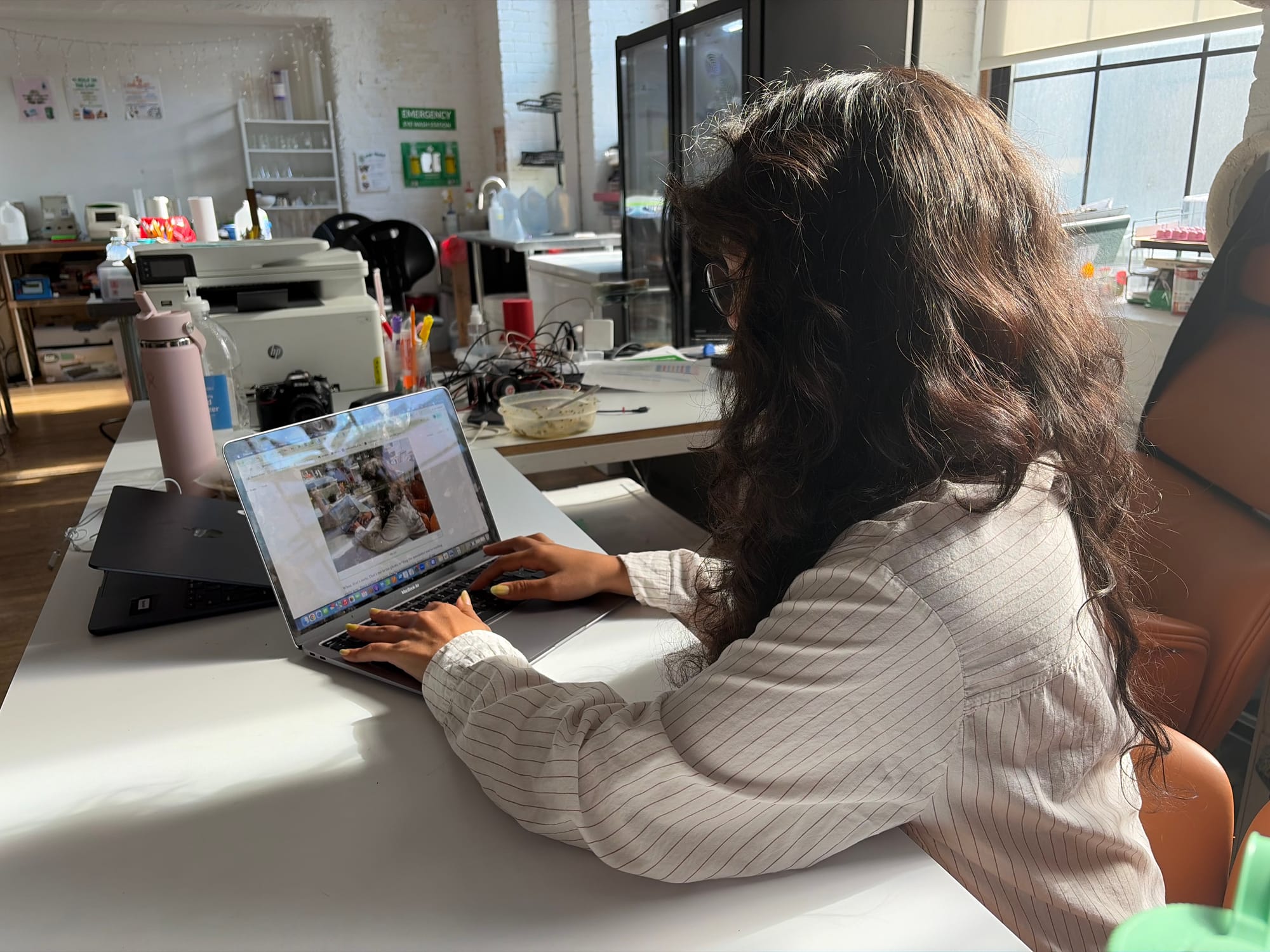
Since earlier this year, I’ve been interviewing members of our community about the work they do at Genspace. This has been such a fun part of my job, and because of this, it is never lost on me how cool it is to work here. I get to learn so much from our community. One of my favorite editions so far was “Lights, Logic, and Living Circuits,” about our newest community project, SynBio Software. Some members of the team live in different states, so they meet in a hybrid fashion to build a DIY optogenetics rig from a darkroom enlarger. Like WHAT? It’s even cooler to me now because the 2026 Nobel Prize in Physiology or Medicine was just awarded for optogenetics. I had a very limited understanding of what optogenetics even meant until my interview with Eric, Yehuda, and Ishna. We originally slotted our interview for 30 minutes but wound up talking for almost two hours!
2:30 PM - Youth Programming
Next I’m prepping for High School 2.0, our afterschool partnership program with Uncommon Collegiate Charter High School. We’re in our molecular cloning unit, and today the students are doing their first Gibson Assembly, a technique for stitching pieces of DNA together in a single reaction.
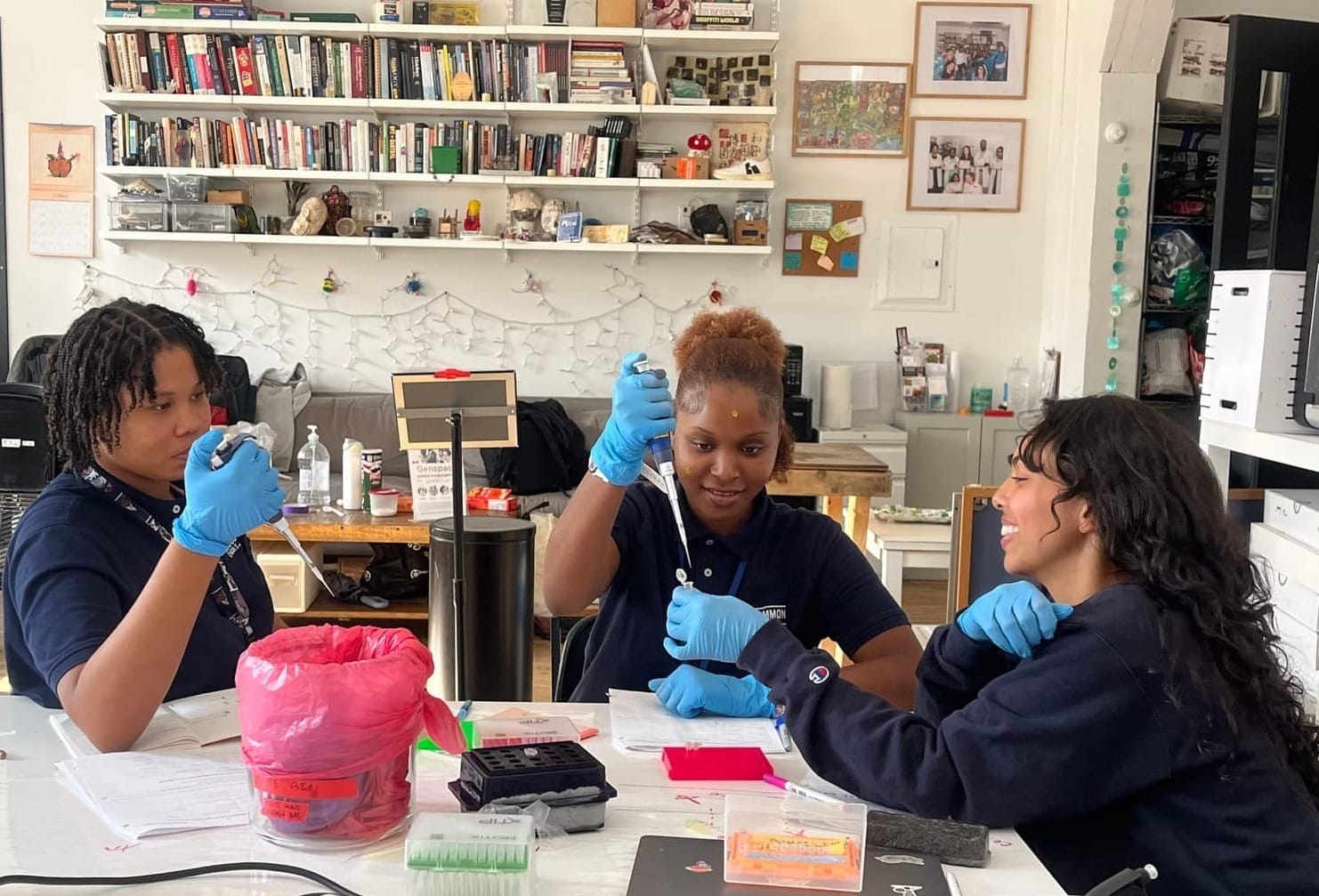
I am always impressed with their ability and motivation to jump in and do this work after a long day at school. They always come with questions that keep me on my toes and we always learn together.
4:30 PM - Beyond Biorocket
Now I’m checking in with Amani, one of our Biorocket alums from 2024. I absolutely love that I get to bring my previous students back to work with us in different capacities. Getting to see and play an active role in their growth as young professionals gives me a sense of peace about knowing that what I do matters. Before returning, Amani was one of our most frequent volunteers — they’ve probably checked you in at an event. This fall, they just joined us as a Development and Communications Intern, and they’re helping with the bottom section of this newsletter (again, woah, meta) by finding jobs, events, and opportunities that we think our readers will be interested in.
5:00 PM - First Thursday
Tonight is First Thursday, our monthly open house where people from our community share cool and interesting research. This month’s theme is RNA, and Shuying from Chaolin Zhang’s lab at Columbia is coming to talk about her work.
This means moving out all the benches, setting out spicy hummus and spiced apple cider, putting on a vibey playlist, and turning Suite 101 into an event space. During the event I’m taking pictures that may or may not end up on our Instagram. I always get an emcee masterclass from Serena on First Thursdays, and towards the end she passes me the mic to tell everyone about our upcoming events.
9:00 PM - After Party!
First Thursdays never end without shenanigans. Minnie’s is two blocks from the lab, so that’s where we’re headed tonight. (Pro tip: Sunset Stoop does karaoke on Thursdays.)
So when people ask what I do, it’s hard to give a short answer. I had a little bit of difficulty writing this because no day really looks the same, which keeps things fun.
But getting to work with all different kinds of people, getting to learn from so many ways of knowing and experiencing the world is a privilege and an honor. I always tell people that I was grown at Genspace :’) and it is the joy of my heart to partake in that growth for other people who come through our doors, too. I love working somewhere I can be myself, fail and try again, and watch people put in the work to be scientists on their own terms.
Peace,
Sarai
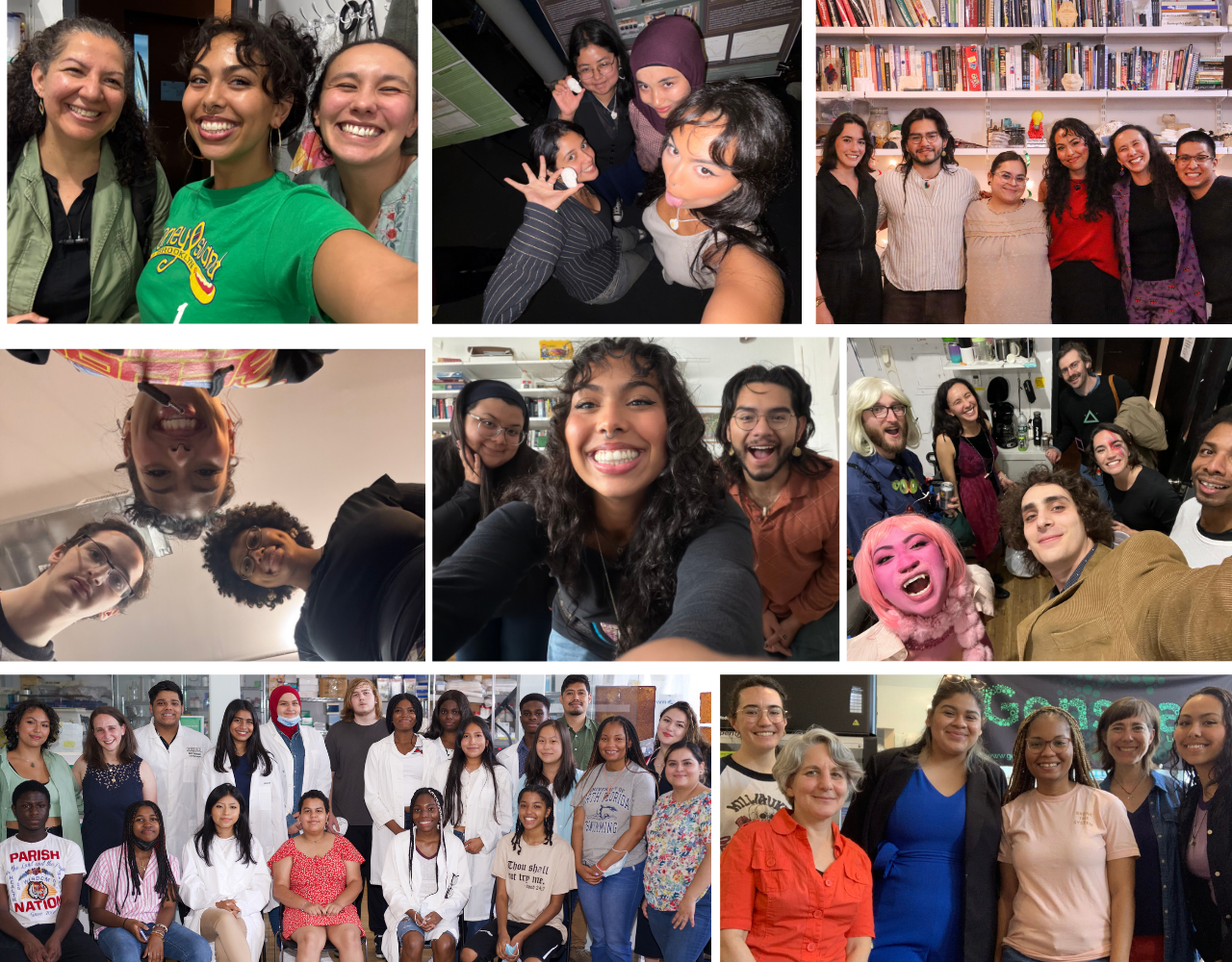
P.S. Since I’m usually the one behind the camera, finding photos of me for this was harder than I expected! Here are a few from my five years at Genspace, with the current team, past staff, and some of my favorite people in our community. Reply to this email if you spot yourself or recognize any of these wonderful people from around the lab. 😄
Coming Up at Genspace
Community Events • Opportunities • Jobs
Community Events
• 10/17 - They Blinded Me With Science/Urban Bat Project NYC present How Many Bats Fit in NYC
• 10/18 - Open House New York Weekend: The Climate Imaginarium
• 10/20 - Incomputable Earth: Technology and the Anthropocene Hypothesis
• 10/21 - Biomolecules Aren't Rocks: Temperature Sensing and Protein Dynamics
• 10/24 - Intro to Dendro in Prospect Park with Nicole
• 9/25 10/25 -Ancestral Ecologies at Brooklyn Botanical Garden
• 10/29 - Science Tonight! - The One Billion Episode
• 10/29 - Night Lab I | Materials of Tomorrow
• 11/4 - Gut Feelings: How Our Nervous and Immune Systems Communicate
• 11/6 - NYC Data Science & Analytics Social Mixer
• 11/10 - Queer Genealogies in Dominican Literature and Culture
Opportunities
• PD Soros Fellowship for New Americans
• The Leon Levy Scholarships in Neuroscience (LLSN)
• Conservation and Scientific Research Fellowship
• Open Call Agency Residency, Eyebeam NYC
• Return to Real: Black Utopian Fellowship Open Call 2027
• Leonardo Open Call for Papers, Life as Medium: Bioart, Biotech, and the Ethics of Entanglement
• Protected Species Observer Certificate Course with Gotham Bat Conservancy
• Ayatana's Biophilium Mycophilia: Mushroom School for Artists
• Homeworld Academy: Fundamentals in Biotech Translation and Climate Impact
• Quantitative Research Assistant, Glisten
• Rearc Institute Center for Planetary Pedagogies: 2026 Edition
Jobs
• STEAM Lab Instructor, Pratt
• Laboratory Associate, Bureau of the Public Health Laboratory
• Field Specialist, New York Department of Environmental Protection
• MTA Climate Planner Data Scientist
• Associate Editor - Life Sciences, PLOS One
• Program Associate, Bioquest, RTW Foundation
• Laboratory Associate, Bureau of the Public Health Laboratory
• Program Director, Innovation Fellows Initiative, Cornell Tech (NYC)
• Multiple Positions, Grow NYC
• Carbon Farm Planner Coordinator, NY Textile Lab