
Small Numbers, Big Feelings
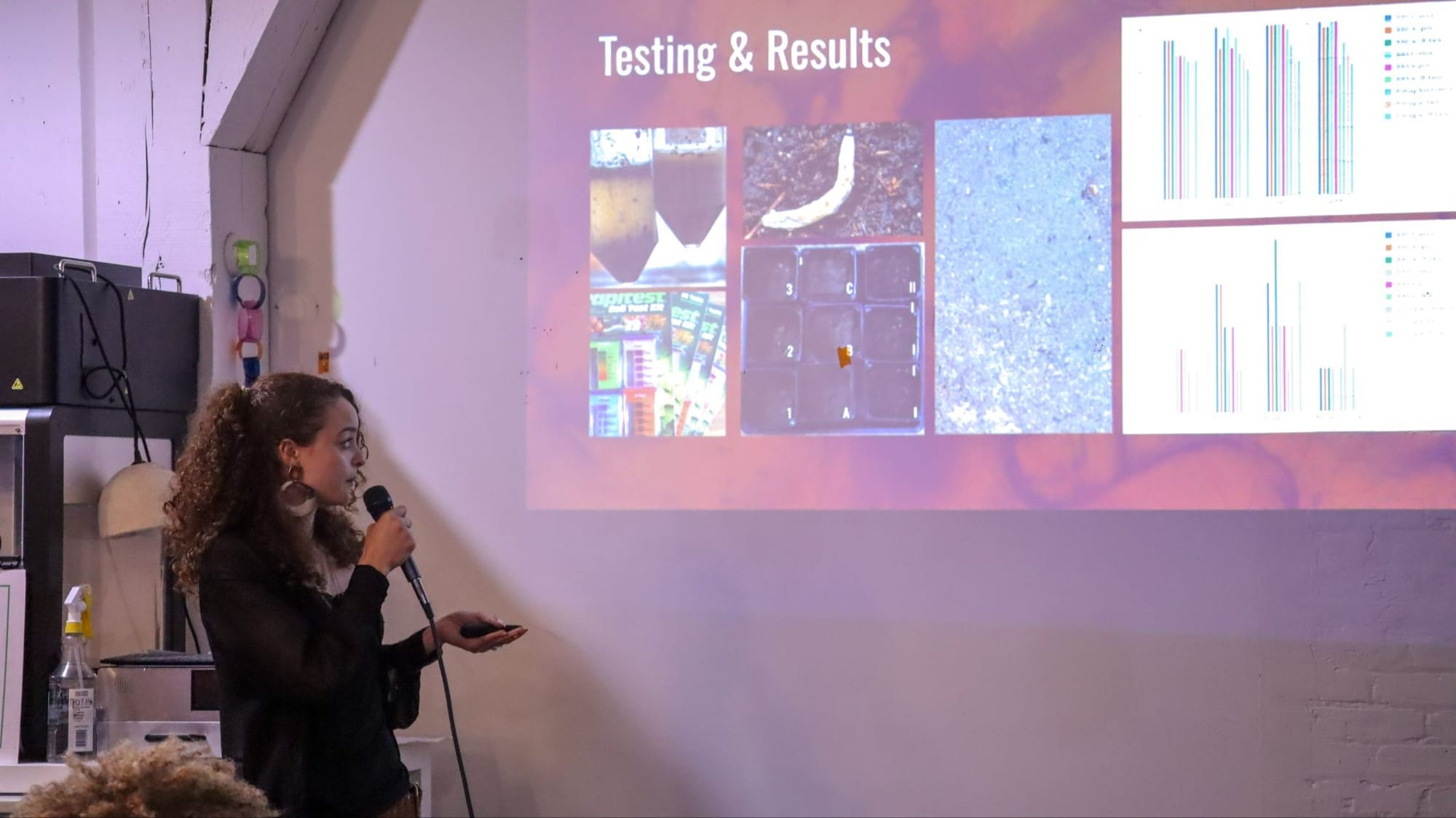
FIT-Genspace Scholar Georgia Badonksy Mulligan is obsessed with jellyfish.
She spent the past two years turning that obsession into a biomaterials research program at Genspace. Below, she shares an update on her work at the lab.
Jellyfish are roughly eight hundred million years old.
Spineless, brainless, and bloodless, they are living fossils that have outlasted many other ancient ocean-dwelling organisms. According to Georgia–who has spent two years researching them at Genspace: “not enough people know enough about cnidarians!”
"They're such simple creatures, a lot of people kind of just brush past them," she says. "But even just in their movement, they're built to conserve energy, they're built for efficiency. It's not just them floating through the water, they're creating vacuums. There's so many possibilities with these animals.”
A recent Textile Development & Marketing graduate, Georgia came to Genspace through our university partnership with the Fashion Institute of Technology. After graduating, she became the first student to continue the program for a second year.
Why jellyfish?
"I read this book, Spineless, and it was just covering jellyfish as a whole. I really thought it was so incredibly interesting from an evolutionary standpoint and from an artistic one. I just kind of took that and ran."
Georgia originally wanted to work with jellyfish stinging cells, or nematocytes, and spin their proteins into nanofibers. Time and resource constraints led her to pivot. "When you take a step back from the stinging cells, what do you see? You see the bell. And what can we get from the bell? Collagen."
Georgia saw a connection between global jellyfish populations and an abundance of the collagen in their bells. "There's evidence these animals are benefiting from global warming. We've seen massive increases in population, a huge bycatch problem, also a huge problem for nuclear cooling sites. People are losing money, having to pivot from fishing to jellyfishing. So what can we do with this material?"
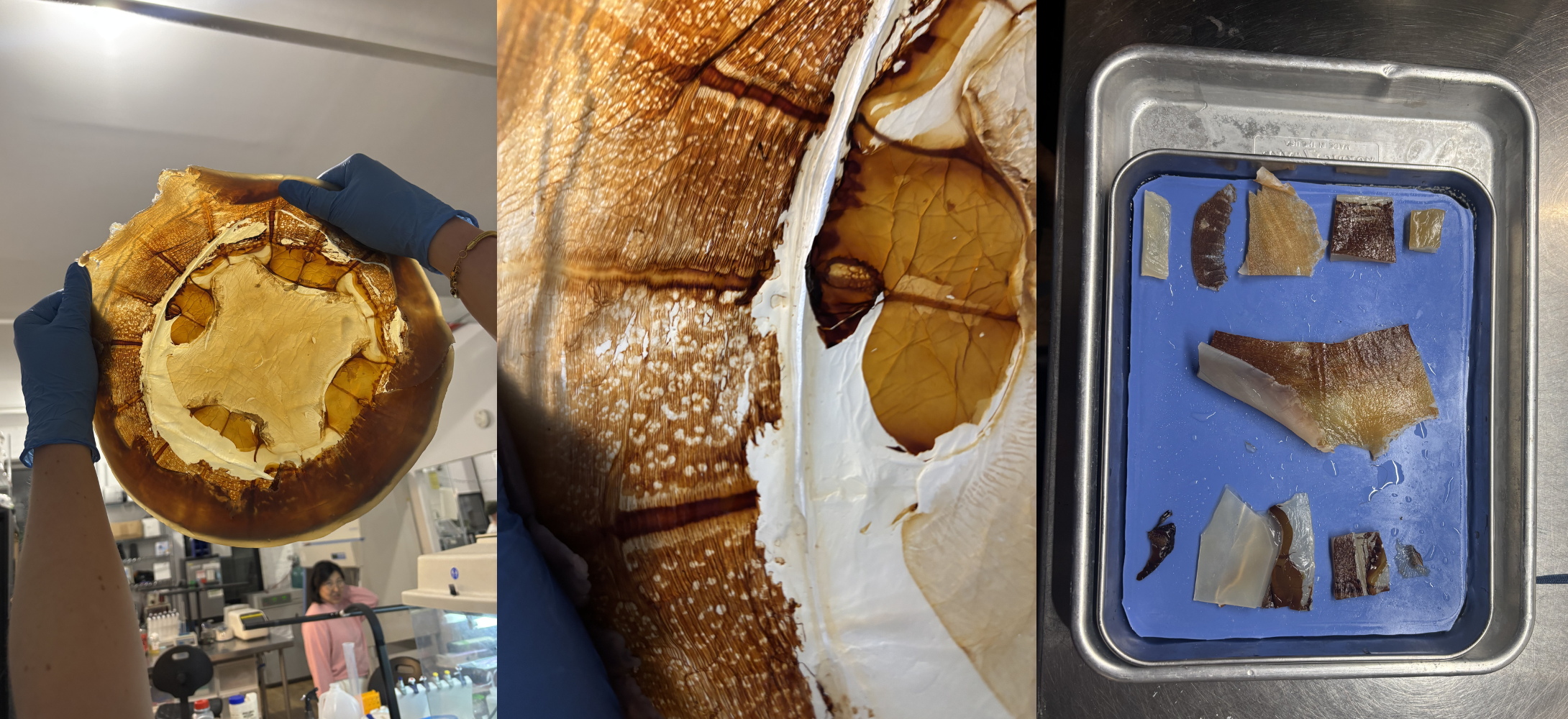
Looking into jellyfish collagen led Georgia to hydrogels–a chemical matrix that can hold up to 99% of its mass in water. "You experience a hydrogel every day. If you wear contacts, if you like Jello, in the lab they're your agar plates.”
Georgia began exploring applications for hydrogels made from jellyfish collagen. This line of thinking led her to agriculture: growing cotton, for instance, consumes millions of gallons of drinking water; in some states, 40% of irrigation is clean drinking water. She decided to try to create a jellyfish-collagen hydrogel that could reduce how much water it takes to grow cotton.
Why collagen?
"Collagen is a hot topic. Everybody wants it, we need it to survive. It's in our skin, our hair, our bones. It's in your food, it's what's keeping you together. It's in face masks, makeup, collagen drinks. It's everywhere. But it's expensive. Bovine, synthetic, plant-derived, all expensive. And there's a medical issue: if you want to put something in the body for something like wound healing or bone density, it can't come from another animal, because your immune system identifies it as a threat."
Jellyfish collagen sidesteps that. "Jellyfish predate mammals, and their collagen developed earlier. Our body does not identify it as a threat." Which is also why Georgia deliberately steered away from beauty and medicine. "There's all this money and focus on the beauty and medical field, which are important. But we're in a severe water debt. It's more pressing to focus on water retention in agriculture."
Check out where Georgia's work fits in the larger body of jellyfish hydrogel research!
Iron-oxide Nanoparticle Release from Jellyfish-based Hydrogels for Agricultural Fertilization
Patent: A Method for Extracting Collagen from Aquatic Animals, Collagen, and Products Containing It
The science of small numbers
In order to work with jellyfish collagen at Genspace, Georgia picked up about three pounds of Stomolophus meleagris, the cannonball jelly, from JMart in Bensonhurst. "If you've seen a video of a dolphin tossing around a jellyfish, that's this guy. It's also edible, you can make it into a salad."
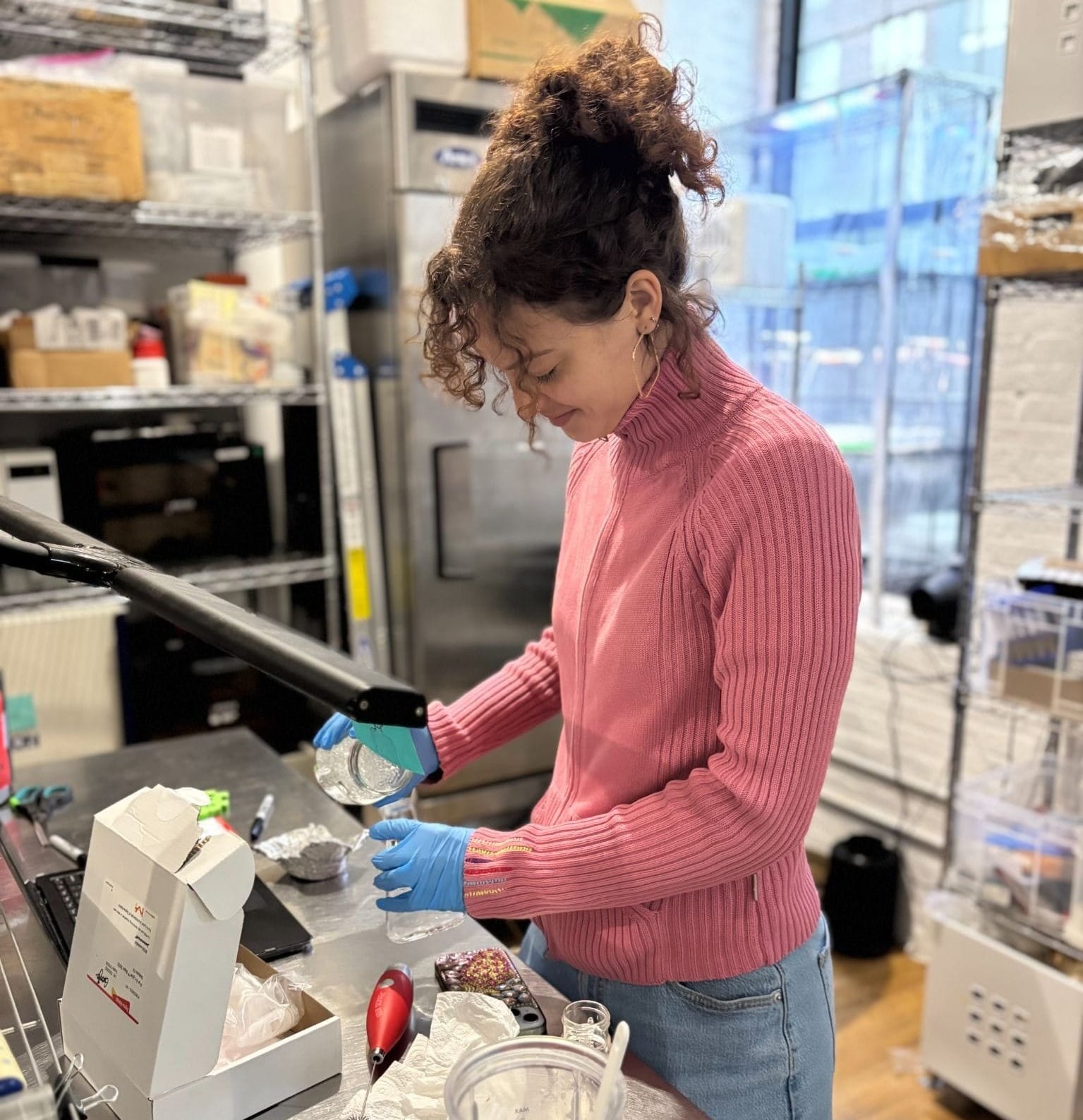
"When I first stepped in, I thought, if we're extracting, we're just taking it out, right? We're just focusing on that one protein. That's not what it is. It's taking away everything else." Georgia's protein isolation protocol involved several steps. First–a base extraction to strip the other proteins, then resuspension in acid, then rounds of sonication and centrifugation, and finally dialysis, or using a molecular filter sized to the protein she wanted. It took days of work for each round.
The hardest part was proving she had collagen at all. “[Finally,] the Bradford assay returned 440 micrograms per milliliter out of an entire jellyfish bell. A lot of science is small numbers but really big feelings. This was a huge step after months of trial and error."
Year one, year two
Year one was scaffolded, learning alongside her mentor, Dr. Katie Bunde. “I could not have done this without her. She was the one who helped translate a lot of these papers. She showed me what I was missing, what I couldn't really Google. We were measuring really, really tiny things you wouldn't even think about.”
In year two Georgia and Katie redesigned the extraction protocol to try to boost their yield of collagen, and ran soil tests from scratch. The second extraction came out less effective than the first. "Collagen is very clumpy, it likes to stick together, and we didn't think about how much we'd lose."
Another misstep came when a centrifuge tube cracked mid-spin. "You're dealing with these really small amounts, it takes you weeks to get to this point. And what are you going to do when it goes wrong? I like to think I've become calmer in a crisis."
Unexpected visitors
Speaking of crisis, on the fourth week, Georgia found fungal gnats in her samples. "You get a little closer and you're like, oh, they're maggots, lovely." But they also found something else unexpected: phosphorus-based biomineralization. Actual crystals, forming on the gels.
"This is a direct reaction with the collagen in the soil, creating a physical crystal interacting with the phosphorus. It's bringing up about a hundred new questions." It also flipped the project's premise. "Instead of thinking what can we give the soil, it's what can we take out? Can this be used to clean? What other mineralization can interact with these gels that we could later extract?"
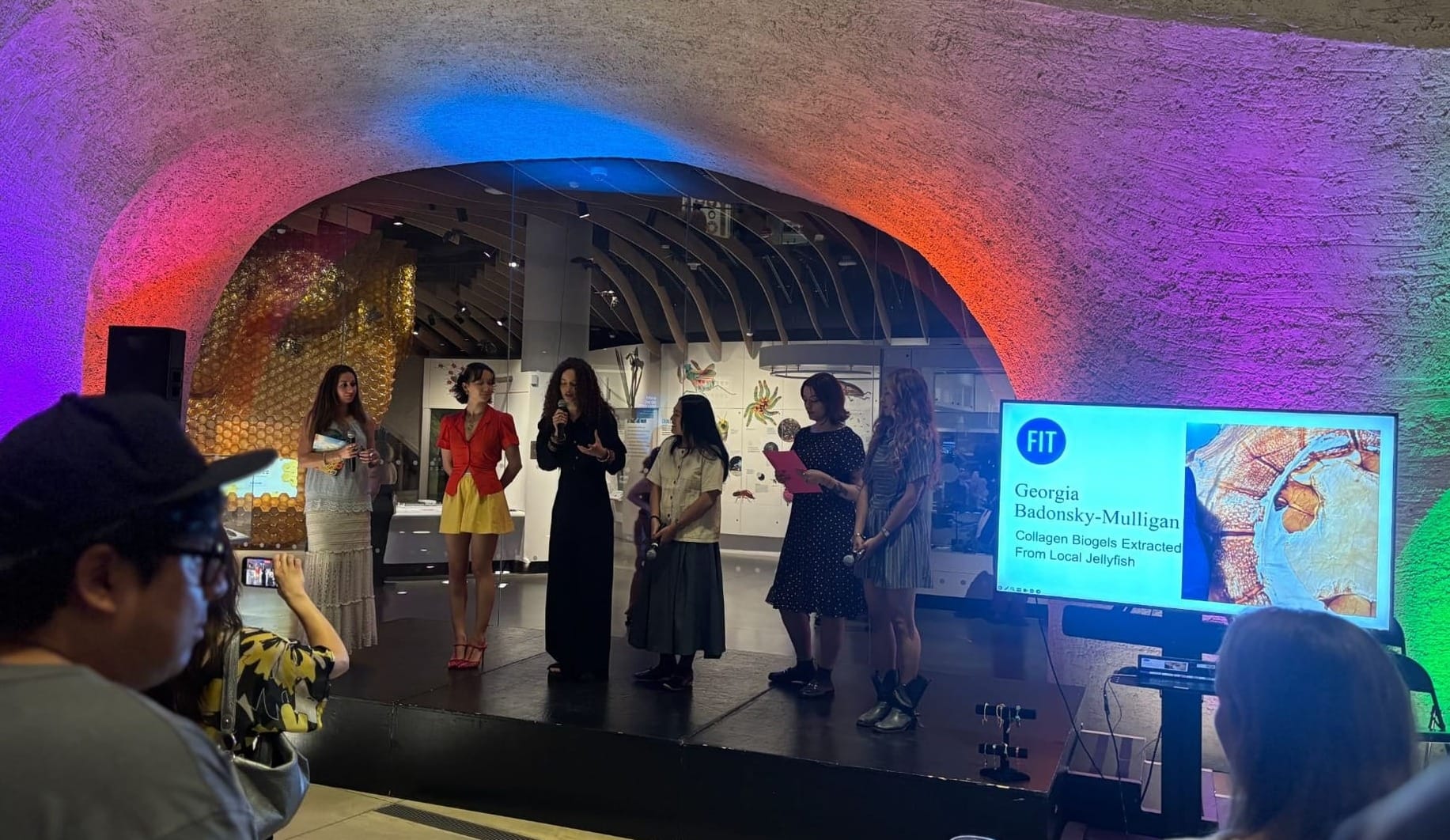
What’s next?
Georgia will continue her fellowship at Genspace through November, and she's still deciding on her next steps. Maybe she'll continue to explore the biomineralization, or, go back to her original goal of spinning protein nanofibers.
We'll keep you updated.
Tag yourself: Georgia's favorite jellyfish
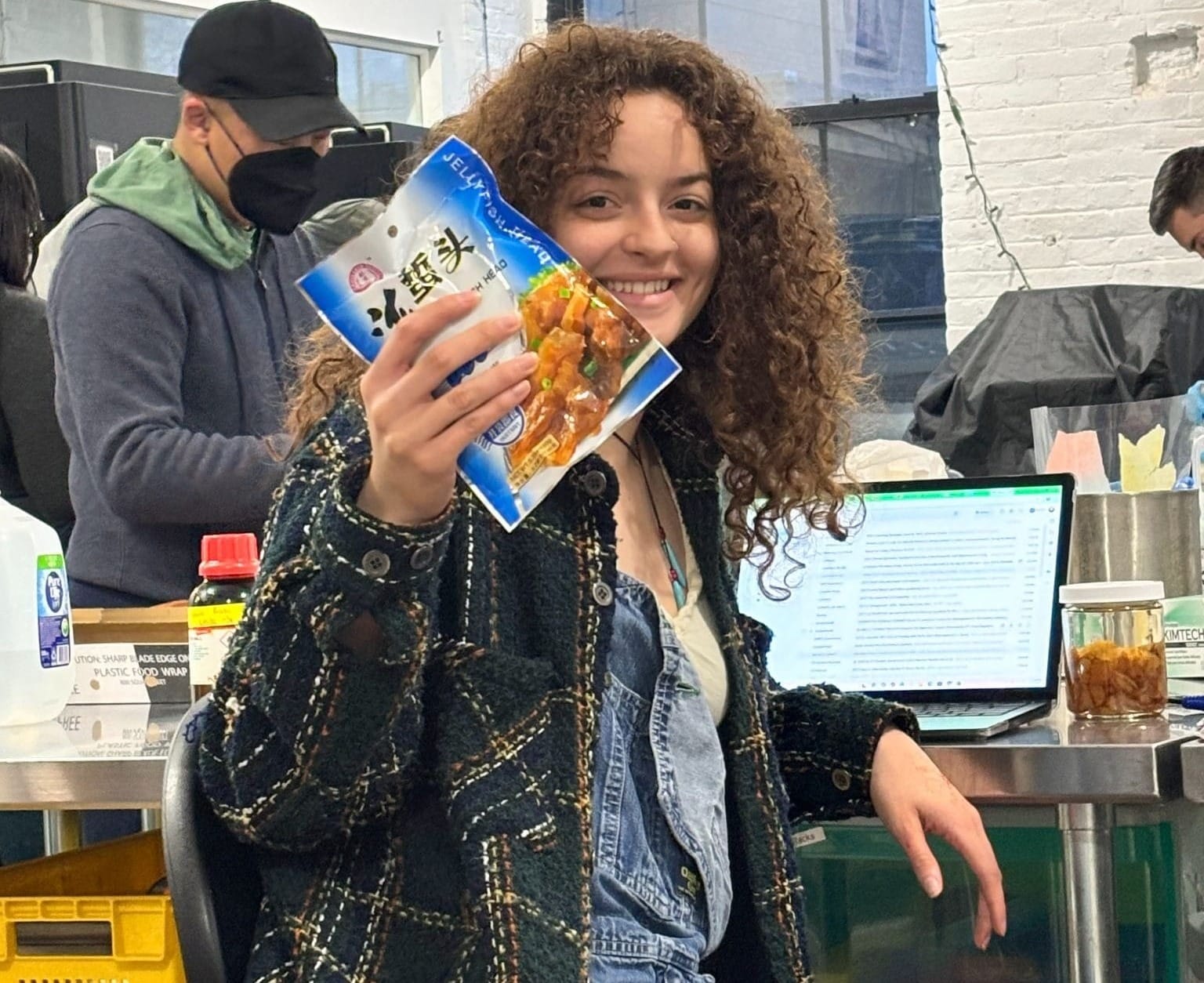

Which Jellyfish are you?We asked for Georgia's favorite jellyfish. She gave us 5. |
Coming Up at Genspace

Thursday, July 9
Community Events • Opportunities • Jobs
Community Events
• 7/4 - Pangue Video Art Festival Opening Reception
• 7/8 - Little Bat Walks Prospect Park
• 7/11 - NYC Math Festival 2026
• 7/12 - Pioneer Works: Second Sundays
• 7/15 - Amateur Astronomers Association Stargazing at Brooklyn Bridge Park
• 7/23 - Science After Dark: Crab Lab
Opportunities
• Wonderlab: Designing Tomorrow Series
• Become a Volunteer Terrapin Monitor, Marine Park Alliance
• Open Call for Art, Center for Wellbeing NYC
• NYU Game Center Incubator
• Fish Are Teachers Artist Residency Program Oko Farms
• NYC H2O Paid Summer Eco-Internship
• Fort Greene Park Development Summer Internship
Jobs
• Multiple Positions, NYC Department of Cultural Affairs
• Multiple Positions, Bridge to Enter Advanced Mathematics
• Part Time STEM Educator, Liberty Science Center
• Special Agent STEM - Physical Science Background, FBI
• Applied Research Associate, J.P. Morgan
• Technical Sales Specialist, Thermo Fisher Scientific
• Geologist/Environmental Scientist
• Associate Director, Fellowships & Professional Learning, NYAS