She put one of the most toxic mushrooms in North America in her mouth
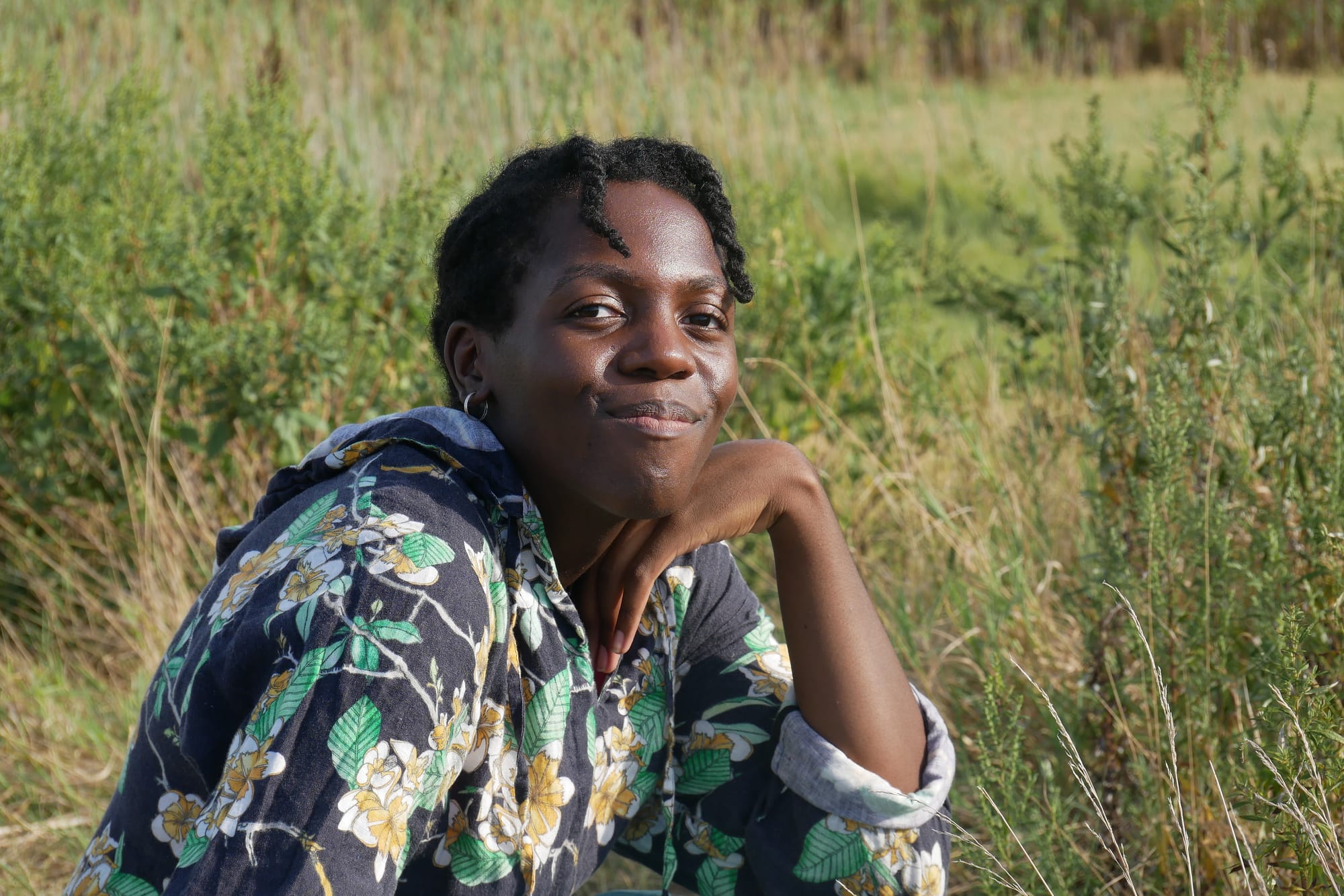
Maren Fossi is an environmental educator, researcher, lover of fungi, and alum of the Break into Biotech Program. She served as the fungal taxon leader for this year’s Macaulay BioBlitz, is a park steward of Inwood Hill Park, serves as a lecture and workshop organizer and occasional walk leader for the New York Mycological Society, and is currently working on a citizen science project on marine snails and their fungal symbionts. All while working a day job that has nothing to do with biology at all.
"I'm broadly interested in the world," she says. "I joined the New York Mycological Society a couple years ago and have gotten deep into [that]. I call myself a researcher. I do art, I'm a steward in NYC parks, specifically in Inwood. Just doing a lot."
Why fungi
"Fungi weren't really explored or talked about much in school, so the novelty was a major draw. But there's such diversity, and fungi underpin relationships between a bunch of other taxa. To know the mushrooms in the woods, you've also got to know the trees you're looking at, you've got to mind soil types sometimes. It's really multidisciplinary, which is fun. It forces you to learn really broadly about the whole world."
The nibble and spit test
The moment that made us want to check in with her was a recent LinkedIn post: she'd put one of the most toxic mushrooms on the continent in her mouth, and spit it out, in a live demonstration of the nibble and spit test at the 2026 Macaulay BioBlitz.
"It involves exactly what it sounds like: taking a small bit (of a mushroom), putting it in your mouth, crushing it a little bit, tasting it, and spitting it out. There's a lot of stigma around mushrooms, so something the club will always say is, one, all mushrooms are safe to touch, and two, even deadly toxic mushrooms, it's safe to do the taste test with, and it can tell you a lot about what you have in your hands.
A fun example: two fungi that look like an oyster mushroom without the stem, both brown and hairy. They're both in the genus Lentinellus. One's nicknamed the bear, one's nicknamed the beaver. The bear is super spicy, the beaver is super bitter, and you don't know which one you have until you taste it."
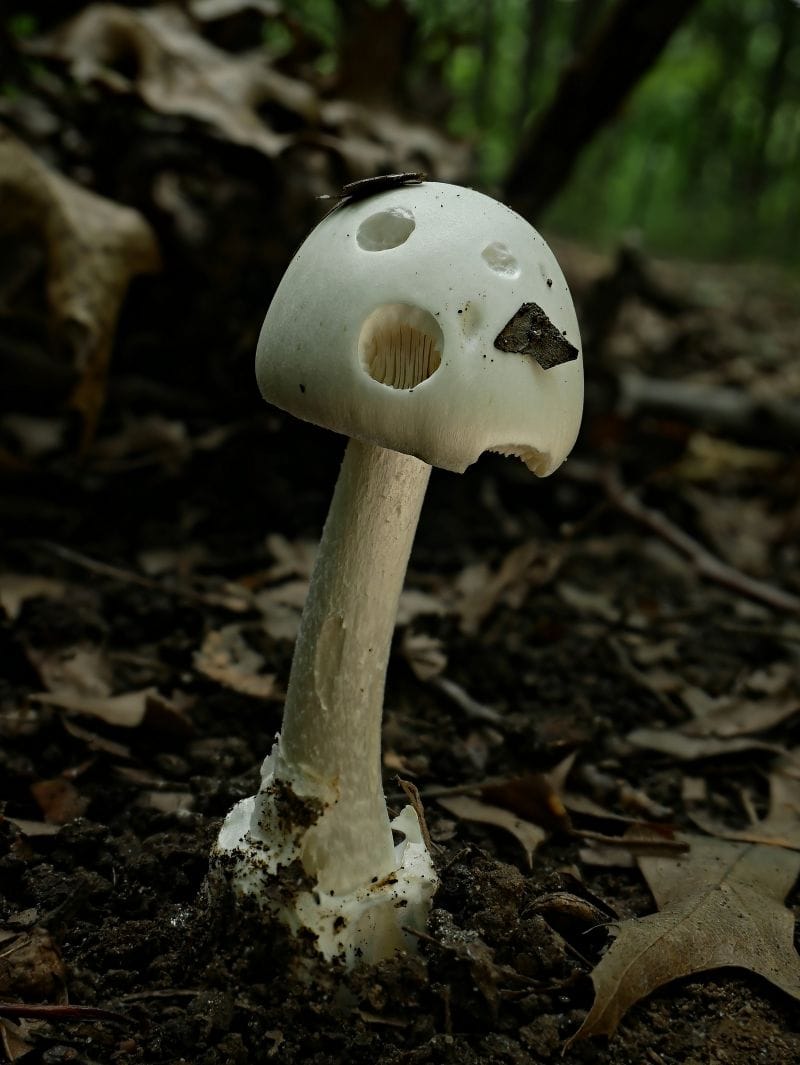
The mushroom in the post, the toxic one, was Amanita bisporigera, or ‘destroying angel.’ Getting a group of BioBlitz volunteers comfortable enough to try the test took some warming up. [Editor's note: the nibble and spit test is not recommended for all species or as a first pass in mushroom identification. It's best practice to ID what you're looking at first, and to learn from and with an experienced mycologist.]
Posting about it afterward came from a similar impulse to put more of herself out there.
"I'm constantly keeping busy, but I don't often share what I'm doing. I wanted to, especially because the BioBlitz was a fun opportunity, and I have a huge backlog of photos I'm actually really proud of. It was an excuse to post those. Sort of just deciding to share more."
On science communication
"I feel like the best way to learn is to be an active member of groups like the NYMS or Genspace. You don't have to go to academia, just having a community around to guide you is great. Social media is a great way to plant the seed in people's interests, to get people to think, oh, I didn't know that was a thing. For every event I do related to mycology, I end up promoting NYMS. I think I got one or two students at the BioBlitz to actually join. Every time that happens, that's a win."
"When I'm out and about, I want to know what I'm looking at, I want to know the things around me. Over the past couple of years here, doing stewardship work, and going out with the mycological society, my own connection to the region I grew up in has deepened a lot. I think that's invaluable.
Break into Biotech
Maren went through Break Into Biotech's fourth cohort last year, arriving with more of a science background than many participants, having worked in a fertility clinic’s lab before enrolling.
"BiB was a nice jump back into doing lab work, which I really like. I enjoy the hands-on aspect, you've got to think about a lot of things, work through things. It's like being a barista almost, maybe being a barista and doing math.
"It opened my worldview a bit as to how I could do the things I'd been wanting to do outside of academia. I'd been playing with the idea of a home lab, I'd had a microscope at home since 2021, but around then I started getting a bunch more lab equipment, some of it from a Genspace garage sale. At this point I'm fully equipped to do everything I could think of wanting to do in regards to mycology at home, which feels really nice. It was also great getting experience in areas like plant tissue culture, I'd watched YouTube videos on it before, but getting to actually do it was really enlightening. It was my first direct community bio experience, which was really fun."
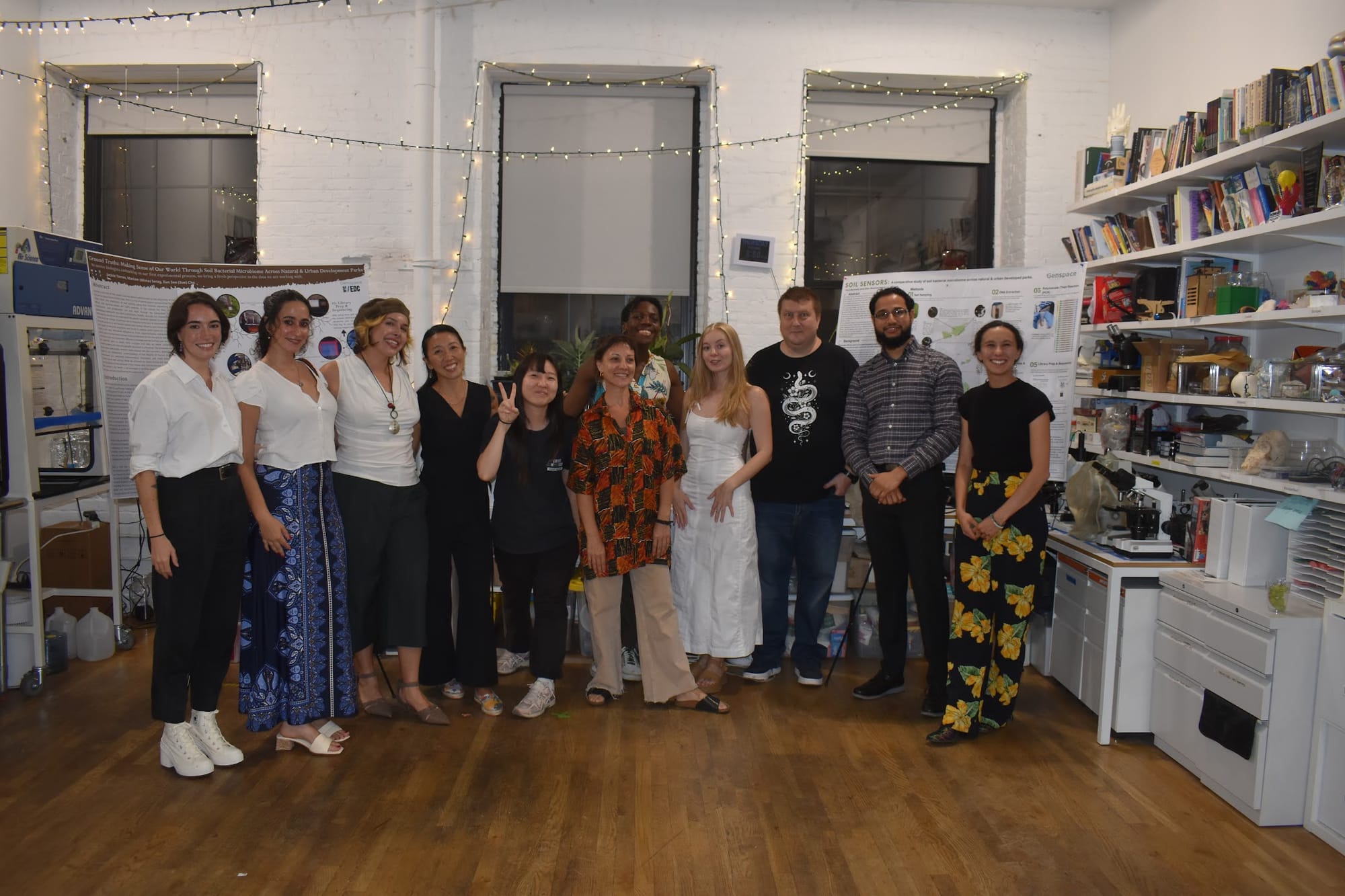
Asked whether the program shaped what she's doing now, Maren draws the line less through any single skill and more through a shift in confidence.
"Right now I'm working at the Law Department, not really in bio. All the bio I'm doing is on my own time. My partner Alexa and I, and Sally [Kong] joined too, we're collaborating with a professor at Duke on a survey of a marine snail and its fungal symbiont. I'd say less particular classes, more so the ethos. I don't think I would have been confident enough to feel like, ‘I'm going to start this project’. But we got a permit, we reached out to collaborators, and now that's something that's happening."
The snail project
That project, still in its early stages, centers on Littoraria irrorata, the marsh periwinkle, a species whose range may be shifting north as the climate changes.
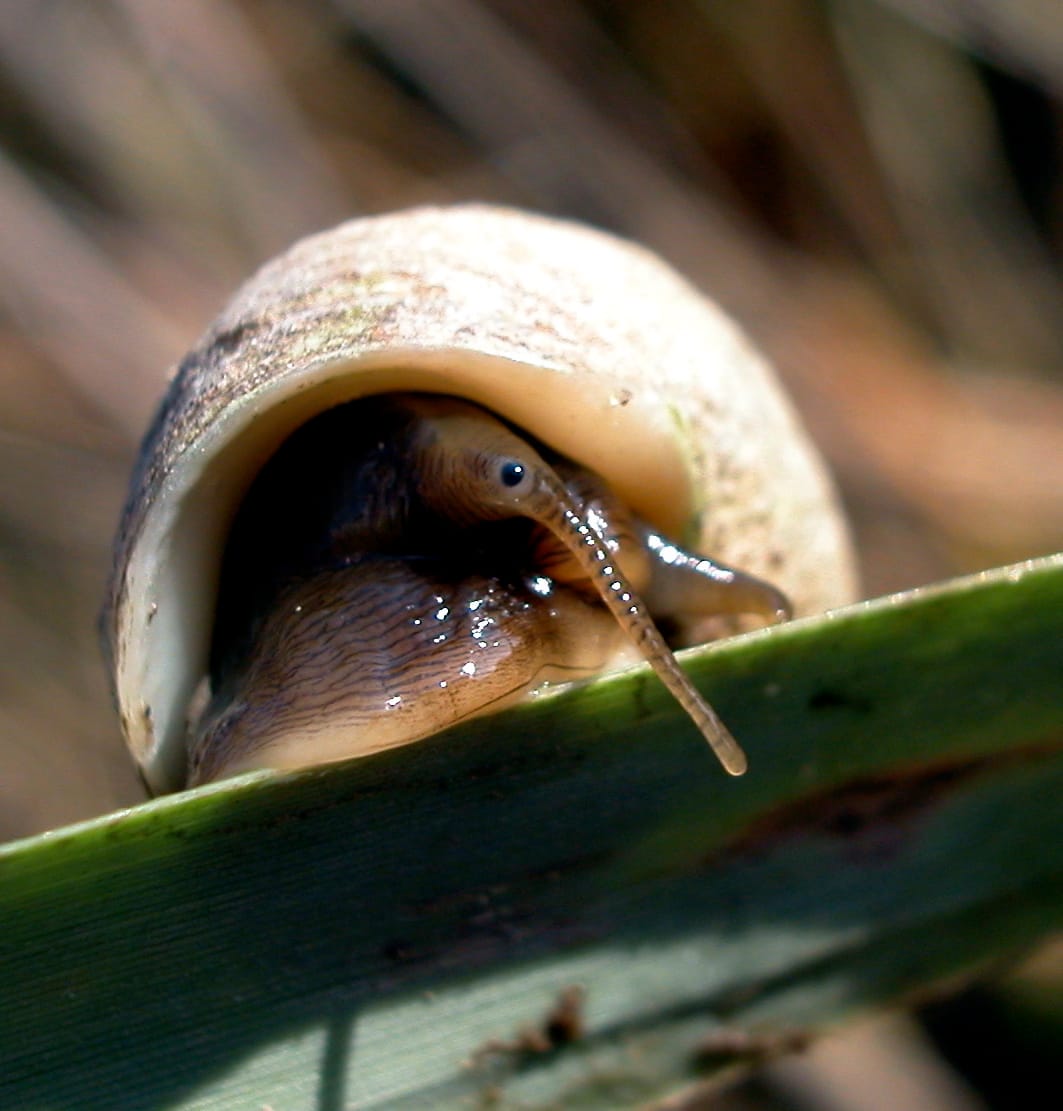
"Its known range is maybe Caribbean up to southern New Jersey but shells have been found in The Rockaways recently A lot of species have been moving northwards with climate change, so there's potential for upward migration here. The snails are symbionts with two species of fungus. They basically farm the fungi. They congregate on salt marsh cordgrass, Spartina alterniflora, but they're not eating the grass like other marsh snails, they're damaging the leaves, pooping on it, and inside their guts are fungal hyphae from fungi they've already eaten. So they're inoculating the grass. They come back later and eat the fungus. If they're expanding their range, then the range of the fungi is expanding too and that would represent a change in the composition of our local salt marsh ecosystems and the estuary in general.
"Right now we're just looking to see if there are any populations here. We want to sequence the fungi we find with the snails, and compare that to places without the snails, to see how they might impact the health of the shoreline."
The work is happening on city parks permits for now, with a National Park Service permit still pending for some of the more promising sites.
"We got the city parks permit we need. I'm still waiting on the National Park Service one, that takes way longer. Hopefully by next year we can look at places like the Rockaways, there's a really big salt marsh hanging off JFK I'd love to go to."
She says that maybe down the line, she’ll do some of the sequencing work at Genspace.
Her advice? Get involved
"There are a lot of mushroom clubs all around. Even if you're not in the city, NJMA, the New Jersey club. The Western Pennsylvania club is massive and full of experts. I went to NAMA 2025, the North American Mycological Association's big foray, and got to meet a ton of people. For botany there’s the Torrey Botanical Society. And then there's Genspace, but I guess if you're here, you know about Genspace."
Looking back
"Thank you to my teachers and mentors over the years. This year has been one full of reflection for me and I've been feeling extra grateful for just how much my understanding of the world and myself has grown and continues to grow by the hand of the people around me."
Catch Maren at the NYMS Fungus Fest in Battery Park, October 11. Maren will be giving a lecture, and there'll be vendors, food, and workshops. Got a favorite mushroom? Hit reply and tell us. We'd love to hear it.
Coming Up at Genspace



Community Events • Opportunities • Jobs
Community Events
• 10/8 - Fall Festival at Lakeside
• 10/10 - Canarsie Street Tree Care
• 10/13 - Scientific Controversies: Octopus Umwelt
• 10/17 - They Blinded Me With Science/Urban Bat Project NYC present How Many Bats Fit in NYC
• 10/18 - Open House New York Weekend: The Climate Imaginarium
• 10/21 - Biomolecules Aren't Rocks: Temperature Sensing and Protein Dynamics
• 10/24 - Intro to Dendro in Prospect Park with Nicole
• 9/25 10/25 -Ancestral Ecologies at Brooklyn Botanical Garden
• 10/29 - Night Lab I | Materials of Tomorrow
Opportunities
• Open Call Agency Residency, Eyebeam NYC
• Return to Real: Black Utopian Fellowship Open Call 2027
• Leonardo Open Call for Papers, Life as Medium: Bioart, Biotech, and the Ethics of Entanglement
• Protected Species Observer Certificate Course with Gotham Bat Conservancy
• Ayatana's Biophilium Mycophilia: Mushroom School for Artists
• Homeworld Academy: Fundamentals in Biotech Translation and Climate Impact
• Quantitative Research Assistant, Glisten
• Rearc Institute Center for Planetary Pedagogies: 2026 Edition
Jobs
• STEAM Lab Instructor, Pratt
• Field Specialist, New York Department of Environmental Protection
• MTA Climate Planner Data Scientist
• Associate Editor - Life Sciences, PLOS One
• Program Associate, Bioquest, RTW Foundation
• Laboratory Associate, Bureau of the Public Health Laboratory
• Program Director, Innovation Fellows Initiative, Cornell Tech (NYC)
• Multiple Positions, Grow NYC
• Office Coordinator | Office of University Life and Community Engagement, The Rockefeller University
• Carbon Farm Planner Coordinator, NY Textile Lab
• Senior Bioinformatics Programmer, NYU Grossman