
The class where nobody made a book

Long before Fan Kong had even taken a class at Genspace, she was developing a class for Genspace.
As Fan recalled to me, “I already had in mind this class called 'Bookmaking with Bioplastics,' because personally I was interested in making books and just learning about bioplastics.”
Fan is an artist and educator. A few years ago, she was working at the Center for Book Arts when the team at Genspace learned about her practice, and invited her to propose a class.
There was just one tiny problem. She had never made a bioplastic before.
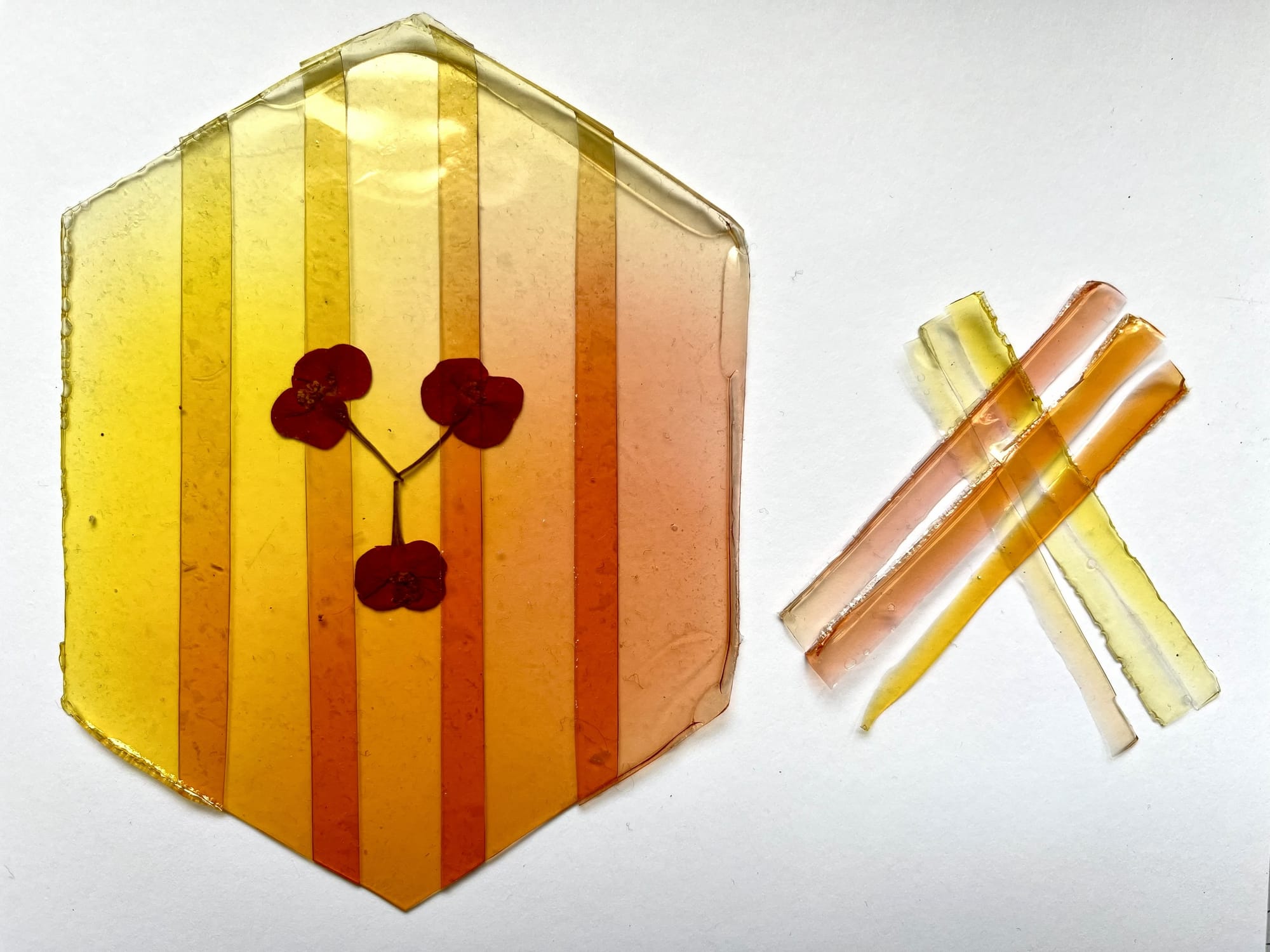
So, a month before she was set to teach her own class... she signed up for her first class at Genspace: Intro to Bioplastics.
"This is my problem," Fan told me. "I'm always learning new tools and techniques in order to turn around and teach them to others."
Intro to Bioplastics became Fan’s introduction to Genspace. She had an idea for a class, and we gave her the space to try it out.
Later, Fan would recall spending countless weekends turning her kitchen into a materials lab so that every participant would have samples to collage, fuse, and weave with – bridging her knowledge of bookmaking with hands-on techniques to work with bioplastics.
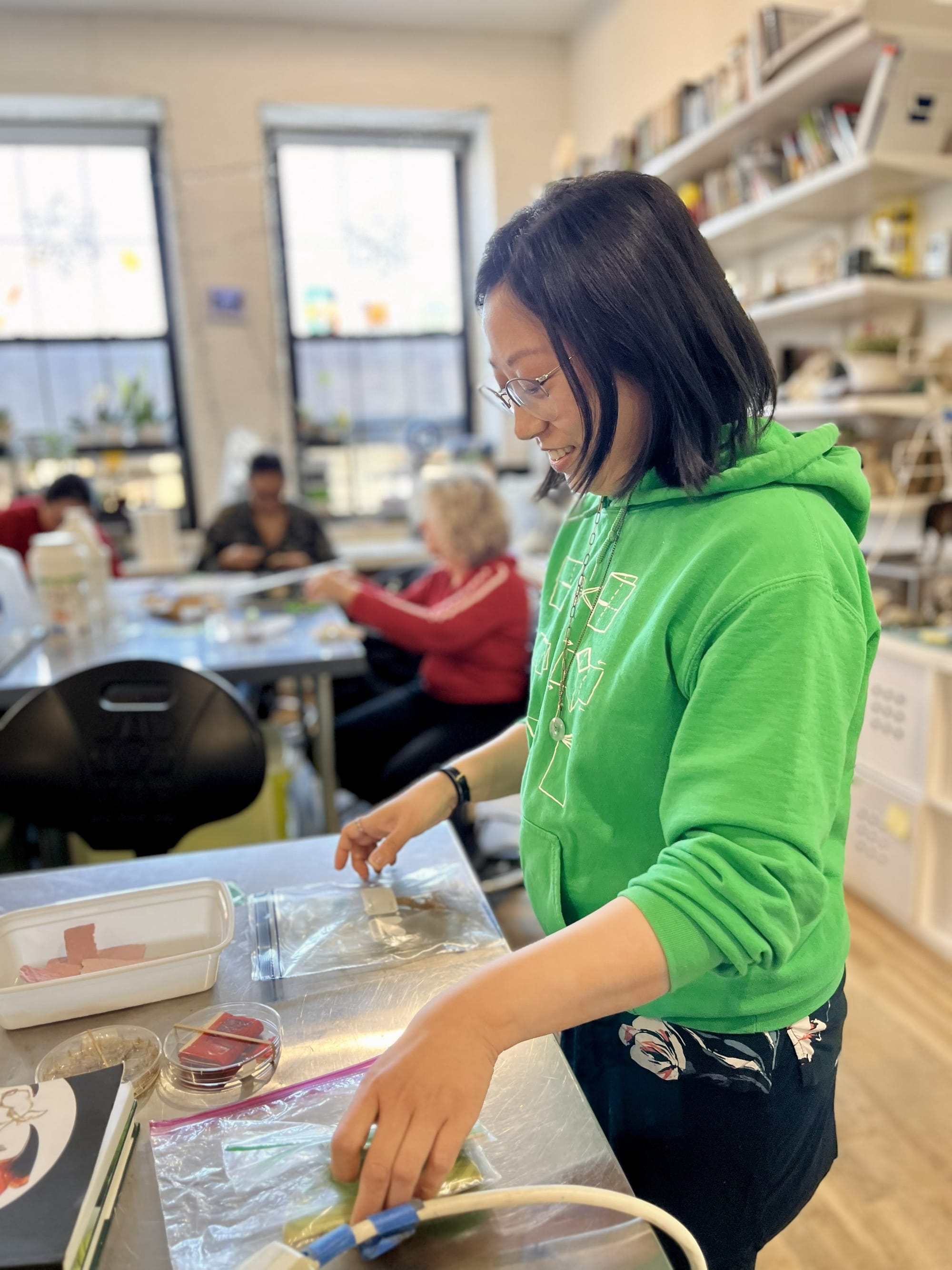
Fun fact: the word plastic comes from the Greek plastikos, which means “able to be molded.” So plastics don’t have to be petroleum-based at all – a plastic can be made from bio-based things like corn, animal fat, algae, or really anything that can be cooked, poured, dried, and maybe later, broken down.
When her first class finally arrived, nobody wound up making a book.
"We're unlearning what books are," Fan says, "and we're also unlearning what plastics are. In that pilot class, nobody really made a book, because books as an art form can be a little bit open-ended.”
Since that first class, Fan has continued to teach:
- She's run Bookmaking with Bioplastics many times now. These days, people do leave with a book, plus the materials she makes by hand.
- She later piloted a second new class, “Stained Bioglass,” and then worked with our team to bring it online as a virtual workshop.
- She helps out as a TA for other classes at Genspace.
- And this January, she'll be back to teaching when classes & workshops return to Genspace – Bookmaking with Bioplastics, Stained Bioglass, and maybe even Intro to Bioplastics, the same class she once took as a student herself.
This is how Genspace grows a new kind of scientist.
It starts with a place where you can bring an idea and hear, "Sure, give it a try." It's a place where a book artist can become someone who experiments with materials, and where learning and teaching are two sides of the same coin.
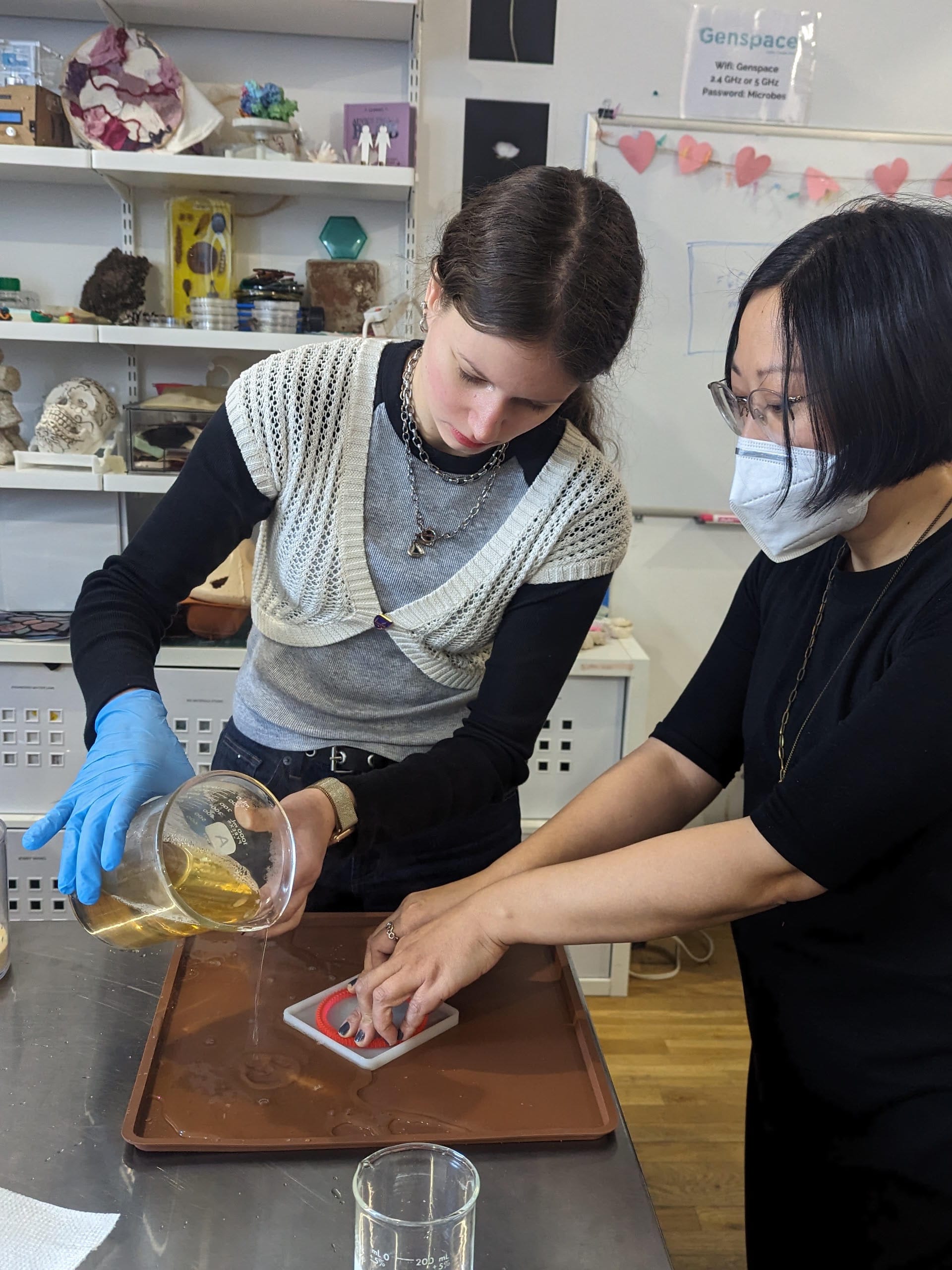
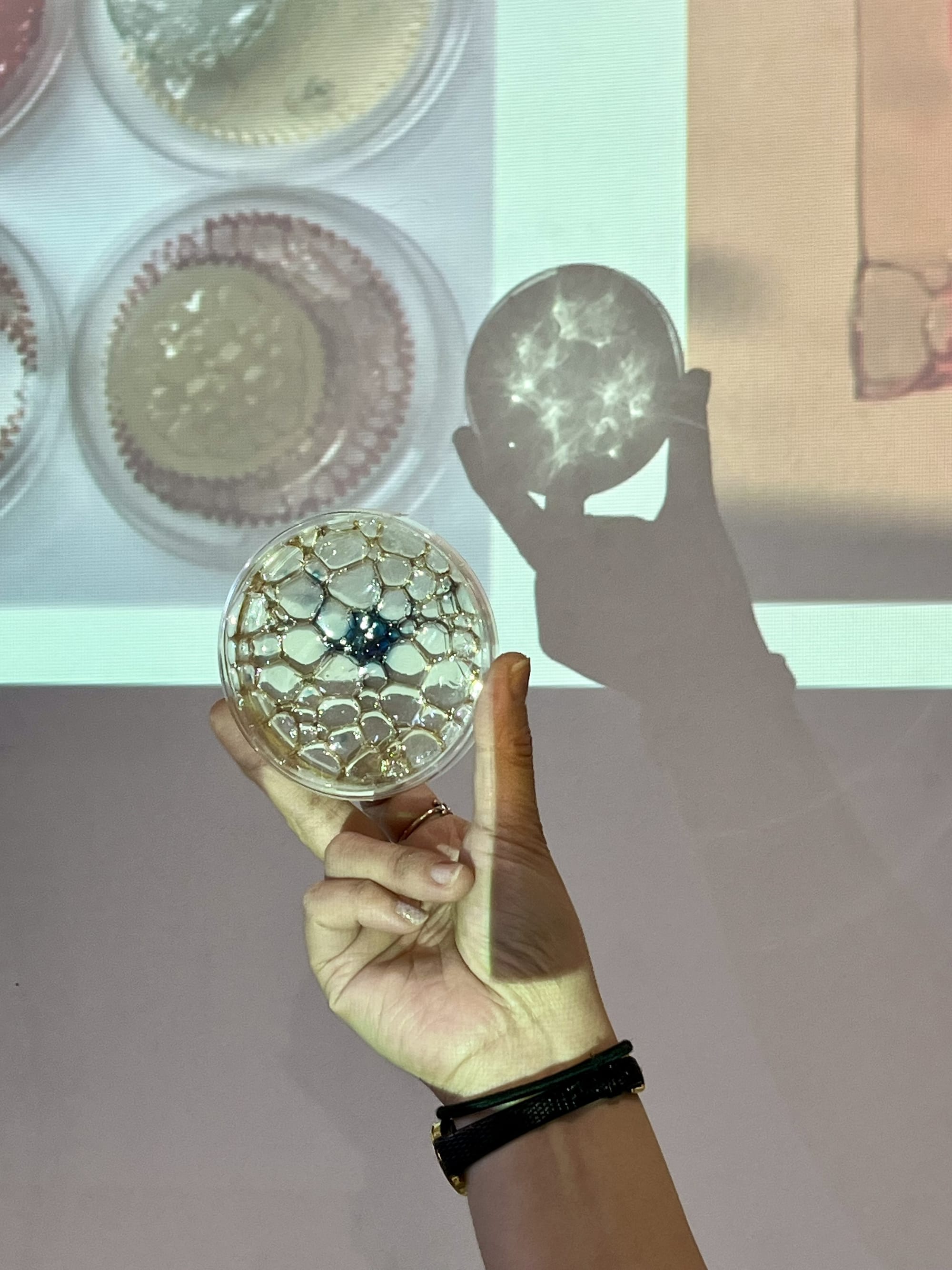
Fan in the lab; Fan's bioglass held up in the light of a projector
All year, I've been thinking about what education at Genspace makes possible for people like Fan and the students she’s able to reach.
I just wanted to say: thank you for being part of the community that makes this possible, whether you've taken a class, taught one yourself, or smiled at one of our wacky ideas from afar.
Want to see more of Fan’s beautiful bioplastic work? Check her out on IG.
With gratitude,
Casey Lardner, PhD
Executive Director, Genspace
P.S. When I asked Fan how she'd describe Genspace, she came up with this on the spot: "Genspace is a permissive environment. Everybody’s a learner, everybody’s a teacher." I felt that one; in grad school, I wrote every protocol as if I was saving it for the lab I'd run someday. Turns out that Fan and I have the same habit: learning in order to teach. 🤗