
"You have to be so passionate about it. You have to be almost delusional."
30 minutes with Jonah Goodman, founder and creator of ECO-SKIN, and winner of the Outstanding Science Prize at last year’s Biodesign Challenge
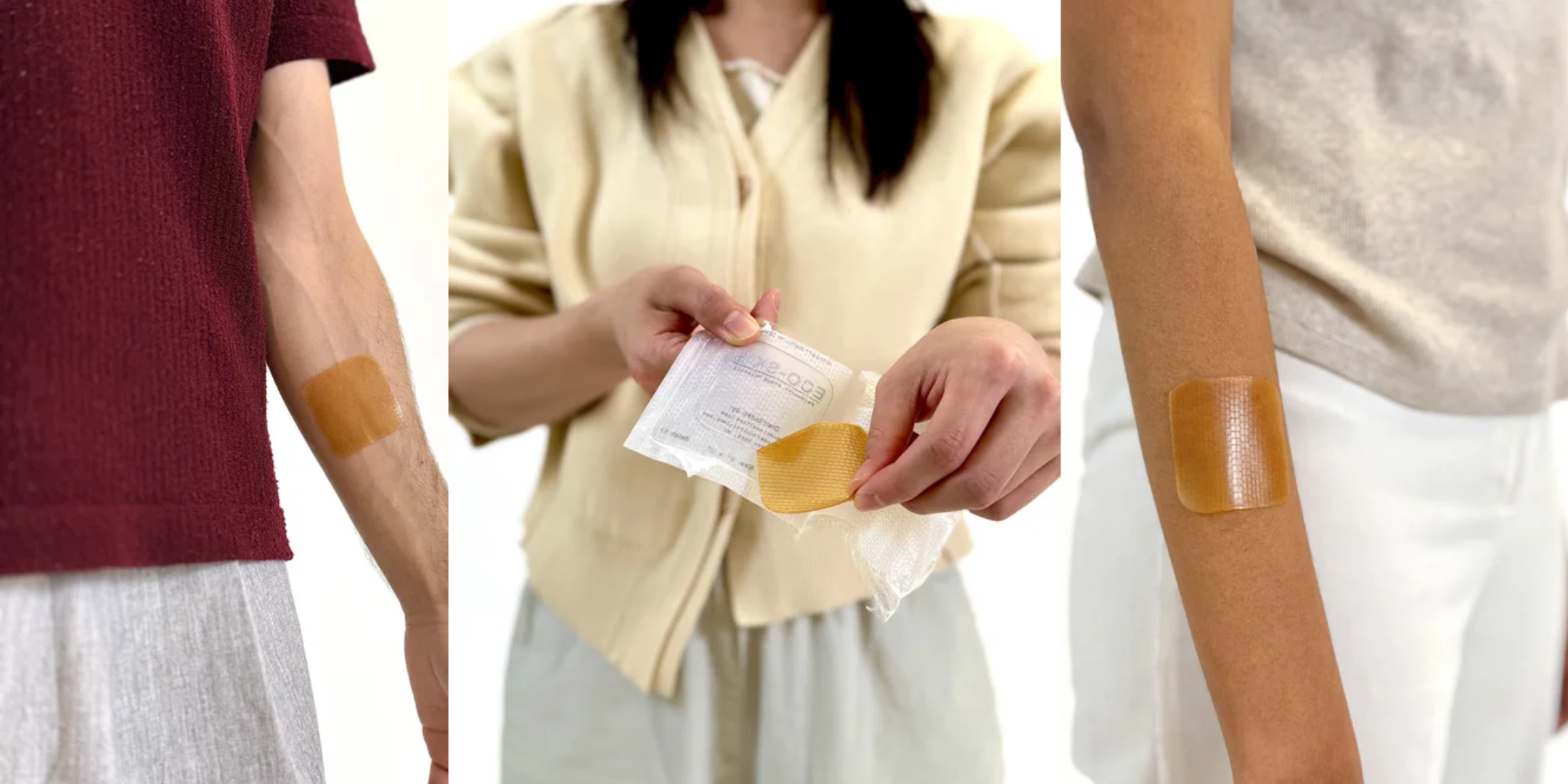
ECO-SKIN, a wound healing system made of bacterial cellulose, acetic acid, and Manuka honey. Developed by Jonah Goodman at Genspace, the project won the Outstanding Science Prize at last year’s Biodesign Challenge.
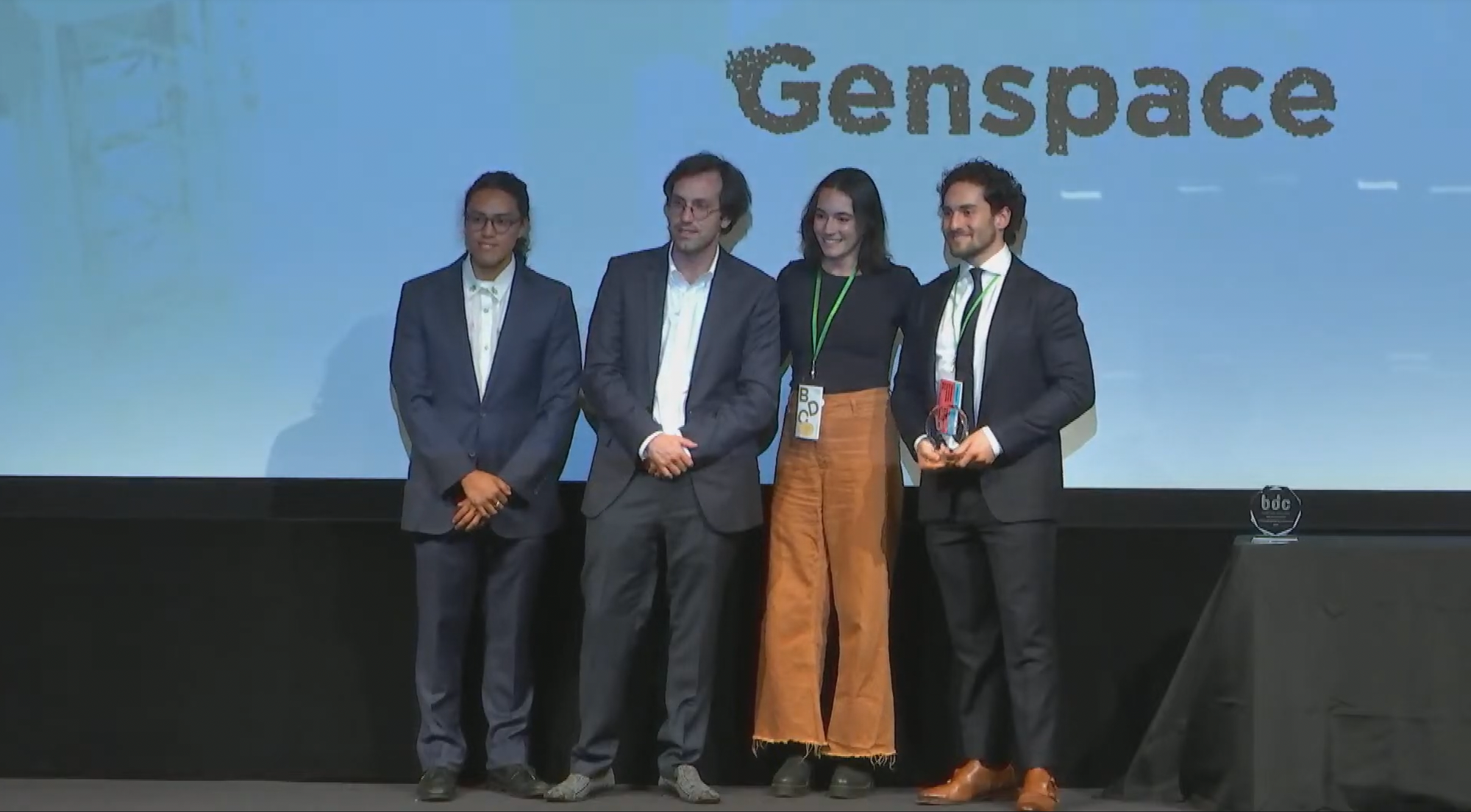
Last year, industrial designer Jonah Goodman competed in the Biodesign Challenge. Representing Parsons School of Design, he took home the Outstanding Science Prize, presented by Genspace. The Biodesign Challenge Summit is here again next week on June 11 and 12, and we've been thinking about the wound care product he built at the lab, and the mindset that boosts its success.
Ancient Ideas, Modern Problems
ECO-SKIN is a wound healing system made from three ingredients: bacterial cellulose, acetic acid, and Manuka honey.
Jonah’s design philosophy centers on these natural, ancient ingredients. "There's a lot of untapped, lost knowledge. There are these master fermenters, people who still ferment, who still grow, and still uphold ancient information. A recipe that's been passed down for hundreds, thousands of years has so much information in it. I'm very interested in restoring that ancient information and packaging it in a modern, contemporary lens. And it's not crazy innovative sometimes. It just feels very comfortable. Like a time-tested technology. Something we literally consume."
"A lot of recent innovation is powerful in the short run, but there are long-term consequences. Antibiotics, for example. In the short run, it does exactly what it's intended to do. But there's overuse, mutations, and they disrupt your microbiome."
How ECO-SKIN Works
Bacterial cellulose, grown through the same fermentation process that produces kombucha, forms the scaffold.
"The bacteria create a stable sheet to protect against UV rays. It's kind of like an evolutionary defense mechanism. And scientists and doctors have used purified bacterial cellulose for burns and chronic wounds because it's a bio-compatible material and it doesn't set off any immune response."
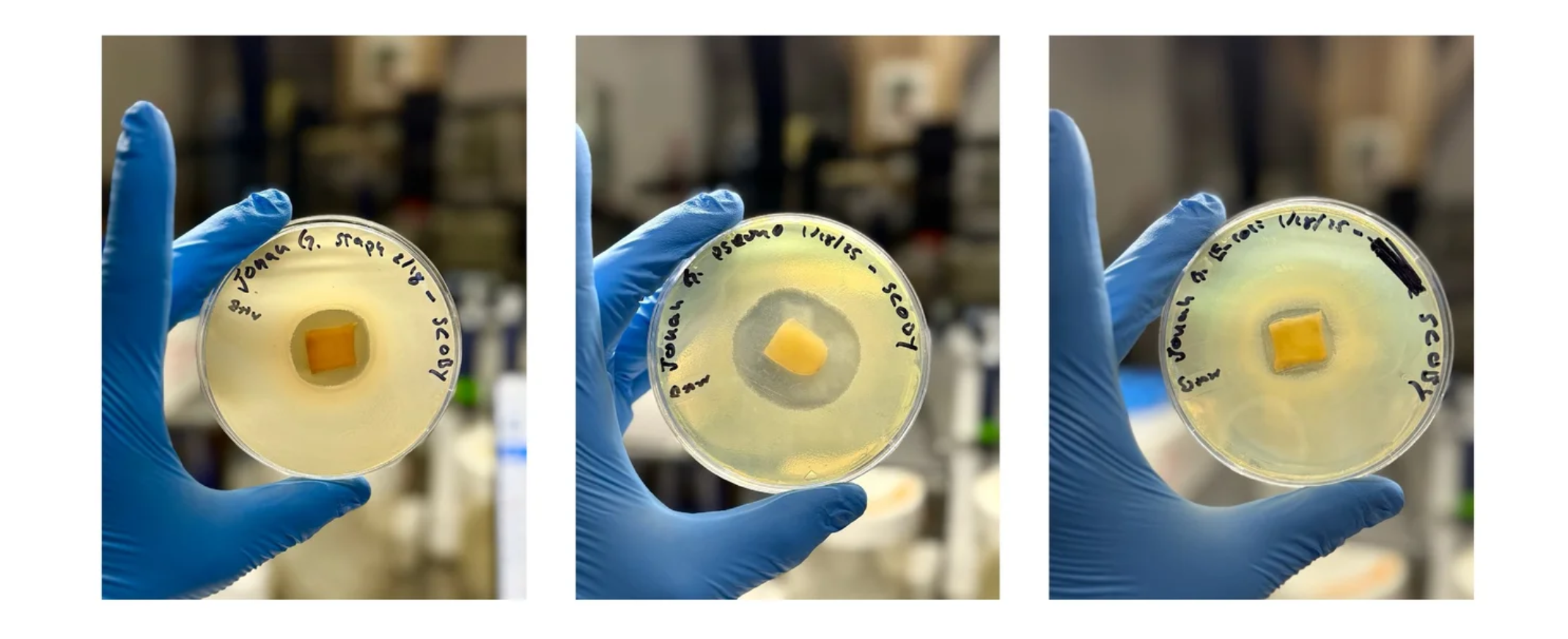
Acetic acid, the primary acid in vinegar, acts as an antiseptic. "It only kills bacteria that cannot thrive above a pH of four. Staph and other [strains] that cannot survive in an acidic environment. And it's compatible with your skin's natural environment."
Manuka honey is the third component. "It's got a high dose of hydrogen peroxide, which is antiseptic. And it triggers a response called autolytic debridement. It removes dead tissue to make way for healthy tissue. There's this really horrible cycle where necrotic tissue prevents the growth of healthy tissue, and Manuka honey, at the right concentration, breaks that cycle."
Jonah’s ‘Why’
Part of ECO-SKIN’s origins lie in Jonah’s personal challenges with Ulcerative Colitis. "I can't use band-aids because I have skin conditions, and they give me a reaction. I changed to antibiotics, but I already had an inflamed GI microbiome; even a systemic antibiotic disrupts my microbiome in some way, shape, or form. It also disrupts my skin microbiome. So I just wanted to make something better."
Where Genspace Came In
Jonah's background is in design and engineering, and he came to Genspace to create a robust scientific foundation for his product. "As a designer, you don't always know the right question to ask. You just don't have the training. Genspace does so well at making science really welcoming, really open, really friendly. They broke things down at a very simple level."
The mindset in the lab matched how he was already thinking. "Open to any new idea, as long as it's rapid design, figure it out and see what happens. That's the attitude I was trying to plug into."
Betting on Your Ideas, From the Lab to Beyond
When asked for his takeaways from last year's Biodesign Challenge, Jonah credits his success in part to the story. "The story is what matters. Different stories land with different people." In the next two to three years, Jonah wants to build a scientific team to do research on more advanced healing for chronic wounds and burns, and eventually move into cosmetics. And he’s still doing work at Genspace.
"You have to be super passionate about what you're making. The idea will change, and people will say it's a bad idea, people will say it's a good idea. You have to be so passionate about it. You have to be almost delusional. You have to see 85 years ahead. You have to be a little psychotic, but if you believe in what you're doing, other people believe in you too."
"When I talk about pickles and fermentation jars, people get excited. I learned: go deep. Let your passion show."
The Biodesign Challenge Summit returns to MoMA and Parsons on June 11–12, 2026. Tickets are available now at biodesignchallenge.org.
Coming Up at Genspace
Workshops and events are offered both in person and virtually. Please read carefully before signing up and reach out if you have any questions.

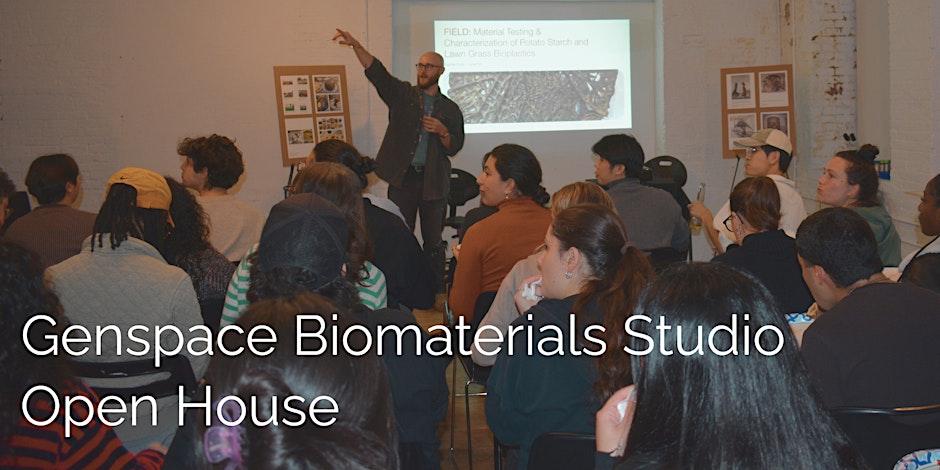
Monday, June 8


Saturday, June 13
Thursday, June 25
Community Events • Opportunities • Jobs
Community Events
• 6/5 - Demo 2026 Day 3 - New Museum
• 6/5 - ChamberQueer: Siren Songs
• 6/7 - Peanut Eating Competition
• 6/11, 12 - Biodesign Challenge
• 6/12 - Pride Night at the Museum: Forces of Nature
• 6/13 - NYC Resistor: Machine Yearning
• 6/26 - UPROSE Comedy Night
Opportunities
• Volunteer at BDC Summit & Symposium 2026
• NYU Game Center Incubator
• Fish Are Teachers Artist Residency Program Oko Farms
• NYC H2O Paid Summer Eco-Internship
• Fort Greene Park Development Summer Internship
Jobs
• Multiple Positions, NYC Department of Cultural Affairs
• Part Time STEM Educator, Liberty Science Center
• Special Agent STEM - Physical Science Background, FBI
• Applied Research Associate, J.P. Morgan
• Technical Sales Specialist, Thermo Fisher Scientific
• Geologist/Environmental Scientist
• Associate Director, Fellowships & Professional Learning, NYAS