What Puddles Remember
There are three puddles along the Gowanus Canal that Artist-in-Residence Becca Rodriguez has been visiting for the past five months. They’ve been surveying them, doing water testing, and watching what lives and dies and comes back. They’re working with puddles, pigments, and silks to craft their piece for the September 18 GBS exhibit, Source Materials at Flux IV.
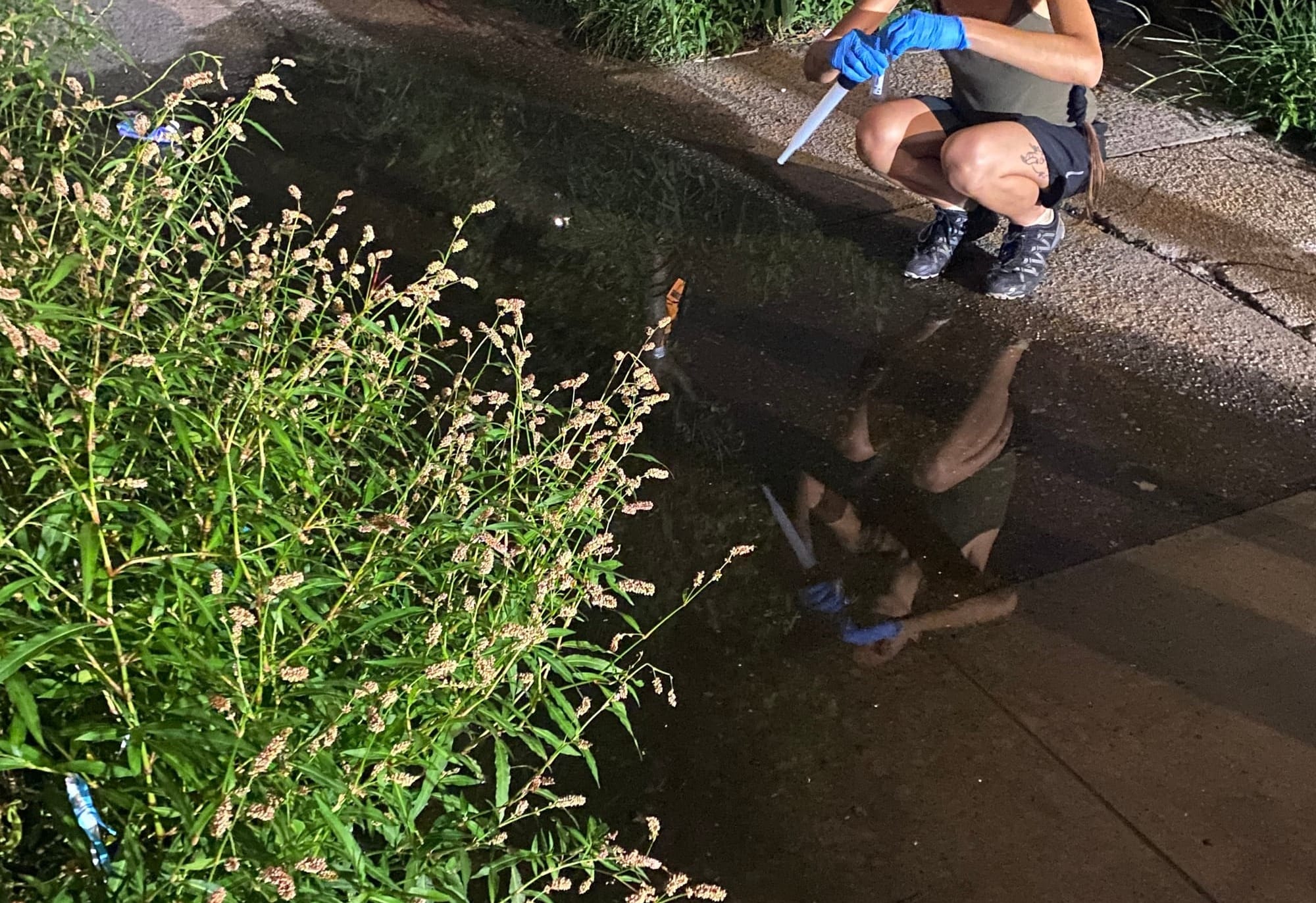
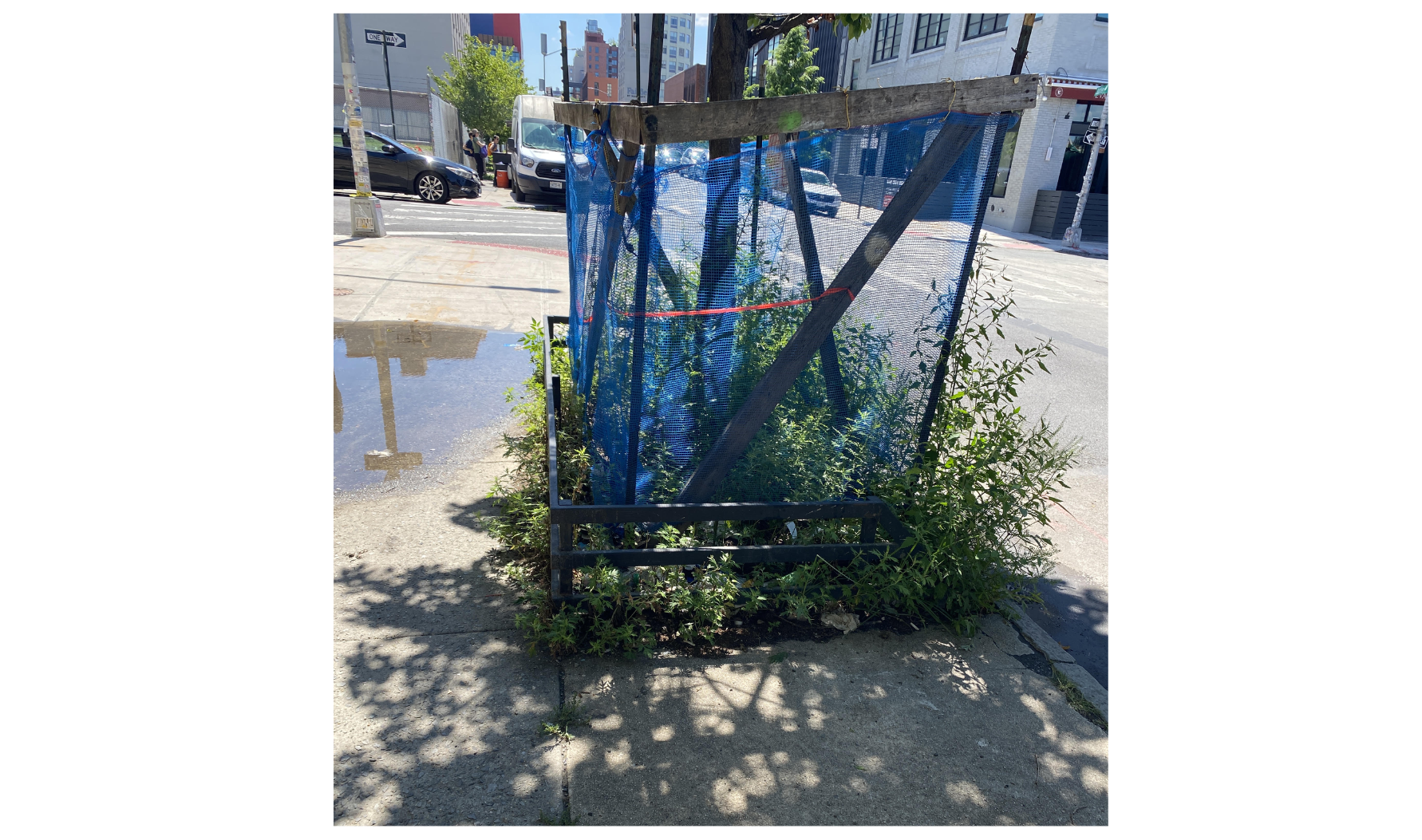
"I've been looking at these micro ecosystems, like street garden beds, and something I almost always see in them is mugwort, which is something I've been using a lot in this project," they said.
"I think the urban ecology of New York City is really special, in that we all live so close to each other, that we're affected by each other's choices, habits, trash, memories. Some people could say New York is more impersonal, but I actually think it's a pretty intimate space in that way. We're all living on top of each other."
Becca’s work deals largely with themes of life cycles, forgetting and remembering, and transitional and ephemeral ecosystems.
Working with amphibians
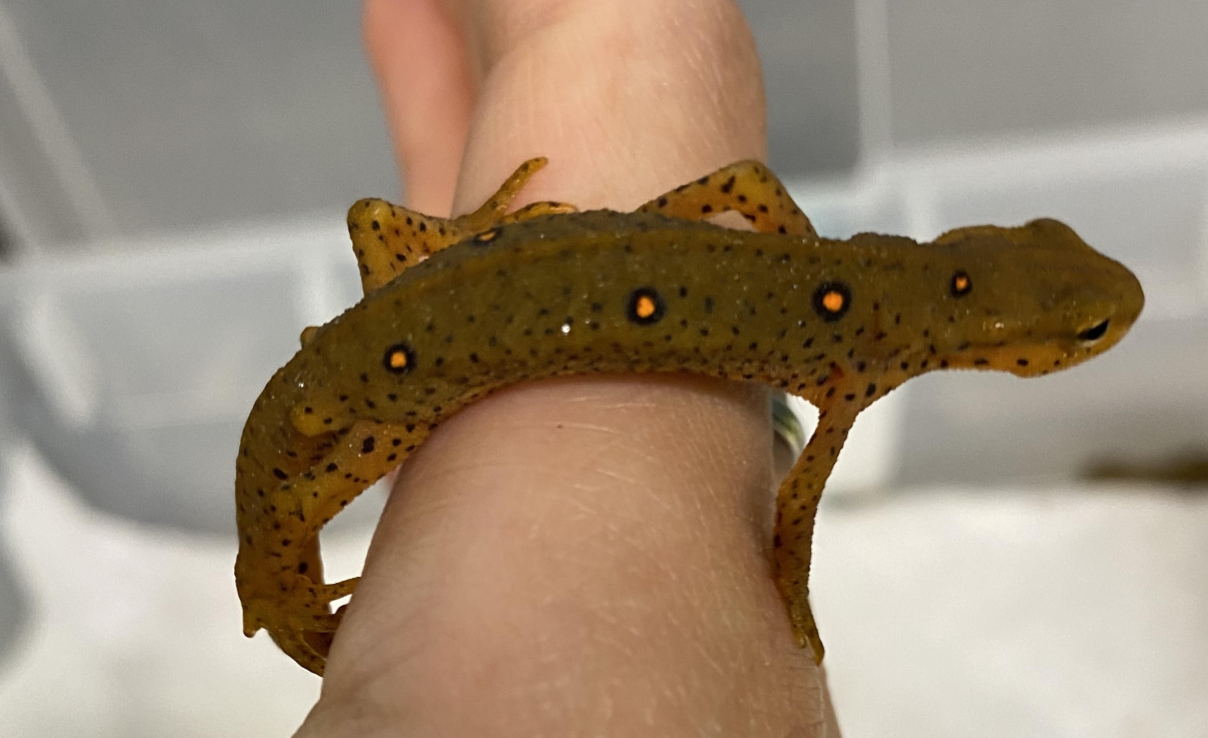
Before they worked with puddles, they worked with amphibians. Becca spent three years volunteering in the nursery of the Amphibian Foundation in Atlanta, working in over fifty enclosures, with some endangered species, like the Eastern Newt (adorable), from egg to metamorphosis.
"With that work, I had to be really careful for a species so porous and susceptible to contamination, disease, environmental stress," they said. "I was doing husbandry, simple tasks. At the same time, I was cleaning houses for work, and I always felt like cleaning and taking care of a space is the biggest thing you can do in your life. At some points I felt really low, and at other points I felt like, wait, this is it. This is the ultimate. I'm so happy to be doing this."
Becca brings this sense of intention and care into their artistic practice.
"The things I'm interested in follow this kind of life cycle of an object or artwork," they said. "I became really sensitive to the stages amphibians go through. At certain stages we had to create morph tanks so they can go onto either the terrestrial or aquatic side. I think about the ability to move back and forth between spaces, and bringing that into bioart."
An ecosystem that comes back
Becca's puddles are inseparable from questions of queerness, chronic illness, and disappearance. "A lot of people don't think about puddles as ecosystems in the first place," they said. "They feel like a nuisance, not like a thriving space, but someone is always thriving there. With ephemeral wetlands, vernal pools, things that go away and come back, those spaces aren't noticed as much because they're not around as much, and so they're more threatened by development if you don't think they're there in the first place."
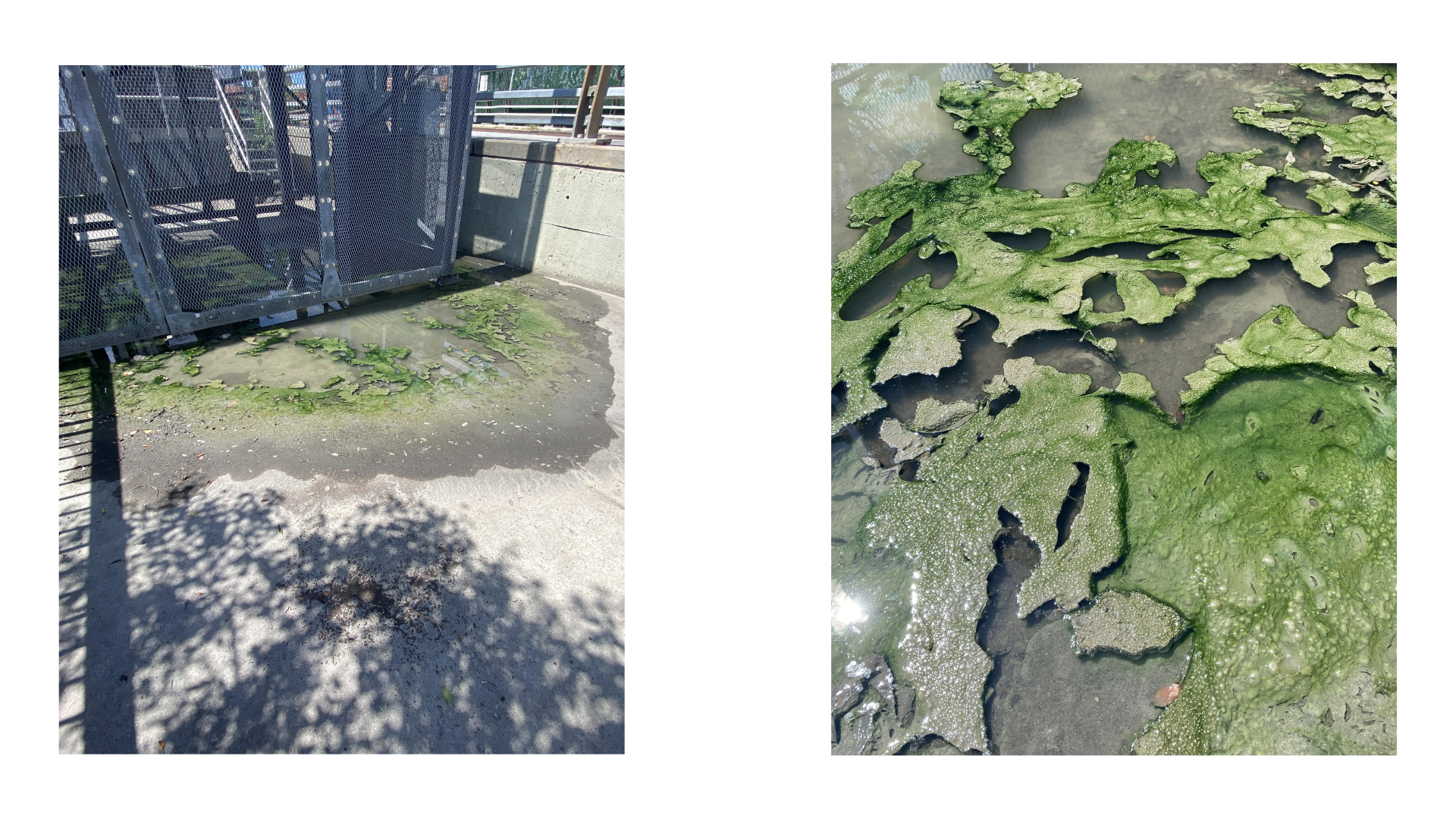
They've been reading An Immense World, which opens with the idea of umwelt — an organism's experience, shaped entirely by the senses its body has access to. "Queerness to me is an expansive ecosystem," they said, "this commitment to the struggle to understand each other more, or to realize you won't fully understand each other. It's a continual practice. Working with puddles and trying to represent them has been challenging, because what I'm really doing is explaining my relationship to the puddles. That's not the puddle itself. You have to first realize you don't know everything, because it's not your experience."
A lot of the organisms they've found go dormant when their puddle dries up, then return when it's rehydrated. "That feels so queer to me," they said. "I deal with chronic illness too, and when I say queer, I also mean queer, chronically ill, disabled."
Becca also highlights that a lot of amphibians are classic indicator species, absorbing what’s around them and being the first to highlight imbalances in ecosystems. In their bio, they mention seeing “queer sick folk as these same transient ecosystem illuminators, sharing the complexities of what it means to live in an interconnected world.”
"All of that is a queer identity to me."
Three puddles, three plants
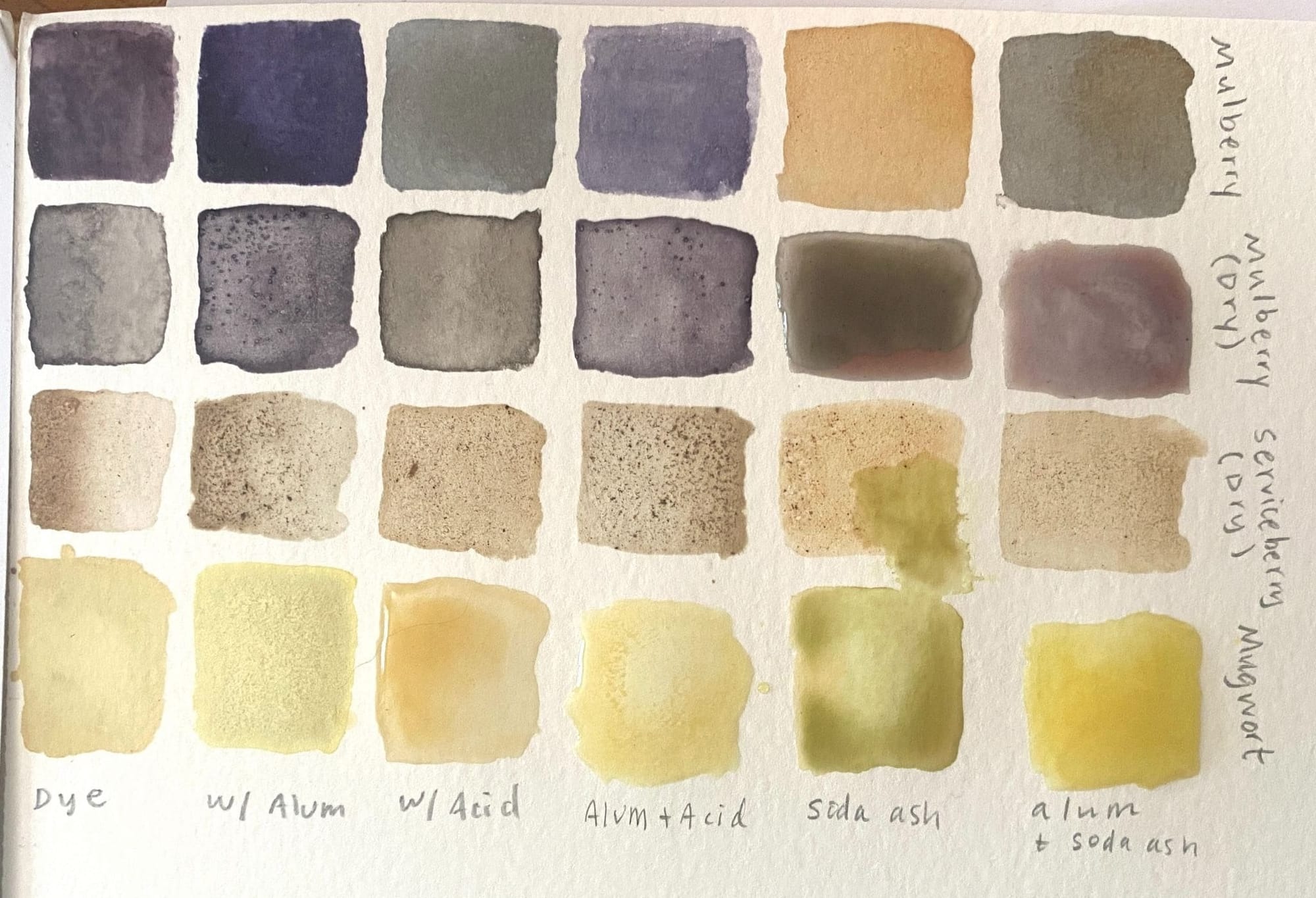
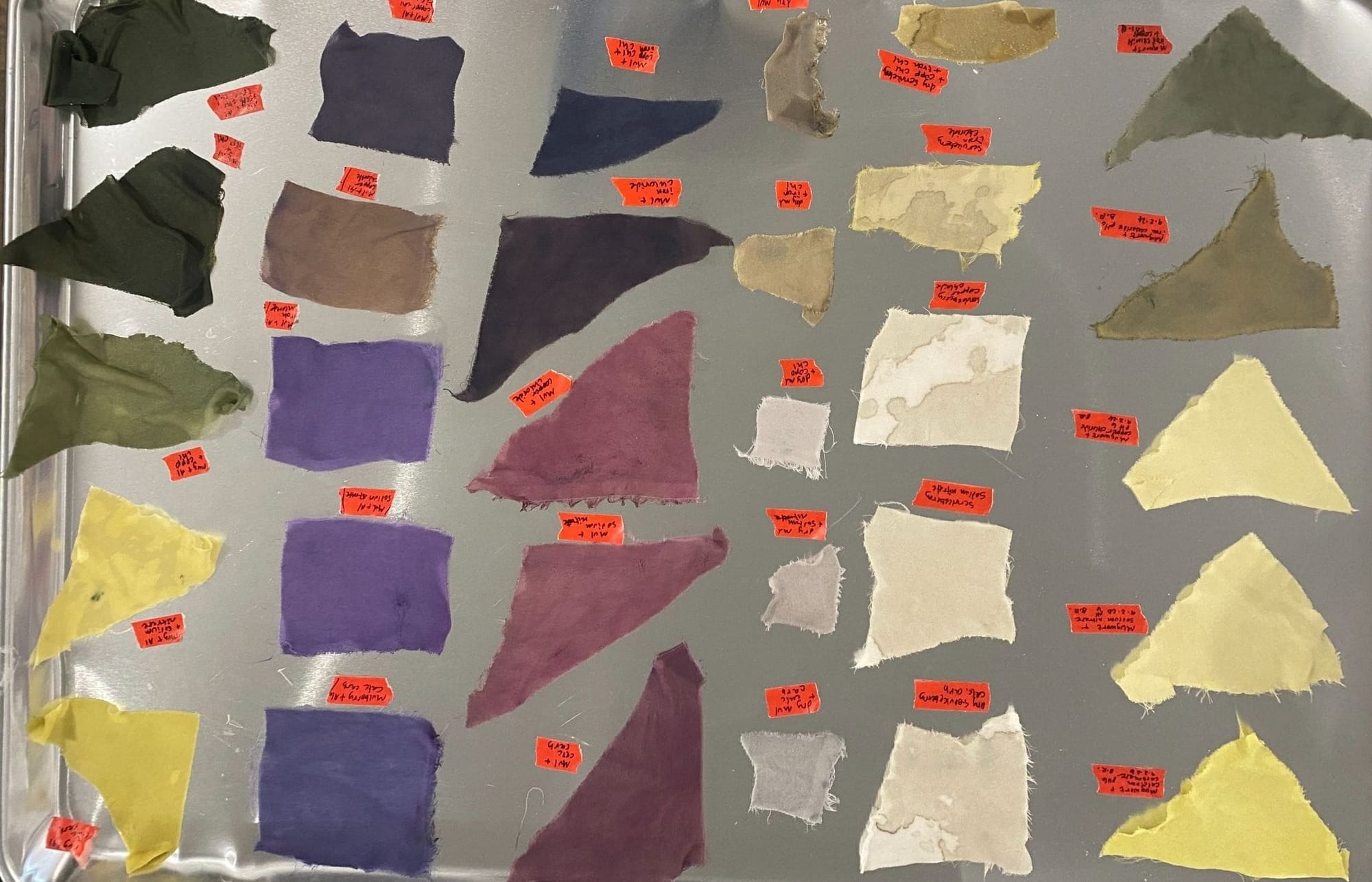
The piece itself surveys three distinct puddles around the Gowanus Canal through water quality testing and microscopy, using what they find to modify pigments from three plants: mugwort, mulberry, and serviceberry, each aligned with one of the puddles.
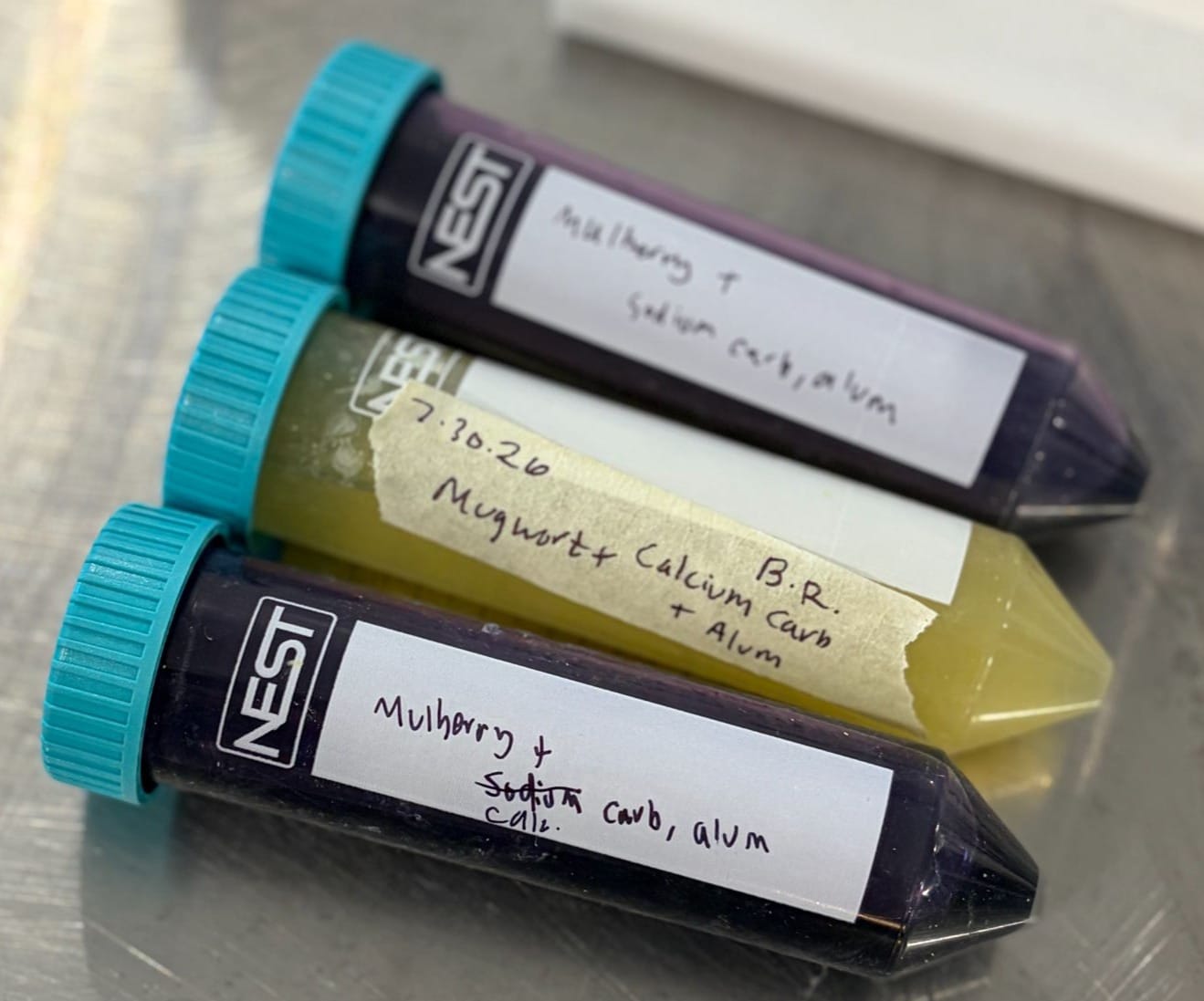
It hasn't been easy. "The mulberry tree I was working with either got cut down or covered by a construction wall, and the serviceberry tree dried up during the first heat wave," they said. "There's been a lot of challenges working with these things, but that's the idea. The installation will be different swatch tests of how the color can be modified, plus image transfers onto silk."
One puddle sits under a Department of Transportation bridge at the end of Third Street, with a serviceberry tree fruiting directly above it. "That tree would have its berries even fall into the puddle, and one day it smelled like it fermented because it was so hot out," they said. Another sits beside the Gowanus Canal CSO facility construction, alongside street garden beds "thriving but also filled with trash," where mugwort grows prolifically. "Mugwort has had a lot of spiritual and medicinal use historically," they said. "I have this Mexican-American herbal remedy book, and I was looking up estafiate, Mexican mugwort, and it's traditionally used if you have too much water in your body. I see it a lot in flooded areas."
Their original plan was to use the puddle water itself to process the pigments, but they pivoted. "I was using the microscope so much to look at what was inhabiting the puddles that I became really sad about that idea," they said. "It felt too extractive, seeing all the life in the puddles. So instead I used the water quality tests to make mimics of the puddle conditions, so I didn't have to kill the inhabitants. And, you could survey a puddle for eternity and it will always change."
A day in the lab
A day in the field starts with an hour or two surveying the three sites, collecting water samples and tracking size and weather. "It was meditative, but sometimes really exhausting too if it was hot," they said. Back at the lab, they prepare slides from the top, bottom, and inversion of each sample, studying them under two microscopes and, eventually, a fluorescence microscope too.
At home, they've been making kombucha pellicles with dye baths standing in for tea, testing whether the pellicle holds the pigment. "It worked for the mulberry. For the mugwort it kind of worked, but was harder without the caffeine element," they said. They've also been extracting chlorophyll from mugwort with ethanol and, once, with a Fireball mini they found empty by one of the puddles. "Just as a silly experiment," they said. "It changed color a little, more brown than amber, not green."
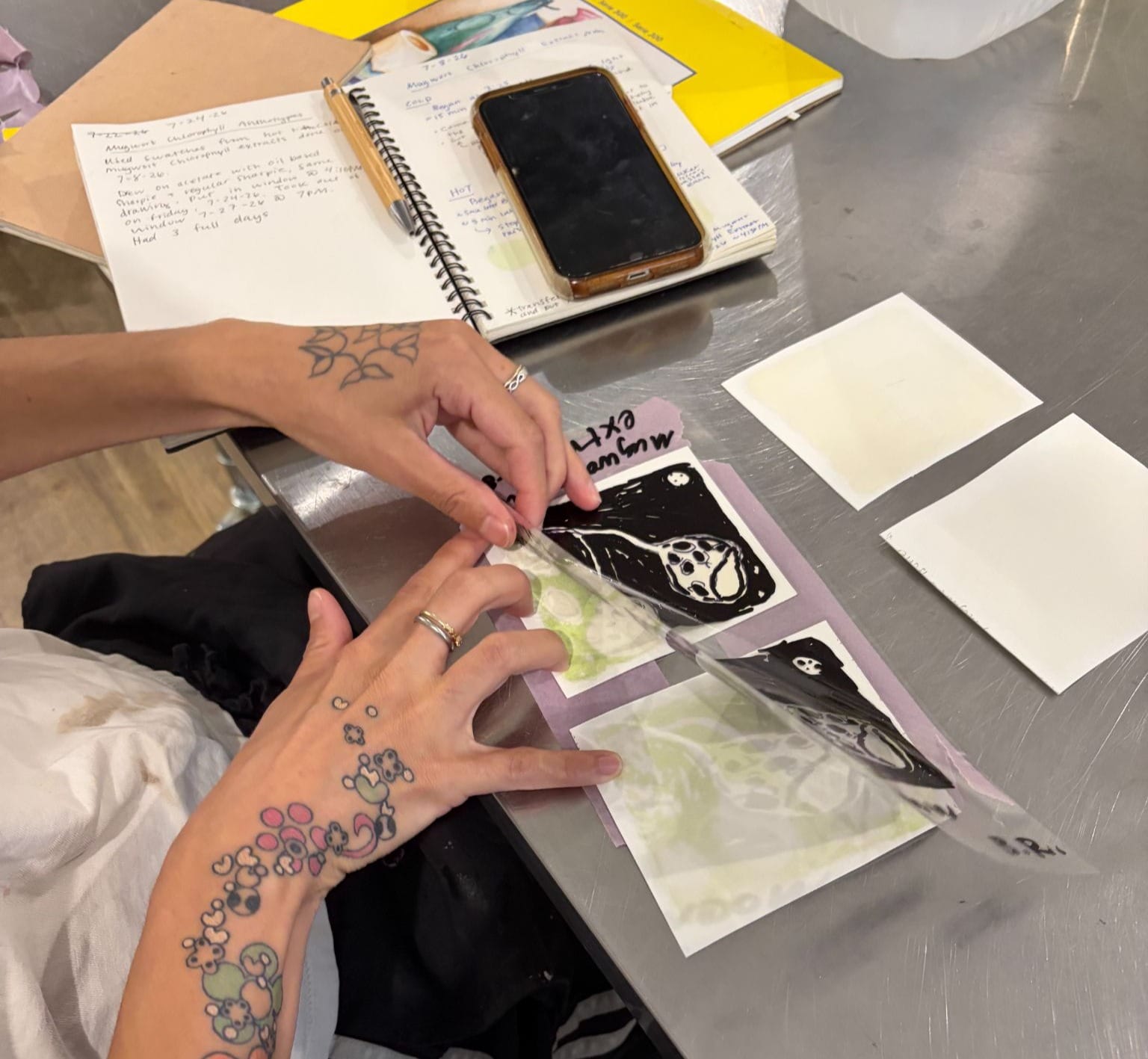
The last stretch of the project has been trying, and struggling, to archive things that are inherently ephemeral: watercolors, lake pigments, pastels made from plants that dried up or vanished mid-process. "I never really thought about molecular biology this much before Genspace," they said. "Learning about the carbon structure of mugwort, its monoterpenes, thinking about amino acid structures, literally how something builds and breaks apart — that's been really helpful in bio art and biomaterials. It's opened up a lot of what feels possible in the wet lab."
Also, Becca’s lab notebook is impeccable. "It comes back to being afraid to forget things, and knowing that I do, especially if I don't write them down," they said. "Knowing the specific amounts of things has been extremely relevant to a project where I'm afraid to take too much from a certain area."
Taking only what you need
And for the chlorophyll extraction from mugwort, they felt it mattered to take the plant material from the actual puddle site, since it was going toward lightfastness tests, something that would itself fade over time. "This project has been a grief-ridden project in some ways, about what we lose to development, but also what remains, or comes back," they said. "I wanted to document exactly how much I used, and how much it yields afterward, and how many things that yield can make so I'm not adding to this extraction-web disaster on a larger scale. Thinking about circularity over extraction matters."
What they hope people take away
"I'm curious how people relate to puddles, what memories they might have with them," Becca said. "I think puddles can also be a microcosm, a softer opening to talk about a larger problem a lot of us in New York deal with. Flooding is a hard and traumatic thing to talk about, especially in a space this populated. Even people in the same neighborhood have completely different experiences with it."
"I think opening up a grief space, but also a space to share what some of this floodwater is holding, and some of the life that's part of it, matters," they said. "On the micro scale, I'm seeing really beautiful things, and also parasitic eggs, scary stuff too. But again, someone is always thriving. It's a perspective thing."
Becca is collecting Puddle Memories, short, personal recollections of puddles from anyone willing to share one, which may become part of the installation at Source Material.
Becca Rodriguez is a multidisciplinary artist and musician who grew up with the beaches, wetlands, and forests of Florida and Georgia. They explore evolutionary biology and multispecies relationships through experimental research and process-oriented craft. Working across ceramic sculpture, biomaterials, field work, and sound, Rodriguez has shared installations as living ecosystems in both gallery and outdoor public spaces, oftentimes representing lifecycles and puddle habitats of amphibians.
Becca is a graduate of Genspace's Break into Biotech program and a member of the Biomaterials Studio's BioArtist Incubator. Their residency is generously sponsored by smoke and mold, a literary journal invested in the narrative possibilities that trans lives bring to our changing nature-culture.
Coming Up at Genspace



Community Events • Opportunities • Jobs
Community Events
• 9/11 - A Forbidden Fruit Fashion x Art x Fungi Pop Up, Fugue Gallery
• 9/15 - Poetry for Our Planet, American Museum of Natural History
• 9/16 - WIB-Metro New York: The Next Generation of Women's Health Innovation
• 9/19-21 - Coney Island Makerfaire
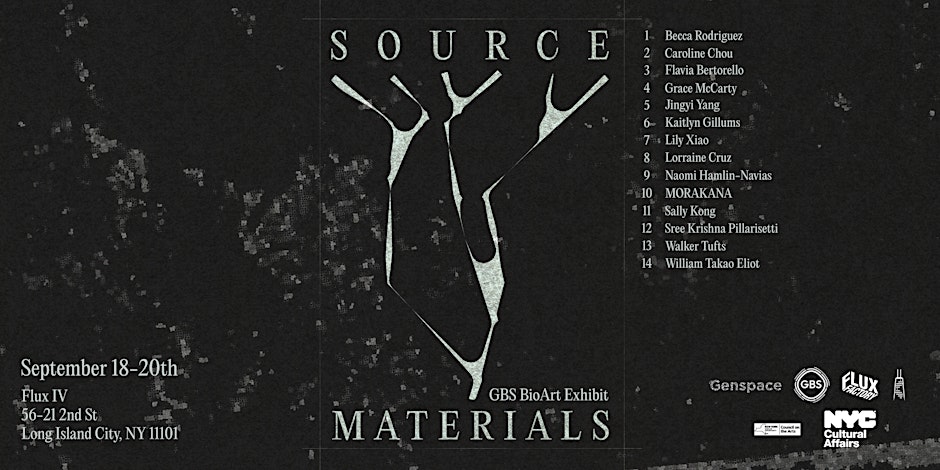
• 9/18-/20 - GBS BioArt Exhibit: Source Materials
• 9/22 - Pioneer Works Science and Society: The Ocean Frontier
• 9/23 Gotham Foundry Symposium: Regenerative Materials Across Industries
• 9/24 - The New School Climate Desk Live: AI, Energy, and Our Fight for Democracy and a Healthy, Affordable Future
• Science After Dark: Ask a Scientist, Hudson River Park
• 9/25 - Finding your Math Roots, Simons Foundation
Opportunities
• Made to Matter: Biofabrication in Fashion, Genspace
• Ayatana's Biophilium Mycophilia: Mushroom School for Artists
• Homeworld Academy: Fundamentals in Biotech Translation and Climate Impact
• Quantitative Research Assistant, Glisten
• Cientifico Latino Academy Call for Mentors
• Rearc Institute Center for Planetary Pedagogies: 2026 Edition
• Biodesign Challenge 2027
• AAPS Strategic Communication for Participatory Science Practitioners Course
Jobs
• Multiple Positions, Grow NYC
• Office Coordinator | Office of University Life and Community Engagement, The Rockefeller University
• Forest Resoration Site Coordinator, Natural Areas Conservancy
• Multiple Positions, Raising Health Partners
• Programs Associate, Arts in Education Roundtable
• Carbon Farm Planner Coordinator, NY Textile Lab
• Senior Bioinformatics Programmer, NYU Grossman
• Senior Advisor and Director, Workforce Development Board, Office of the Mayor
• Multiple Positions, Bridge to Enter Advanced Mathematics
• Multiple Positions, ExpandED
• Part Time Museum Educator, New York Foundation for the Arts
• Multiple Positions, Streetlab