
Light, Logic, and Living Circuits
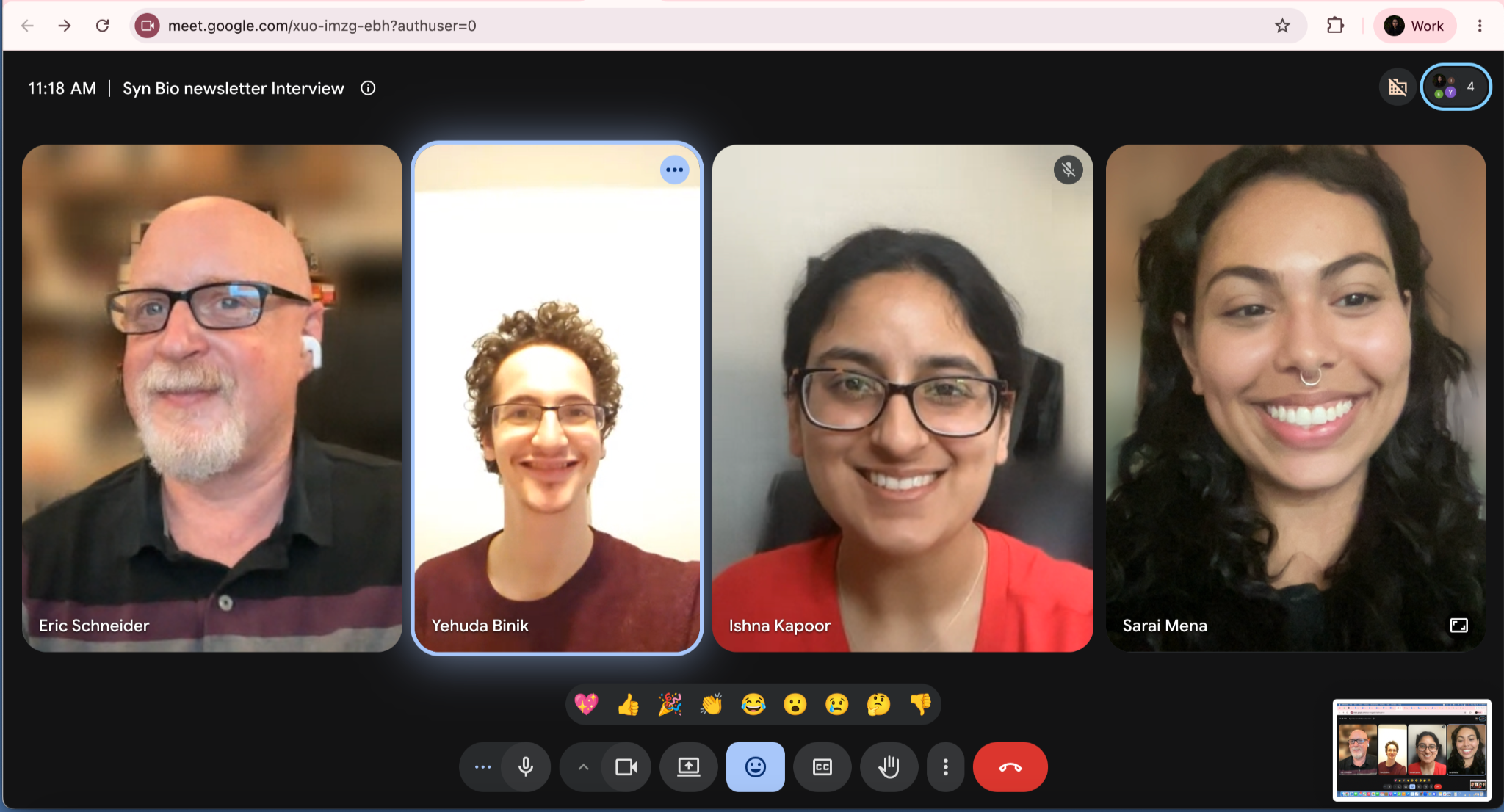
30 minutes with Ishna Kapoor, Yehuda Binik, and Eric Schneider, co-leads of the SynBio Software community project.
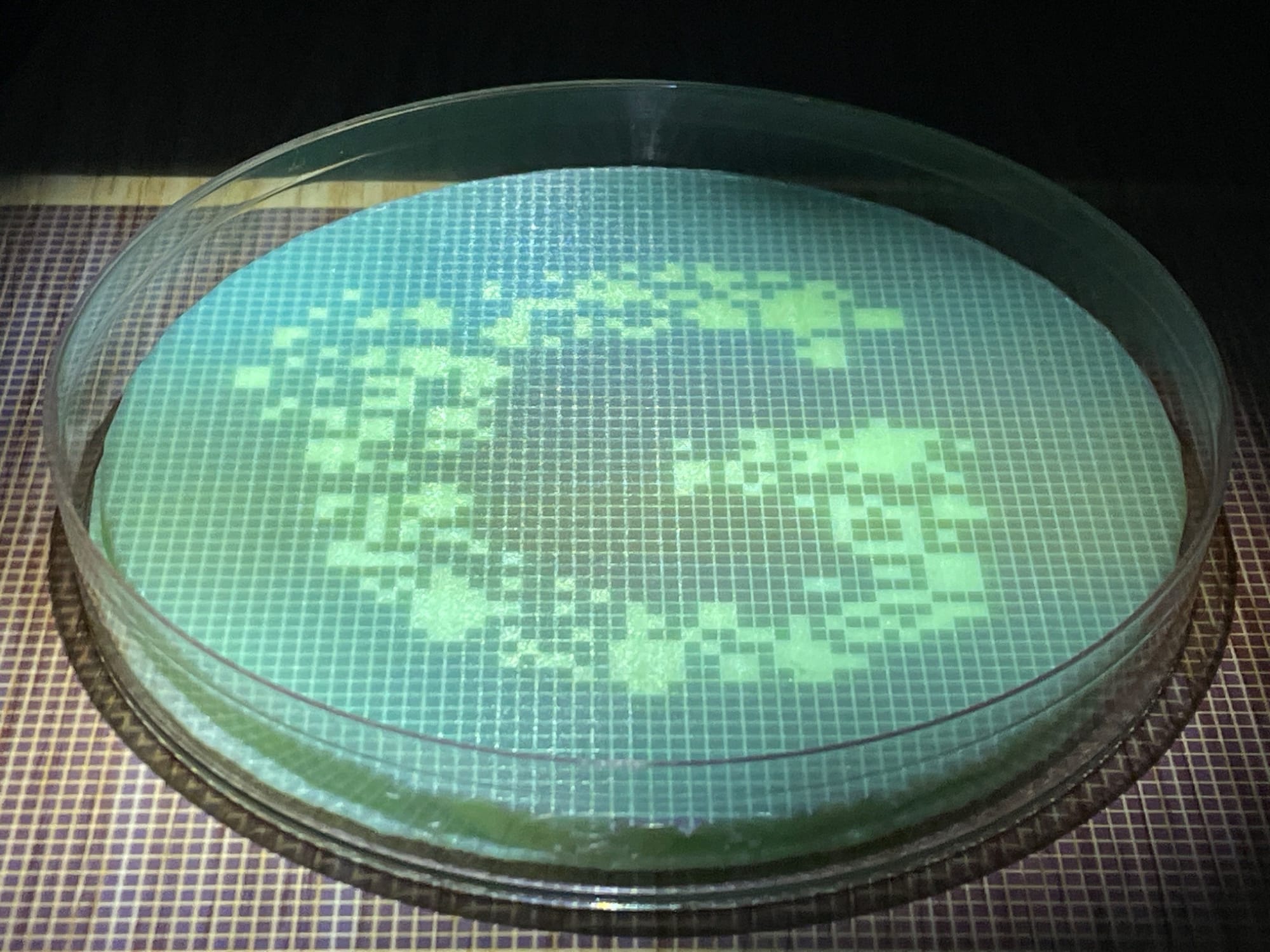
Our SynBio Community Project is building an optogenetics projector and incubator: a lab bench device designed for light-responsive bacterial experiments. Bacterial photography like this is useful in synthetic biology to visualize the results of experiments. The group meets every Sunday and has set up a hybrid lab for remote members.
Origin of the Project
The current project came out of previous work at Genspace as well as Eric's work during How to Grow Almost Anything, from MIT's Media Lab. Eric came to biotech from film and industrial design, by way of Karen Ingram, a beloved member of the Genspace community who runs a bioart lab at MakerSpace Charlotte, where Eric is also a member. His final project at HTGAA was an optogenetics build: a vintage darkroom enlarger converted into a digital projector, capable of exposing light and doing spatial imaging in bacterial cultures.
Yehuda, who has a background in Computer Science and Mathematical Biology, was Eric’s mentor during the project. He helped Eric spin the semester-long project into a Genspace community project, reviving the discontinued optogenetics project that ran up until 2020. Ishna, who has a Master’s in computational biology, is the third project co-lead. She has been co-leading the Synthetic Biology project at Genspace for close to a year now.
How It Works
The biology of the machine is focused on proteins that interact with light. At a high level, light is shined on light responsive bacteria. The light triggers a reaction inside the cell, like flipping a switch to start a pre-built function. In this case, the function inside the cell is simply to turn red when exposed to blue light. However, the exact genetic function you could run is very diverse, like a computer that could run many different applications.
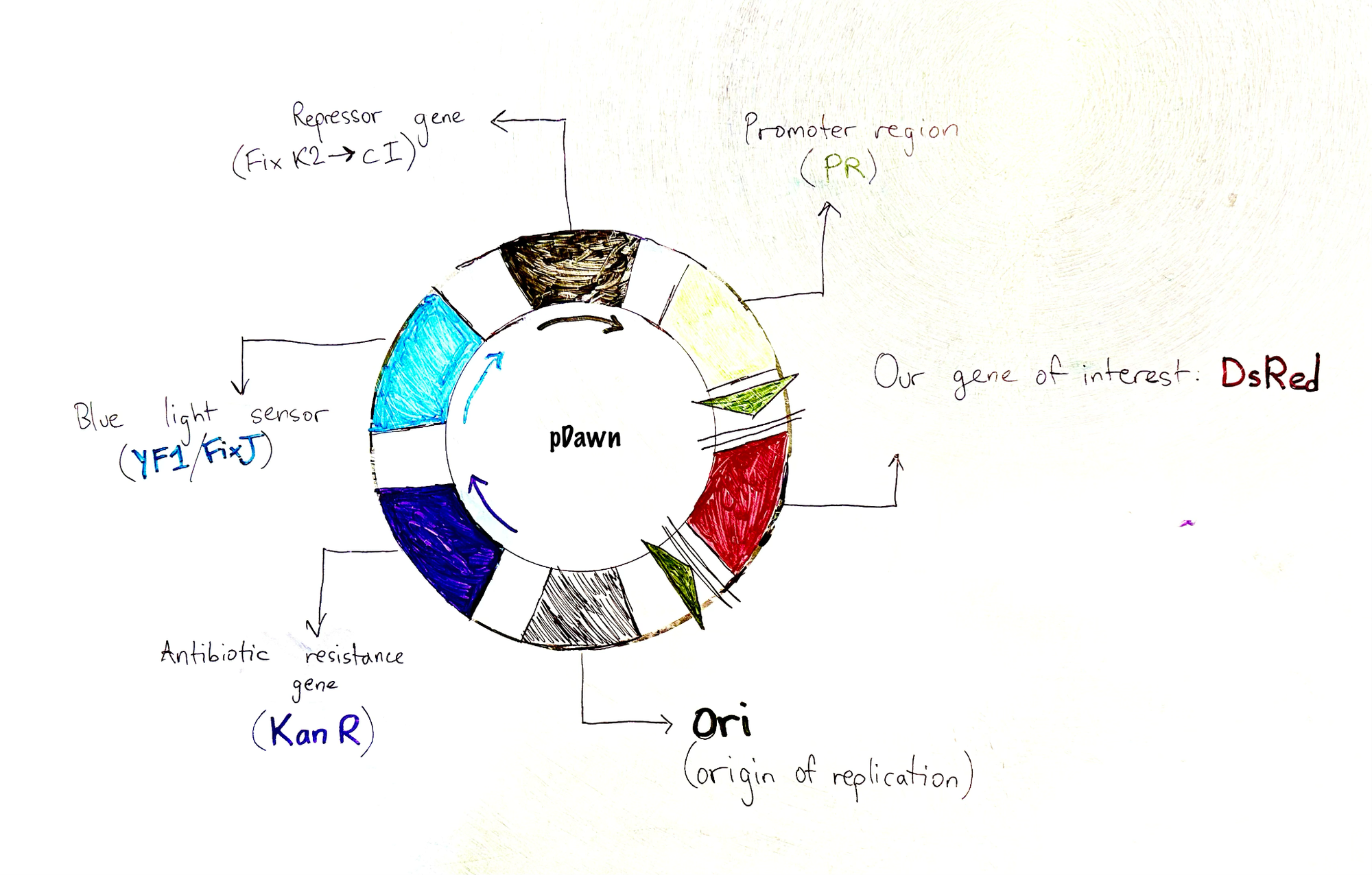
The group’s first experiment revolves around the plasmid pDawn. "It has a gene of interest, an antibiotic resistance gene, and [an inducer, which turns the gene of interest on]. Many times that's a chemical, like arabinose or IPTG. But here, it's blue light. 470 nanometers," Ishna explained.
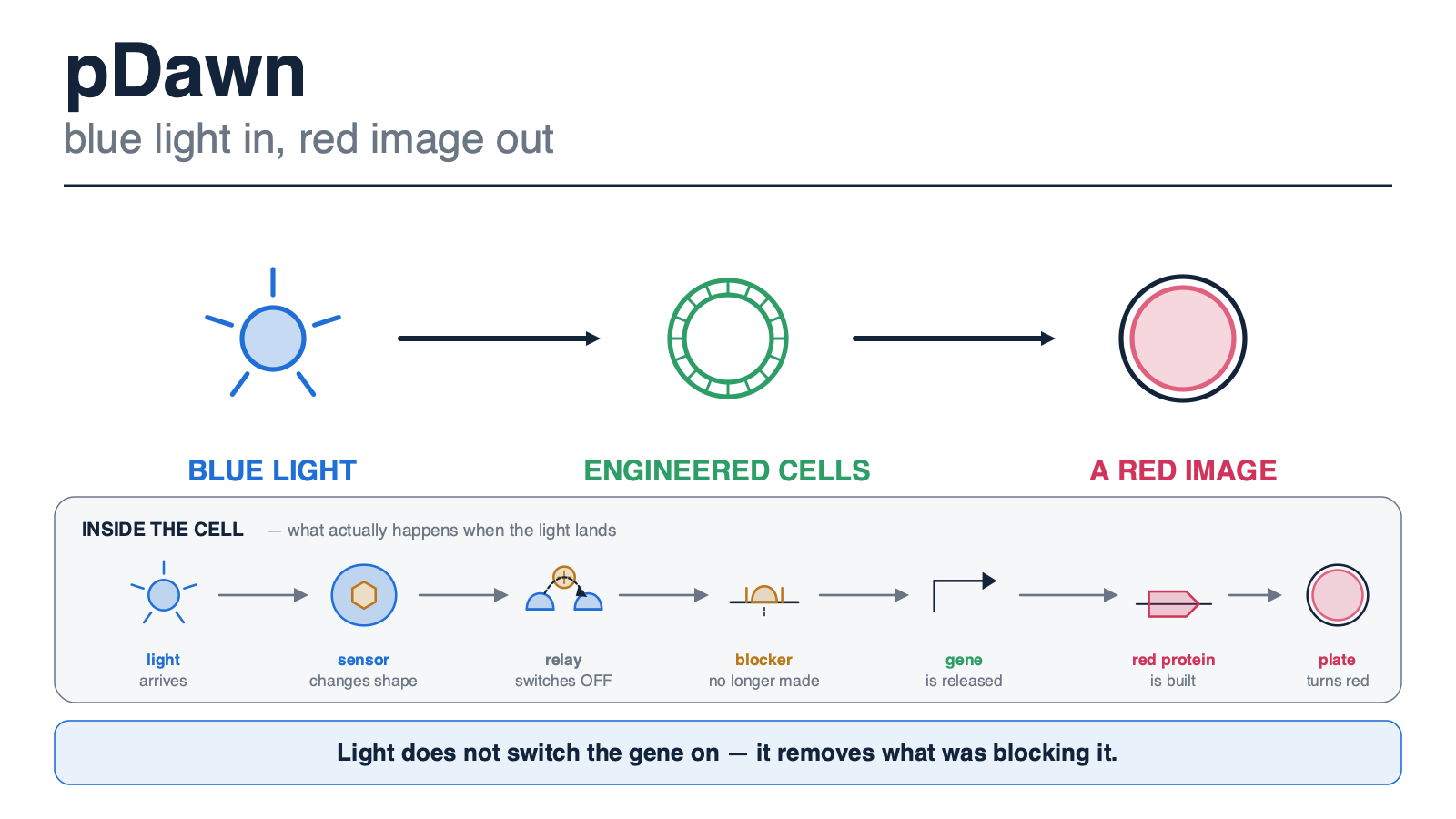
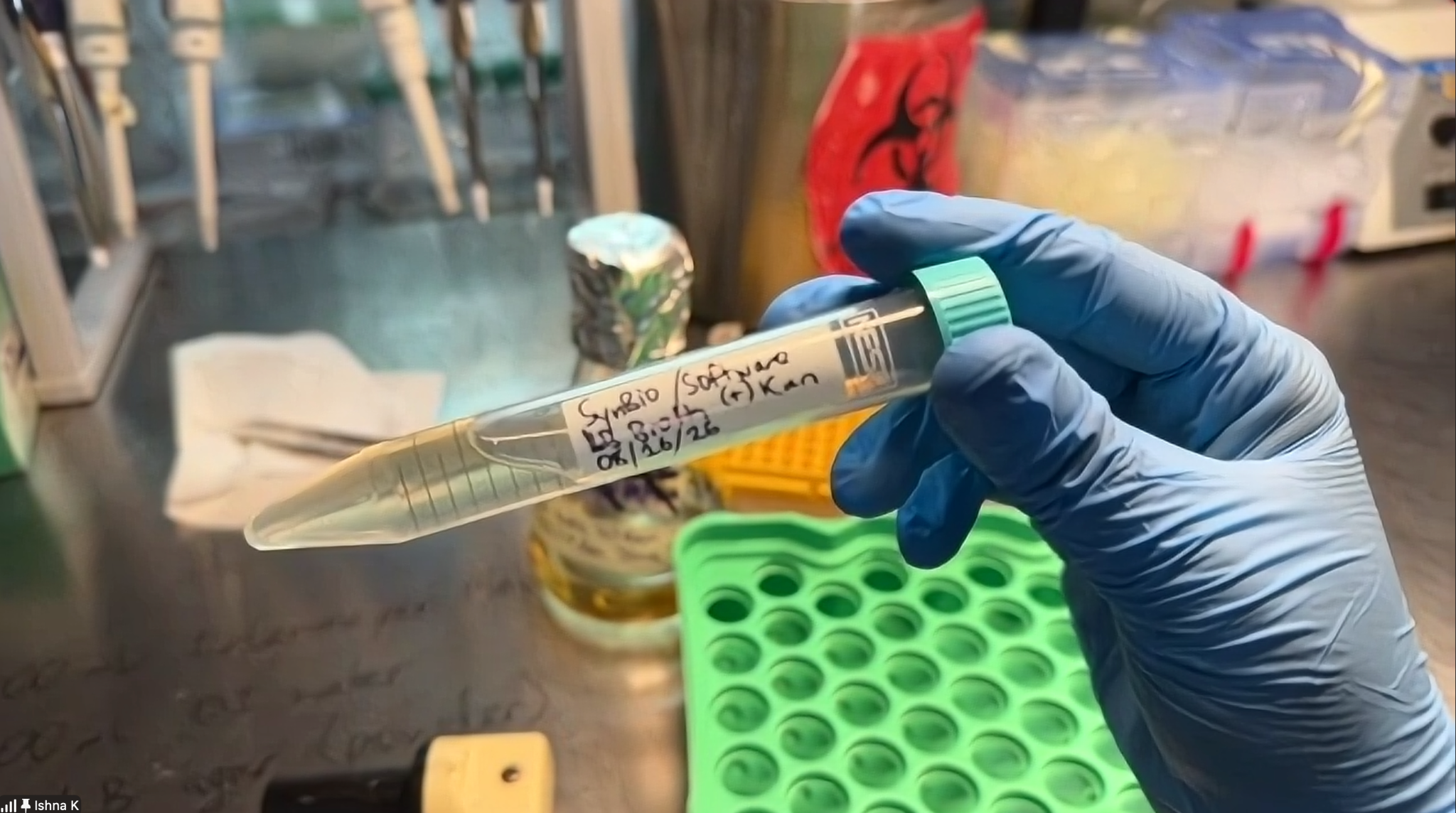
The team transforms and propagates the bacteria, then exposes it to blue light to confirm expression after about five hours, checking whether their technique worked and the culture stayed sterile.
The machine itself starts with a LED. "It's very, very bright," Eric said. "We're trying to block the amount of light that reaches the plate. We don't want to overexpose it. The light passes through converging lenses and an image mask, and that controls exactly where the projected image lands.” Eventually, he'd love for every community member to contribute an image to express in bacteria. "We're all creating an original piece of art, just like you would with a camera."
Underneath the optics sits the incubator, which Eric says is the most complex part of the build.
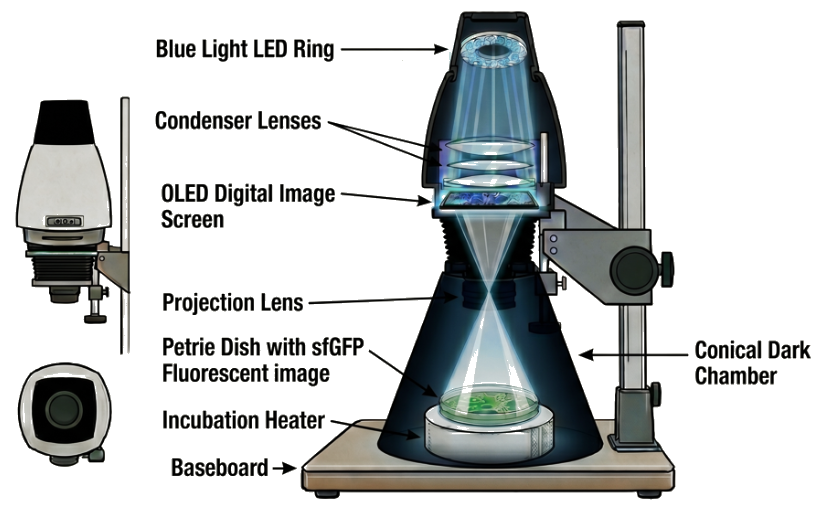
"I'm really big on safety," he said. He built a physical on-off switch, a 55°C thermal cutoff, and a hard 70°C ceiling into the heat-tolerant plastic enclosure. A wavelength sensor and temperature sensor, wired through a Raspberry Pi, keep everything in tolerance.
"This is a living medium, which means external conditions affect its expression," Ishna said. "That's where wet lab biology meets hardware and software."
A Hybrid Lab, in Real Time
The team is running something like a live, remote wet lab, with a phone propped on a gyroscopic camera mount over the bench. "We're experimenting with a real-time virtual laboratory," Eric said. "I feel like I'm looking through Ishna's eyes at the bench, learning by watching incredible video right up close."
"Last week I couldn't get into the lab, but it was fine, because I was still able to contribute. I didn't have hands, but I had eyes," Yehuda added.
What it takes just to show up is not lost on any of them. "It takes about an hour for me to get to Sunset Park," Ishna said. "Jason comes all the way from Connecticut to work on this project and Yehuda from New Jersey, which adds to how meaningful it is for the people who come here. I just love that." Eric even ventured from North Carolina with Kyle Hoover from MakerSpace Charlotte, over 600 miles away to present their progress at our EurekaFest event.
Genetic Circuitry
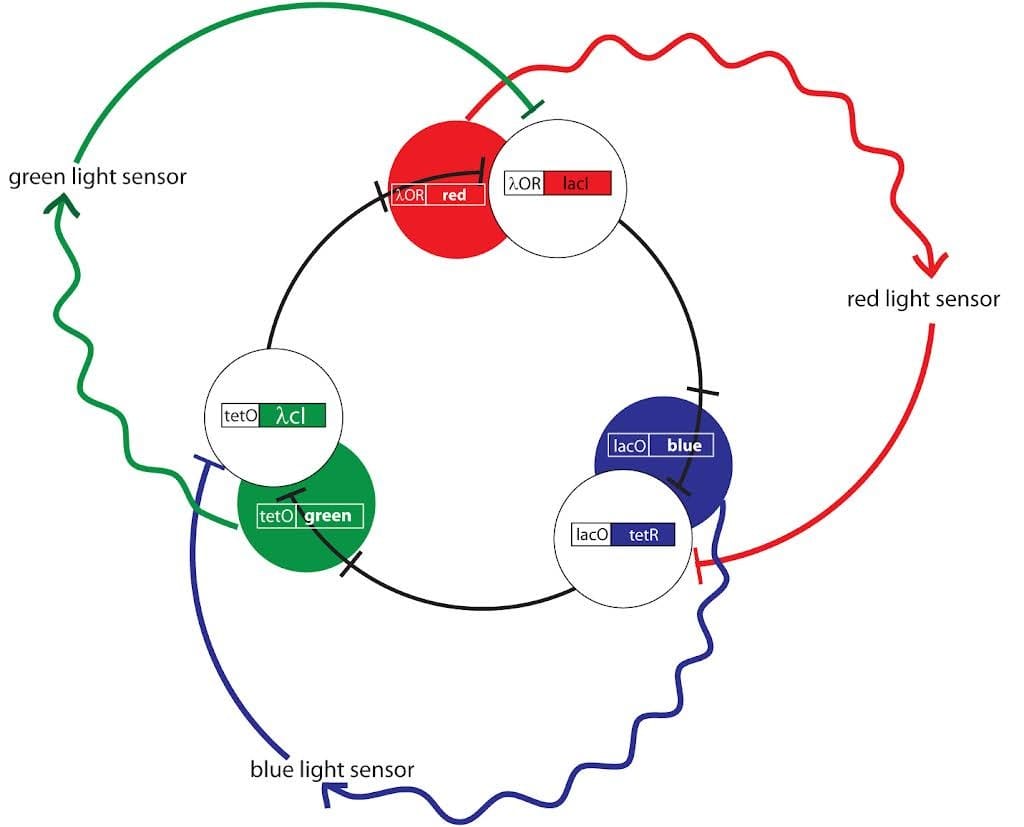
Part of what makes the machine interesting is what it could eventually measure: genetic circuits, the biological analog to the logic gates that run every computer. A circuit takes in signals, processes them, and produces an output — all of it happening inside a cell. The machine uses light as both input and output, which means it can watch that computation happen.
"You take those gates and connect them up, and you get everything in the modern world," Yehuda said. "The desire of people for years was to turn that into biology. It's really difficult. At the moment, biologically, you're able to get about 15 logic gates" — compared to the billions on the phone in your pocket.
One circuit the team is looking at is edge detection. Each cell checks whether it is lit and whether its neighbors are lit, and responds only if the answer is dark-but-next-to-light. Project a solid shape onto the plate and it comes back as an outline. "You'd want to see how that works over time and over space," Yehuda said, "because it isn't really interesting unless you have it over a space."
And what's it for?
Ask the team what experiments the machine will run, and they’re excited to share examples that could be run on the machine. They're first turning to Bacterial Photography, using light to embed photos into bacteria for artistic purposes. Eric is interested in creating a traveling exhibit of bacterial photos created by Genspace members.
And using the light could replace a chemical inducer. "Standard induction uses a chemical, arabinose, IPTG, and once you've added it, you can't take it back without changing the media. Light is reversible and addressable. You can switch expression on for ten minutes and off for an hour, or turn it on in one half of a dish and not the other, in the same culture under the same conditions. That's a controlled experiment you can't run with a chemical inducer" said Yehuda.
"We're excited for people to learn about this machine,” Ishna added, “so they can give thoughts about what interesting experiments we may not have even thought about."
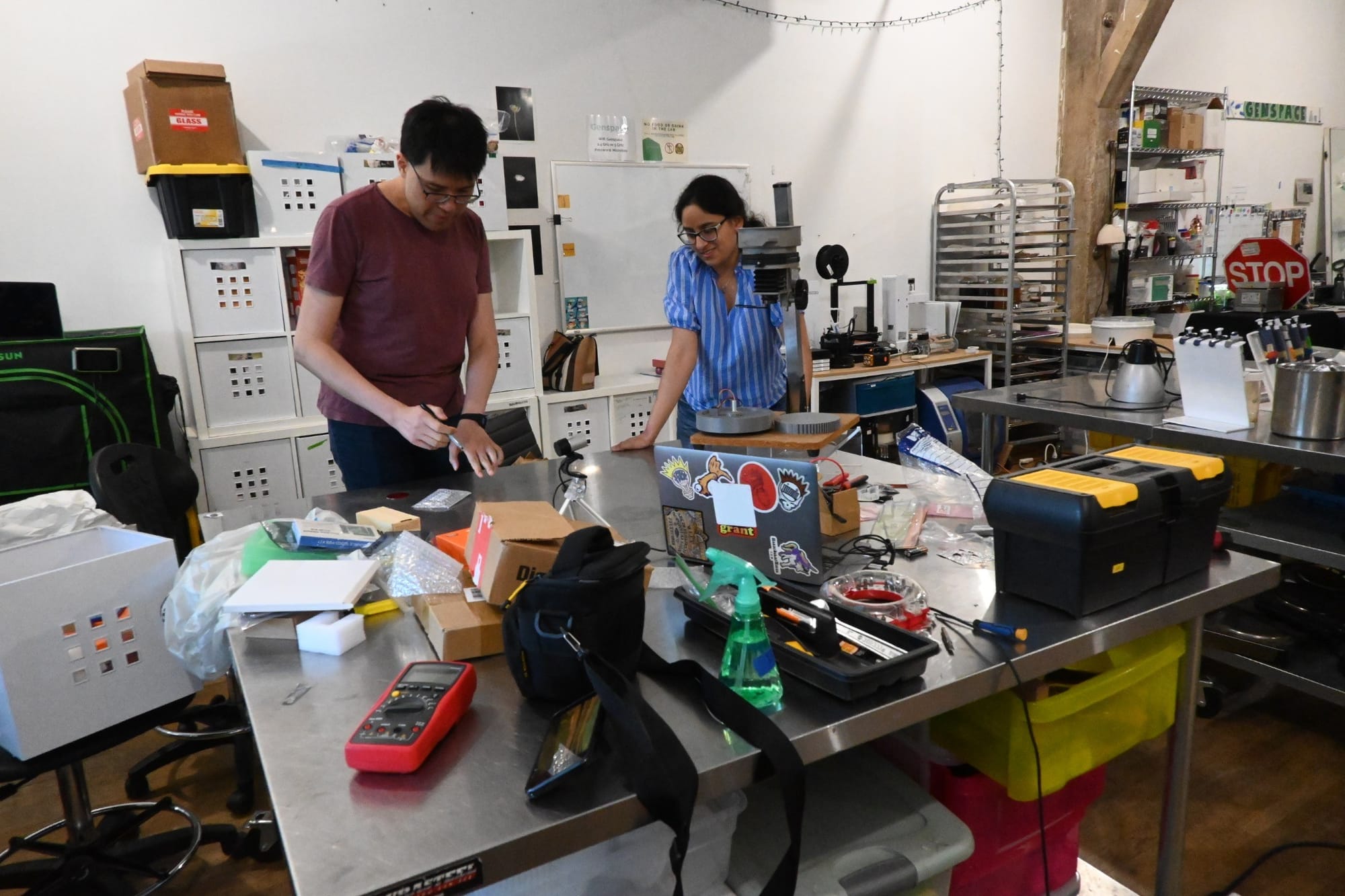
We asked the leads if they see it fitting into a lineage of open lab equipment, alongside projects like OpenFuge and OpenPCR. "This is the opportunity we have to create the next-level open source version of an optogenetics platform. If it's truly open source, you've made it accessible, and opened up innovation from others." Everything is documented and posted to GitHub. "The success of this project for me is: Can you build it? I know I can, because the first prototype was built in my living room, to prove some important concepts. Jason [a high school member] pulled the code repository apart, and I've asked for feedback, because I want to be a good mentor and help members succeed" said Eric.
Yehuda added, “Optogenetics is a very interdisciplinary field. It involves of course biology and optics, but it also involves electronics, software engineering, hardware design, 3D design and printing, not to mention art.” That is why the group is looking for Genspace members of all backgrounds to contribute to the project.
What's Next
The team is hoping to build a bridge between Genspace and MakerSpace Charlotte, where Eric is also part of the community. "How can a traditional makerspace collaborate with a Genspace?" Eric said. "In the spirit of learning together, I think that's where the greatest innovation happens."
Want to get involved? The SynBio Software / Optogenetics community project meets Sundays from 2 to 5. Every week, they focus on a different aspect of the project, whether it be electrical, optical, biological, or mechanical. Reach the team at synbio@genspace.org (or, if you’re a member, ping them on the Genspace Membership Slack).
Genspace gratefully acknowledges the Alfred P. Sloan Foundation for its support of our membership programming and the SynBio Community Project under grant #G-2025-79222.
Applications Now Open
Made to Matter: Biofabrication in Fashion
October 18th & 19th, 2026
Through an NYFIC-funded grant, Genspace is excited to announce Made to Matter: Biofabrication in Fashion, a hands-on workshop in alginate bioyarn experimentation and characterization presented in partnership with Columbia Engineering and Gotham Foundry.
This free to attend workshop is open to residents of NYS interested in the intersection of fashion and biomaterial fabrication, with no background in science or fashion necessary to apply.
Apply to AttendComing Up at Genspace



Community Events • Opportunities • Jobs
Community Events
• 9/15 - Poetry for Our Planet, American Museum of Natural History
• 9/16 - WIB-Metro New York: The Next Generation of Women's Health Innovation
• 9/19-21 Coney Island Makerfaire
• 9/23 Gotham Foundry Symposium: Regenerative Materials Across Industries
• 9/24 - The New School Climate Desk Live: AI, Energy, and Our Fight for Democracy and a Healthy, Affordable Future
• Science After Dark: Ask a Scientist, Hudson River Park
• 9/25 - Finding your Math Roots, Simons Foundation
Opportunities
• Break Into Biotech Cohort 8 Application
• Science Illustration Intern, Xerces Society
• Quantitative Research Assistant, Glisten
• Herban Cura: NYC Fall Intro to Herbalism Immersion
• Cientifico Latino Academy Call for Mentors
• Rearc Institute Center for Planetary Pedagogies: 2026 Edition
• Biodesign Challenge 2027
• National Geographic and the Nature Conservancy Community Conservation, Data Visualization, and Mapping Externship
• Plexus Projects Studio Residency
Jobs
• Director of Science Education, Genspace
• Multiple Positions, Grow NYC
• Office Coordinator | Office of University Life and Community Engagement, The Rockefeller University
• Forest Resoration Site Coordinator, Natural Areas Conservancy
• Multiple Positions, Raising Health Partners
• Programs Associate, Arts in Education Roundtable
• Carbon Farm Planner Coordinator, NY Textile Lab
• Senior Bioinformatics Programmer, NYU Grossman
• Senior Advisor and Director, Workforce Development Board, Office of the Mayor
• Multiple Positions, Bridge to Enter Advanced Mathematics
• Multiple Positions, ExpandED
• Part Time Museum Educator, New York Foundation for the Arts
• Multiple Positions, Streetlab