Community Research as Muse
Sally Kong has led or co-led multiple community projects at Genspace: Engineered Matter Labs, How to Grow Almost Anything, Microbial Reef, and now Phyconauts.
Across all of them, community research continues to be a muse for her art. Last year it was Sea Cake, shown at the Genspace Biomaterial Studio exhibit, "Creation and Destruction." This year, her piece Sea Lace is a phylogenetic tree of local marine viruses, crocheted by hand and mineralized like coral.
We caught up with her recently to talk about some of her past works and what she's making for this year's GBS exhibit.
Phylogeny is the common thread
Out of all the community research projects she has worked on, Sally finds it impossible to name just one favorite.
"Microbial Reef has a special place in my heart. It was the first community project I ideated, secured funding for, and carried through from inception to execution. We ultimately published a paper with fellow Genspace members and collaborators [including from the Billion Oyster Project and the Weissman Lab at Stony Brook University].
It was all rooted in one simple question: what's in our waters? And as a result I got to learn about environmental DNA extraction, shotgun sequencing, metagenome assembly, and just how much of the environmental microbiome is understudied."
She channeled all of this excitement into Sea Cake. "That was also a phylogeny, but I specifically focused on the microbes from our waters that are not formally described in the form of a seaweed placenta.”
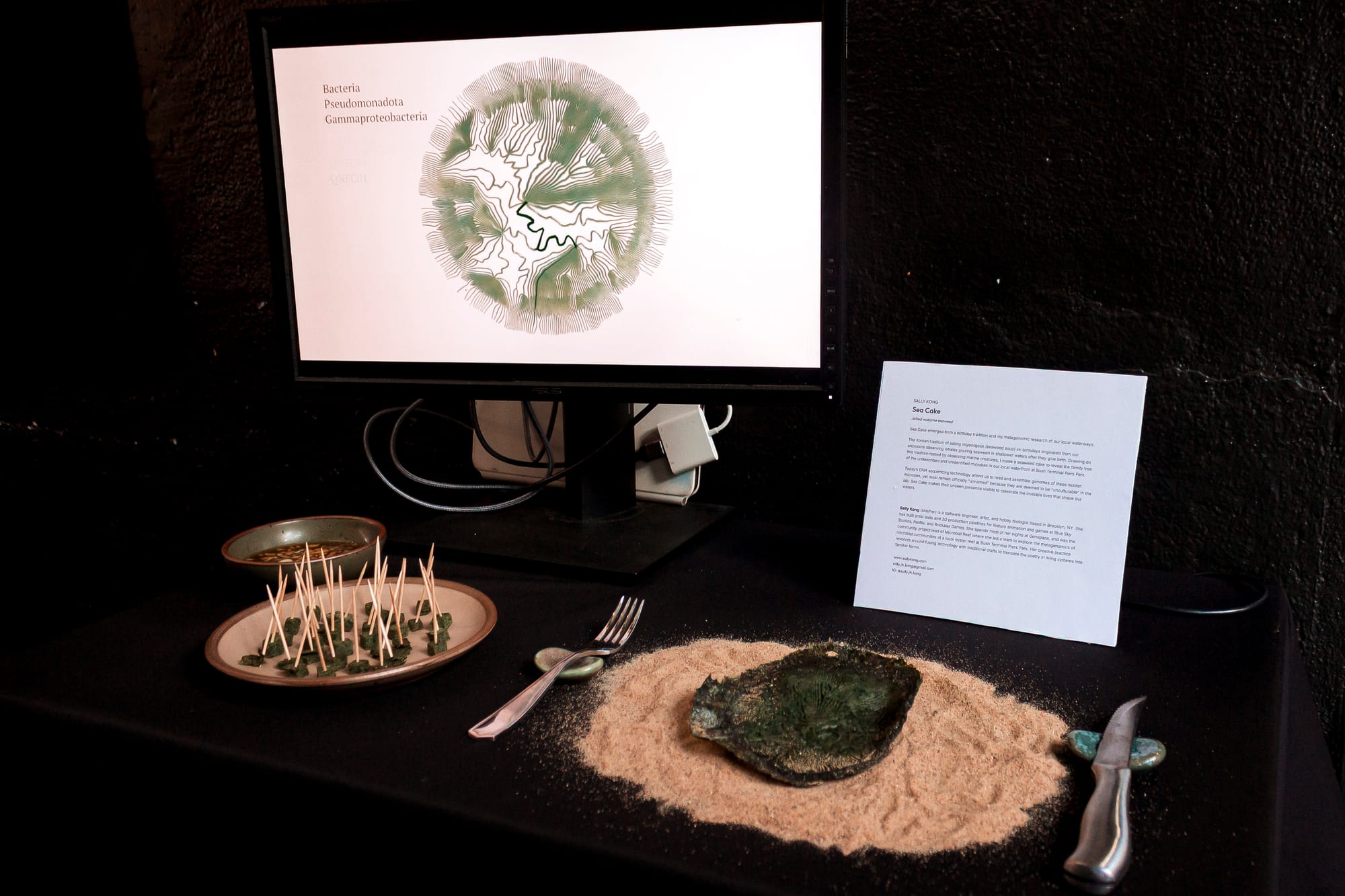
“The Korean tradition of eating miyeokgook (seaweed soup) on birthdays originated from our ancestors observing whales grazing seaweed in shallower waters after they give birth. Drawing on this tradition rooted by observing marine creatures, I decided on the form of a seaweed cake to reveal the family tree of the undescribed and unidentified microbes in our local waterfront.”
One of her other favorite pieces is Mitos, a woven tapestry.
"That came out of Biohacker Bootcamp and learning about molecular biology, and that was all so poetic and beautiful. I was awestruck by the knowledge that all of our mitochondria comes from our mothers, and how this makes mtDNA a vital tool in studying matrilineal ancestry and human migration. I was also fascinated by how we study mutations in unassuming, possibly non-functional regions of our genetic code to understand our ancestry."
"And the etymology of mitochondria led me to weaving. "Mitos" means thread, and weaving is a technique almost as old as my haplogroup M8's mutation. It was also just so much fun. Having a woven piece about my matrilineal lineage gave me opportunities to talk about molecular biology to artists (ex. Oxbow School of Arts), and weaving to scientists (ex. New England Biolabs)."
"Maybe they're all under one umbrella. They're all inspired by molecular biology and phylogeny. And I like that we have the tools to understand things at scales that are hard to grasp. I am just one small person fleeting through this vast space and time, but I have the technology to examine across these immense scales from reading DNA sequences at the molecular level and at the same time getting a glimpse of evolutionary histories spanning thousands of years and that's really cool."
"Those are some of the things that are common in Microbial Reef, Mitos, Sea Cake, and the next project I'm doing for the [GBS] exhibit."
Her latest project came from a side quest
"This is pretty fresh. I was actually doing the work last night."
"I snuck in a little side quest while we were sequencing for Microbial Reef. For that, we collected water samples, run them through a vacuum filtration tower, keep the filter membrane and extract DNA from it. But technically the water left over afterwards shouldn't really have microbes. They should have all been captured on the filter membrane. But I collected that filtered water."
Viruses had been on her mind for a while.
"In How To Grow Almost Anything, one of the projects is inspired by phage therapy, with the goal of engineering a new phage. Also I've also been watching virology lectures on this YouTube channel called MicrobeTV so viruses have been on my mind.”
"I saw this paper that was enriching water samples with different salts so that you can get more viruses on your filter membrane. You add magnesium chloride, and that helps with the adsorption of the viruses onto the filter membrane, so you could capture these viruses there even if they’re smaller than the pore size of your filter membranes."
"So we added the magnesium chloride to the filtered water, and I filtered it through again. And I was pleasantly surprised by the dark shade on the filter membrane and thought woah that's pretty dense. It looks like we captured a lot of stuff there, even though we had just filtered it and the water was really clear."
"And then we sequenced that, and we did get about 50 viral genomes for it."
Then it sat for a year.
"And then last night I was like, okay, I want to finally look into this."
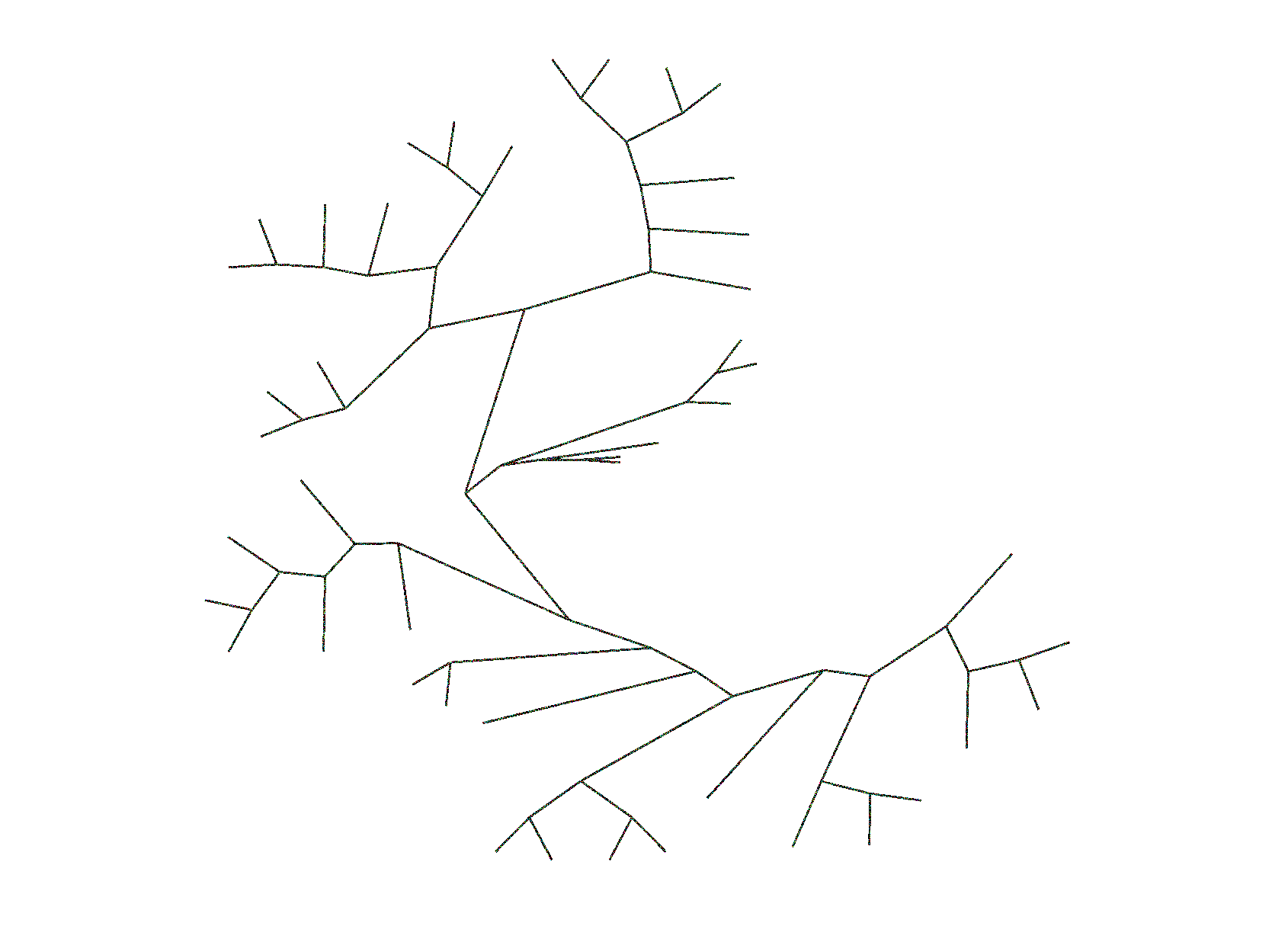
"I talked to Meghan Kane pretty recently. I met her through Engineered Matter Labs, and now she's pursuing a PhD in computational biology. So I learned about some different toolsets to use — MAFFT for alignment, IQ-TREE for building the tree. So yesterday, based on our viral genomes, I annotated what proteins there are, aligned them based on a common protein, and then built a phylogenetic tree for it."
"I just like the aesthetics of phylogenetic trees."
Sally plans to crochet this phylogenetic tree of local marine viruses out of a special material.
The material
"Two years ago, I went to a talk at the National Academy of Sciences by Thomas Goreau, and he's been doing a lot of research into what he calls Biorock. It's using electrolysis to do calcium carbonate precipitation on these steel structures, and he's been using this technique for coral restoration."
"I did raise my hand and asked, 'if you know it's good and effective, why don’t you make more Biorock underwater guerrilla-style. Biorock graffiti?'
"I don’t know what response I expected because I know you can't just dump anything you want, even if you think it might be good for the environment. We have regulations and permitting requirements."
"But it stuck in my mind. So I wanted to recreate some of these on my own. I've done experiments at home using a solution of sodium bicarbonate and calcium chloride or calcium acetate, submerging a wire crochet as the anode and a carbon rod as a cathode which were connected to a power supply, and I ran a gentle current through it and saw the calcium carbonate growing around the wire crochet."
"This is some wire crochet, and then you can see the electrochemically-induced calcium carbonate precipitation on it."
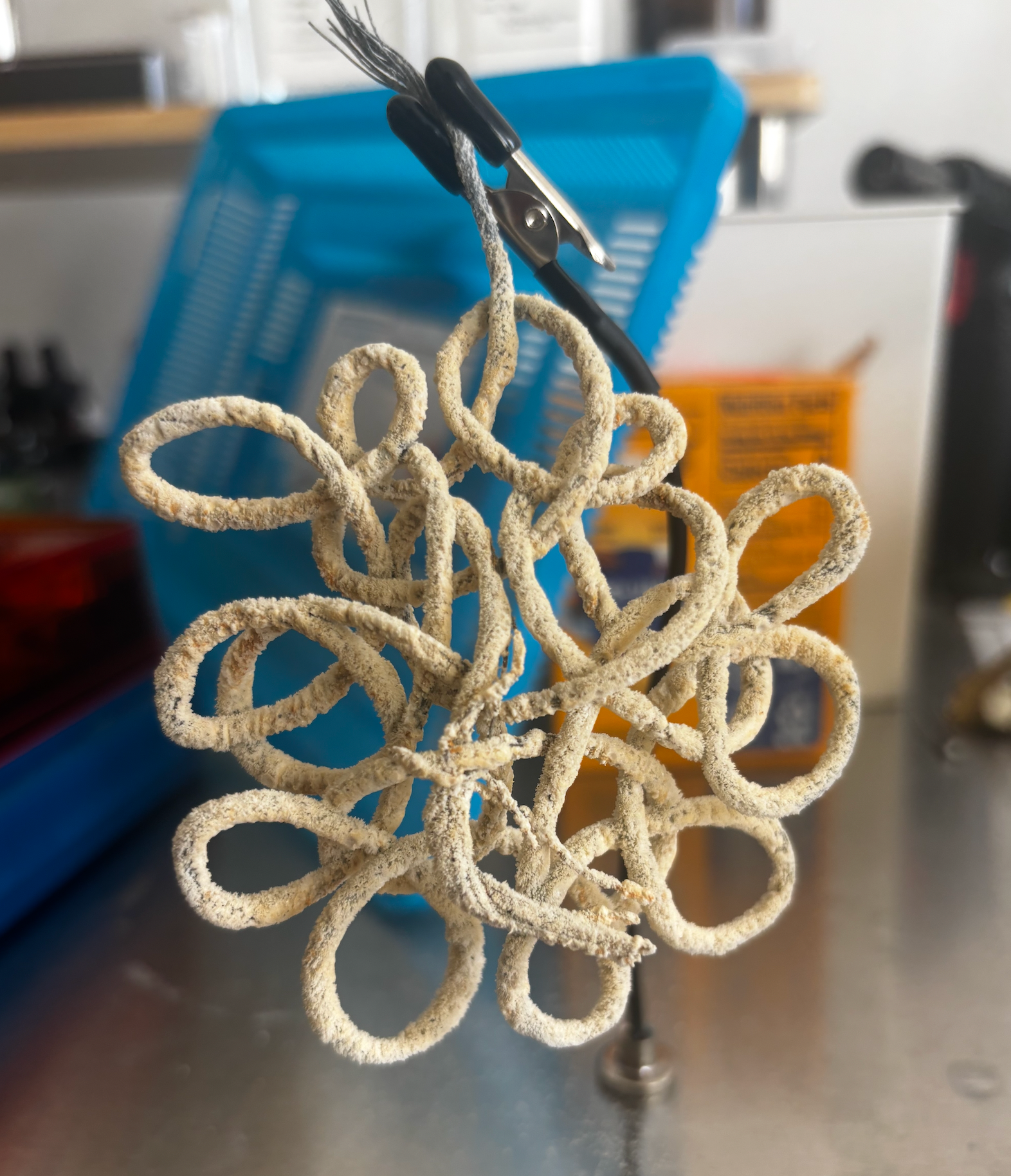
"So the idea is to build the phylogeny tree, electrolyze it, and then the dream would be to actually put it underwater and see what creatures would like to adhere to it. I’d be so curious to see if it can naturally recruit any seaweed or microbes or bivalves."
"I'm planning to get a big tub so I can make it about three feet. Last year Sea Cake was inspired by a birth and the placenta, which is why I kept it at about 9 inches like a human placenta. But this time the inspiration is coral restoration and reefs, so I can imagine it bigger."
Sally on community research
Sea Lace's data came out of community research. We asked Sally about the process of forming community projects.
"For Microbial Reef, it was really just personal excitement. I had just learned about the Billion Oyster Project, I had just met Jackie (computational biologist and professor at Stony Brook University), and it made me rethink that New York City is surrounded by water, and it's quite accessible. It's just a simple question of what's in our water. And I want to do that with people. I don't want to just do that alone. Which is why it became a community project."
"I kind of started it without a team, but eventually people came. I did talk about it a lot. I think it struck a chord with people who wanted to spend more time going to and thinking about our waterfronts. DB was already doing a lot of art around water. She's also an open water swimmer. Grace was already volunteering with City Island Oyster Reef. There are a lot of people in New York who are interested in our waters, which is why Microbial Reef was able to naturally recruit. You can tell by the list of authors on our paper."
Check out the paper they published in 2025:
Metagenomes and metagenome-assembled genomes from tidal lagoons at a New York City waterfront park
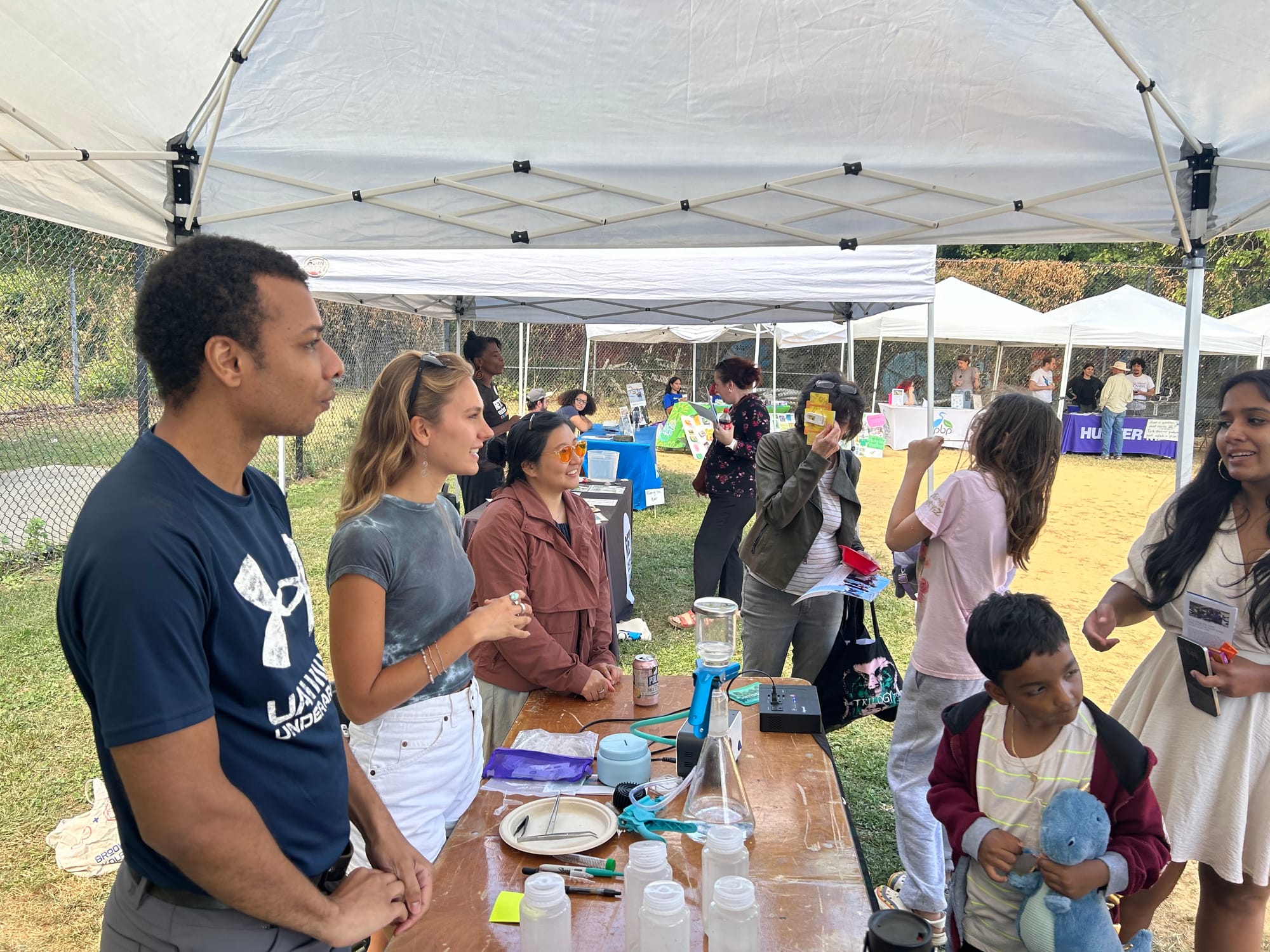
"We are still collecting data, and at least providing some baseline for things we're curious about that might not be of general interest in the wider academic community. Even when I talk to experts, they tell me that so much research is focused on human health or agriculture, which makes sense in terms of urgency and impact."
"I think this is where community biology shines and can play the role of discovering new knowledge from exploring overlooked environments and understudied biomes."
Naively curious small machines
She has even more water-themed work, and again, its connected to the work she's doing at the lab.
"Over the past year I've been working on a series of shorts all shot on film about naively curious small machines. So the first one was Leaf. It's a little robot arm with wheels that leaves its programmed function and goes out into the park and has a blast."
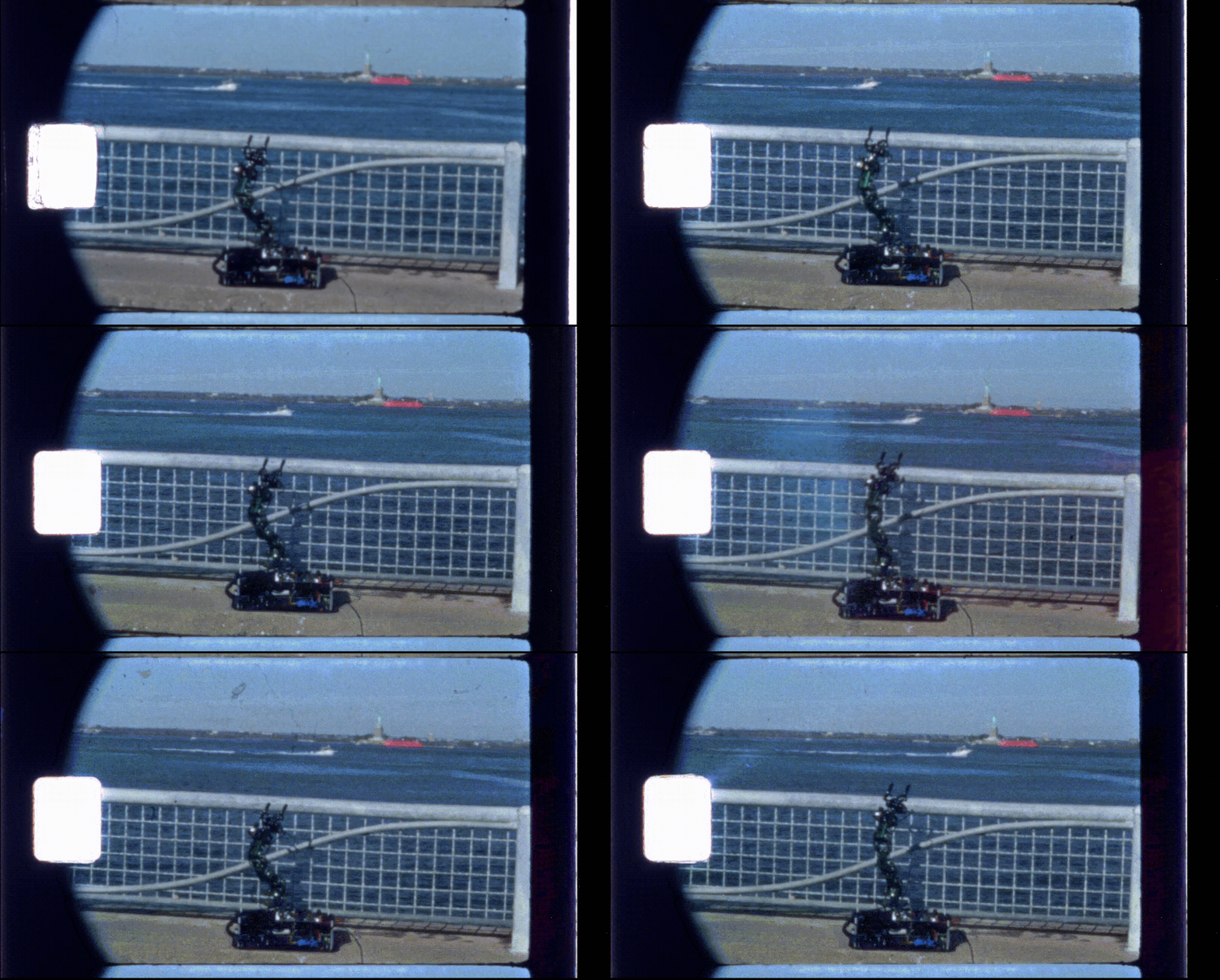
"And then Moss is about a small cyborg moss bug that finds Leaf that seems inactive, and summons its family to take over the electronics.”
"And then Kelp is about an underwater drone. I built this underwater drone for Phyconauts originally to monitor our future kelp farm, but I ended up making a short film about it first. I set up a fake kelp forest in this private pool in Bushwick where Kelp (the drone) lives, and then it meets my friend Romilly, and then it can't stop thinking about her, and it's inspired, and it decides to get luscious kelp hair like her."
"I've been making these films through workshops at Mono No Aware, a nonprofit in downtown Brooklyn. Their mission is to make traditional filmmaking more accessible and build community around the moving image. Leaf was shot on Super 8, and Moss and Kelp are both shot in 16mm film."
"So the series is about finding freedom, finding a home, and finding a muse."
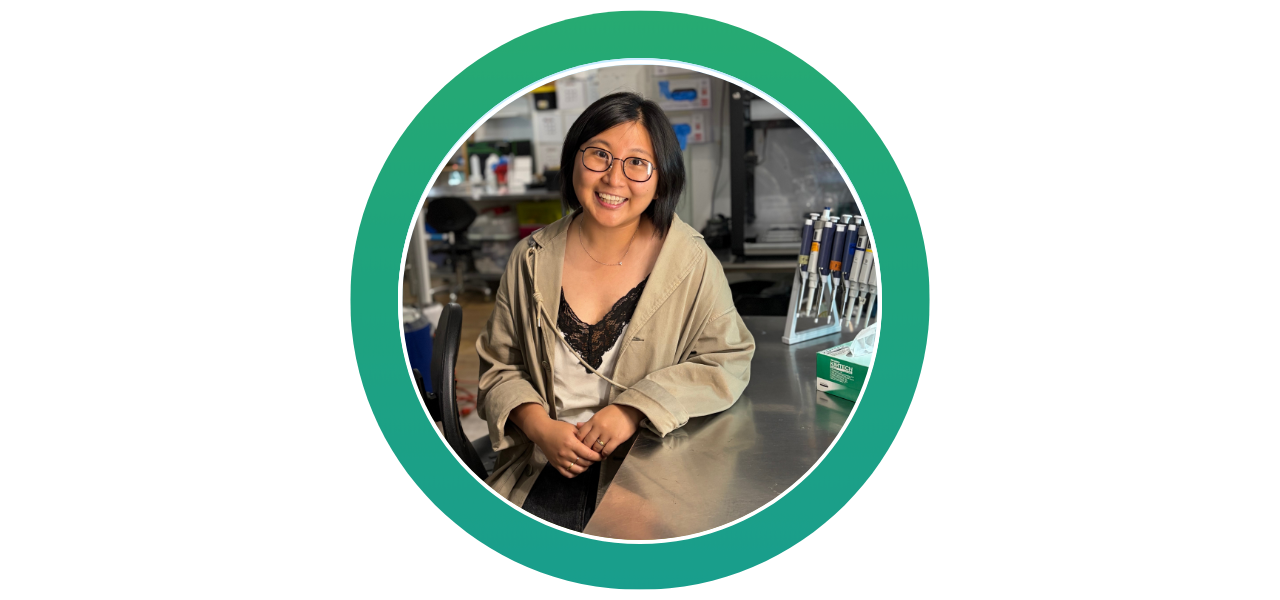
Sally is a software engineer, artist, and hobby biologist based in Brooklyn. By day, she has built artist tools and 3D production pipelines for feature animation and games at Blue Sky Studios, Netflix, and Rockstar Games. Outside of work, she spends most of her time at Genspace, where she led the Microbial Reef community project, a genomic study of aquatic microbial communities in local waterways, and now co-leads Phyconauts exploring the science, ecology, and material potential of algae. Her work blends biology, computation, and craft, creating artifacts inspired by nature.
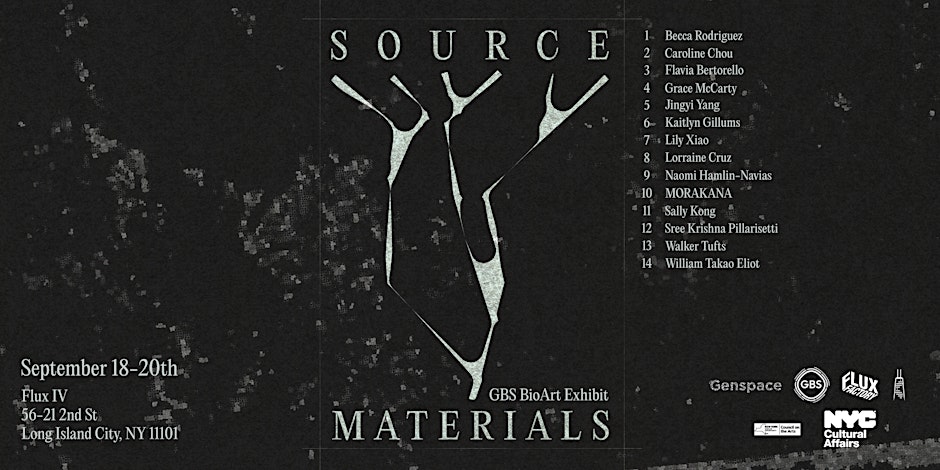
Sea Lace debuts September 18 in the Bioartist Incubator exhibit at Flux IV. Catch her before that at Eureka Fest at Genspace on August 28, and during Climate Week at the Nightflower happy hour, kicking off a feature documentary on artificial light pollution. Find her at sallykong.com and @sally.jh.kong.
Coming Up at Genspace




Community Events • Opportunities • Jobs
Community Events
• 8/27 - Women in Robotics NYC: Robotics, Research & Making Meetup
• 8/27 - Bats! Night Walk, Marine Park Alliance
• 8/29 - Recycled Runway Climate Art Workshop
• 8/30 - Repair Cafe Brooklyn at Another World
• 9/15 - Poetry for Our Planet, American Museum of Natural History
• 9/16 - WIB-Metro New York: The Next Generation of Women's Health Innovation
• 9/24 - The New School Climate Desk Live: AI, Energy, and Our Fight for Democracy and a Healthy, Affordable Future
• 9/25 - Finding your Math Roots, Simons Foundation
Opportunities
• Science Illustration Intern, Xerces Society
• Quantitative Research Assistant, Glisten
• Herban Cura: NYC Fall Intro to Herbalism Immersion
• Cientifico Latino Academy Call for Mentors
• Rearc Institute Center for Planetary Pedagogies: 2026 Edition
• Biodesign Challenge 2027
• National Geographic and the Nature Conservancy Community Conservation, Data Visualization, and Mapping Externship
• Plexus Projects Studio Residency
Jobs
• Director of Science Education, Genspace
• Multiple Positions, Grow NYC
• Office Coordinator | Office of University Life and Community Engagement, The Rockefeller University
• Forest Resoration Site Coordinator, Natural Areas Conservancy
• Multiple Positions, Raising Health Partners
• Programs Associate, Arts in Education Roundtable
• Carbon Farm Planner Coordinator, NY Textile Lab
• Senior Bioinformatics Programmer, NYU Grossman
• Senior Advisor and Director, Workforce Development Board, Office of the Mayor
• Multiple Positions, Bridge to Enter Advanced Mathematics
• Multiple Positions, ExpandED
• Part Time Museum Educator, New York Foundation for the Arts
• Multiple Positions, Streetlab