It's a Constant Cycle of Giving Back: Alum Sunny on Ten Years of Biorocket
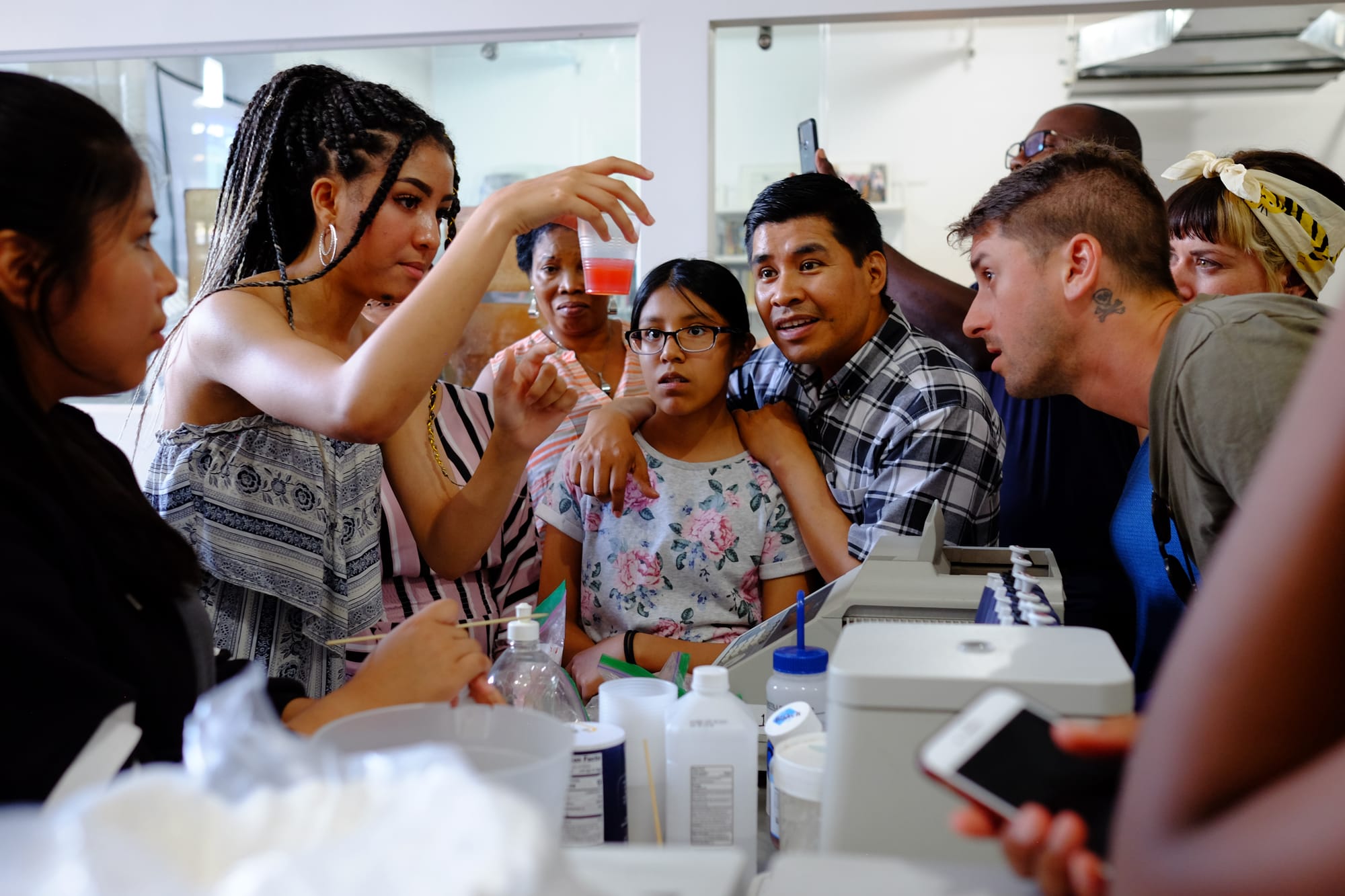
Sunny did her first research ever at Biorocket, back in high school. She went on to study biochemistry and molecular biology at Boston University, came back to Genspace as a Biorocket peer mentor, and just wrapped up a research fellowship at the NIH studying HIV mutants and persistence. She's now applying to MD/PhD programs. As we celebrate Biorocket's 10th cohort this summer, we asked her to talk us through the throughline from student, to mentor, to scientist.
Where It Started
"Biorocket was when I did my first research, period. It was my introduction to basic science and to being in a lab at all. I didn't have that exposure before. And pretty much off the bat, I fell in love with it. For most of my childhood I thought I was going to be a veterinarian. Biorocket was the pivotal point where I transitioned into wanting to do research with humans instead."
That first exposure stuck with her longer than she expected.
"I went on to do a biochemistry and molecular biology degree at BU, and I worked across a few different labs there, a microbiology lab, and a vascular biology lab that was more translational, studying an enzyme for potential cardiovascular therapeutics. What was interesting is that a lot of the protocols I used in those labs were ones I'd already learned from Biorocket. Zone of inhibition assays in microbiology and of course PCR in the vascular biology lab. I'd go in and think, I've done this before, in high school. Even now, doing my postbac, I'm still running very similar protocols to what I learned at 16. I already knew how to use a pipette when most people my age were learning that for the first time in college. It made every transition after Biorocket more seamless."
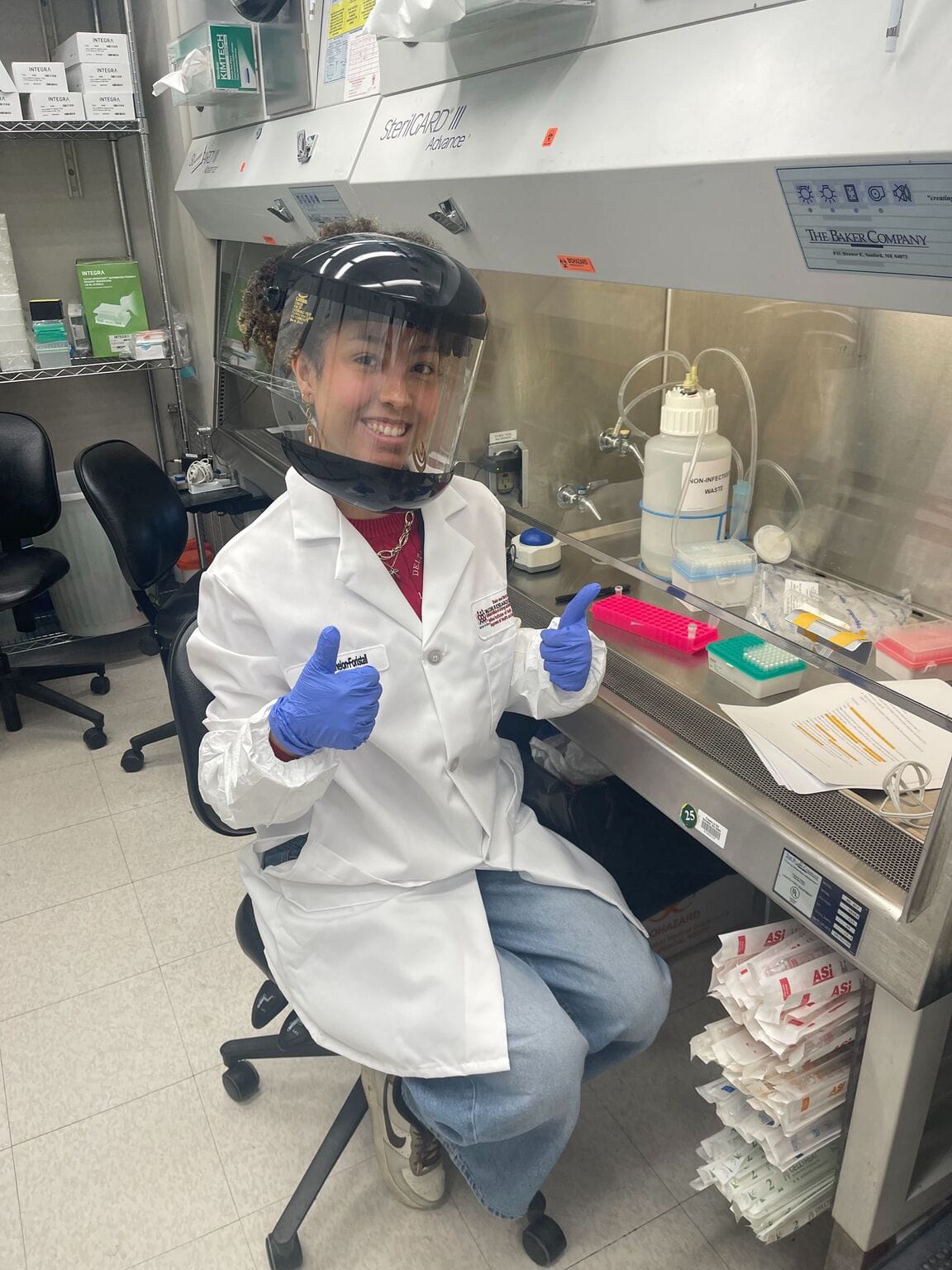
Sunny recently finished her postbac at the NIH. Since deciding on medicine, she's been working to move toward more clinical research and hands-on work with patients.
"I've found I really like this intersection between medicine and science, and that's where I'm at now."
Seeing the Possible
For Sunny, the shift from an interest in science to a real career plan traced back to one visit.
"There was a [Biorocket] guest speaker who came in during my cohort, Justin Schaefer, who goes by Mr. Fascinate. His career took a path kind of like Bill Nye's, teaching youth about science, but what made it different was that he was a Black man in science, specifically working to reach kids of color and marginalized communities to show them a career in research was possible."
"Before meeting him, a career in research never felt real to me. It felt fantastical, like something I couldn't actually claim for myself. Some of that was because you just don't see that representation in STEM. Watching him present, and then later doing my own presentation at the end-of-summer research symposium and seeing the whole process from starting a project to standing up and presenting it, that was when my perspective changed."
Coming Back
After graduating, Sunny stayed connected to Genspace.
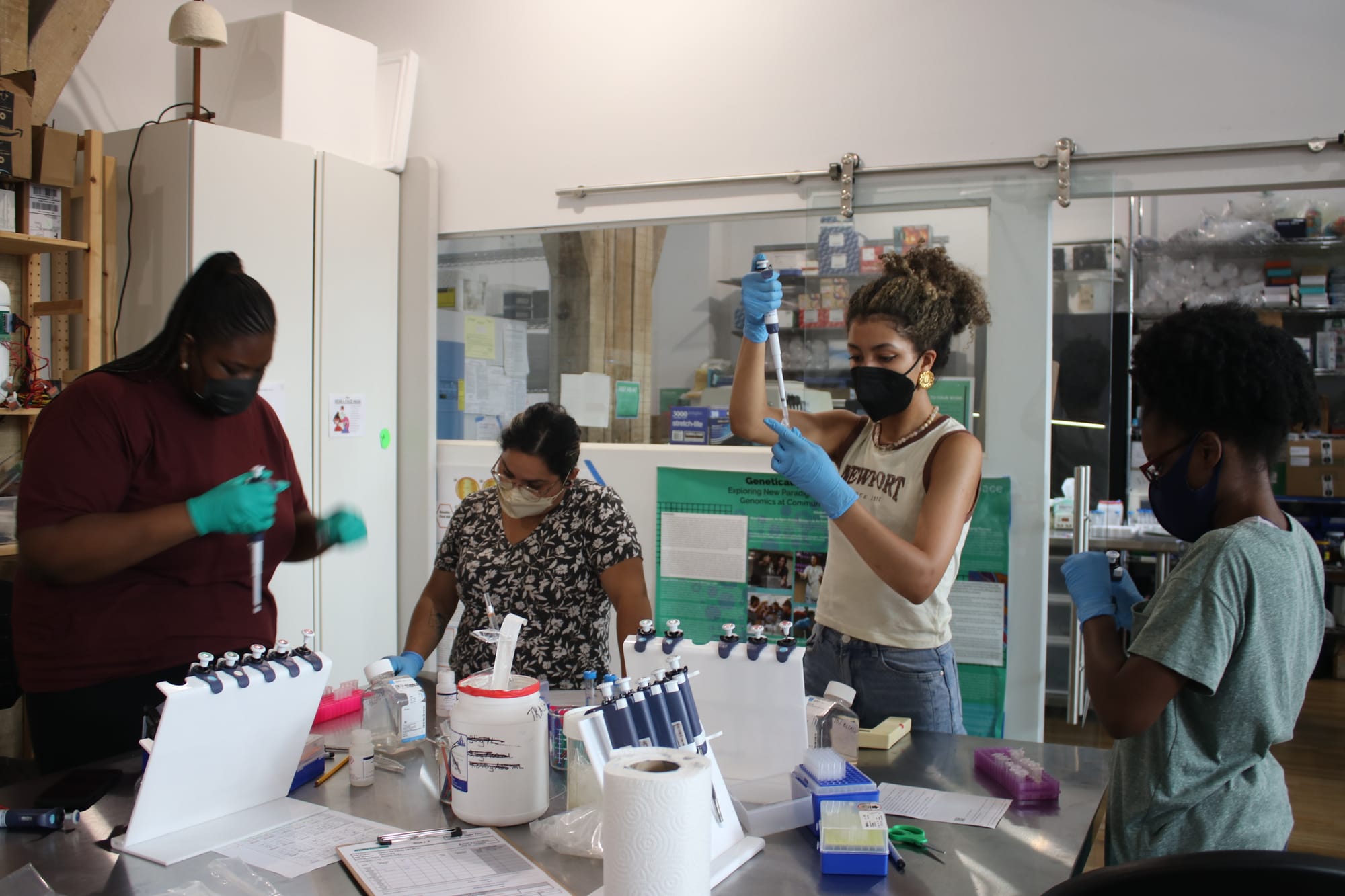
"Beth kept inviting people from my cohort back to volunteer behind the scenes at the lab, maybe once or twice a month, just talking about what we wanted to see for the program and for Genspace more broadly. That got cut short when COVID hit and everything moved online. It was sad, because I really did like being part of the Genspace community beyond just being a Biorocket student, and I wanted to come back."
So when things started opening up again, she did.
"I came back specifically as a peer mentor. It let me see the other side of Biorocket, going from mentee to mentor in the same space. It's a strange, cool feeling to look at a student and realize you once stood exactly where they're standing, and now you know how to help them through it."
The role clarified something for her about why mentorship matters at all.
"I think mentorship matters because of that specific thing, being able to connect with someone who's had the same experience you did, and using what you went through to move them forward faster. Without that, where do you even go for help? Who do you find that can actually sympathize with what you're dealing with? I also don't think I'd be where I am without it."
"Beth was the one who told me about the postbac program at NIH while I was still in high school. I wouldn't have known it existed otherwise, and I probably wouldn't have built a career as a physician-scientist without that conversation. Mentorship creates more mentors, who create more mentees, who become mentors. It's a constant cycle of giving back."
Learning to Communicate the Work
Ask Sunny what carried over most directly from mentee to mentor, and the answer comes quickly: science communication.
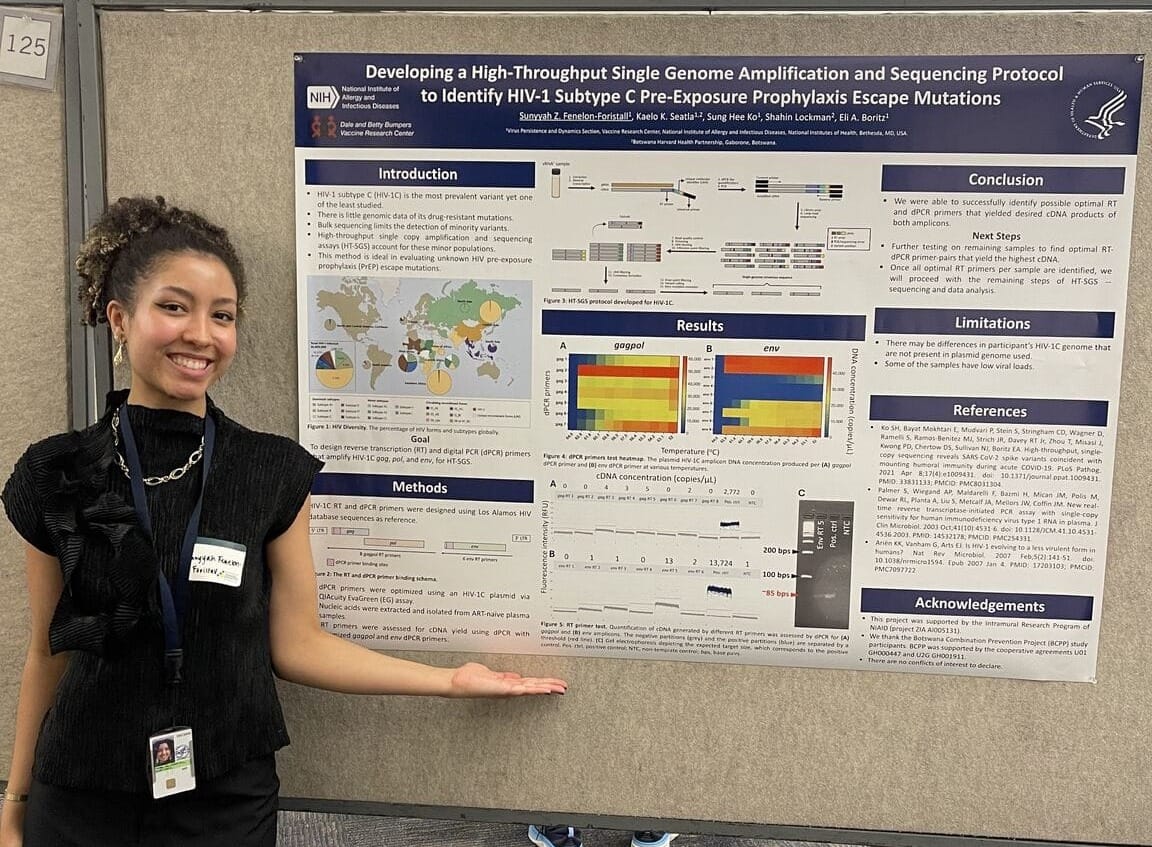
"One of the biggest things I struggled with at first was being confident presenting my own work. One of the most important things I learned from Biorocket was learning to be a better public speaker, learning to dissect a paper, learning the language science gets communicated in. That's carried through my entire career so far. I'm still constantly thinking about how I talk about my own work, and it traces straight back to that first introduction."
She saw the same struggle from the other side, once she was the one mentoring.
"When I came back as a peer mentor, it was the same thing in reverse. Close to symposium day, students would come to me to go over their posters. I'd sit next to them and help them refine what made it onto the page, help them articulate why they did the research, what the results actually meant, how to walk someone through it step by step. Those were the same challenges I'd faced as a mentee but from the other side of the table."
It's also shaped how she thinks about what science education should look like more broadly.
"I'd want more of what Biorocket already does, actively bringing in people who have no science background at all, rather than waiting for them to find their way in. I think one of my biggest issues with science as it currently stands is the disconnect between scientists and the public. Jargon is what turns people away, from lectures, from papers, from the whole field."
"It's important to be able to talk to other scientists, obviously. But I'd argue it's equally important, maybe more important, to be able to explain your work to someone with no science background whatsoever. At the end of the day, what we do is supposed to benefit everyone, and if people can't understand the work, the work can't do its job. I think what's needed is more space for people to actually experience science firsthand, and then decide for themselves what it means to them, instead of having it handed to them as something remote and inaccessible."
The Small Stuff That Sticks
Asked what she still looks back on fondly, Sunny doesn't have to think for very long.
"So many things. Touring the labs at NYU and seeing a research space at that scale for the first time was a real 'whoa' moment. We also did an agar art project where we painted with pigmented bacteria on plates, and I also remember doing a project where we manipulated how leaves absorb light to print images onto them, that was so cool!"
One experiment in particular ended up shaping her cohort's whole summer.
"We did so many cool labs but I still think about one in particular where we swabbed our noses to test for Staph. aureus. I think I was the only person in my cohort whose plate turned pink, which meant I had it. I remember being thrilled and also mortified. That whole unit is actually part of why some of us chose our research project that summer. We ended up studying how common drugstore cosmetic products affect the skin microbiome, using the same zone of inhibition assays I mentioned before."
"And we did Gibson assemblies, which I still haven't found a lab to do again. I catch myself checking every new lab I join to see if anyone does them."
But when she talks about what she really remembers, it isn't any single experiment.
"What I remember most is how close-knit the cohort was. Kids were coming from every borough, some were traveling from the Bronx just to get to class, which is a level of dedication I don't have in me. We all came from completely different backgrounds and found this shared thing in science, and it brought us together fast."
"When I came back as a peer mentor, I watched it happen all over again with a new group of students. I remember one student crying while presenting to his family at the end of the summer, and Beth was crying, and I was too. It's one of those moments you don't forget."
Sunny recently completed her NIH IRTA research fellowship studying HIV mutants, genetic variance, and persistence, and is currently applying to medical school.
We're Hiring
Director of Science Education
The Genspace Director of Science Education will oversee programs spanning adult informal learning, biotech workforce development, youth research internships, private programs, and an expanding frontier curriculum in biomaterials and bioart.
It's a role for someone who thrives at the intersection of scientific research, teaching, and community impact. If you are a scientist who loves to teach, a teacher who loves working at the bench, and a leader looking to make an impact in community science, we would love to hear from you.
Apply on Our WebsiteComing Up at Genspace



Community Events • Opportunities • Jobs
Community Events
• 8/20 - Ask a Scientist, Hudson River Park Trust
• 8/21 - Facts Machine, Caveat
• 8/22 - Foraged Fiber Arts Workshop, Randall's Island Park
• 8/27 - Women in Robotics NYC: Robotics, Research & Making Meetup
• 8/30 - Repair Cafe Brooklyn at Another World
• 8/30 - Bee the Solution: Community Science with The Bee Conservancy, Green-Wood
Opportunities
• Science Illustration Intern, Xerces Society
• Quantitative Research Assistant, Glisten
• Herban Cura: NYC Fall Intro to Herbalism Immersion
• Cientifico Latino Academy Call for Mentors
• Rearc Institute Center for Planetary Pedagogies: 2026 Edition
• Biodesign Challenge 2027
• National Geographic and the Nature Conservancy Community Conservation, Data Visualization, and Mapping Externship
• Plexus Projects Studio Residency
Jobs
• Director of Science Education, Genspace
• Program Director, Biotech CEO Sisterhood
• Multiple Positions, Grow NYC
• STEAM Edu Instructor, Hypothekids
• Forest Resoration Site Coordinator, Natural Areas Conservancy
• Multiple Positions, Raising Health Partners
• Programs Associate, Arts in Education Roundtable
• Carbon Farm Planner Coordinator, NY Textile Lab
• Senior Bioinformatics Programmer, NYU Grossman
• Multiple Positions, Bridge to Enter Advanced Mathematics
• Part Time STEM Educator, Liberty Science Center
• Part Time Museum Educator, New York Foundation for the Arts
• Multiple Positions, Streetlab