Ten Years of Biorocket
Reflections and a data-driven deep dive on a decade of the Biorocket Research Internship–Genspace’s flagship youth research training program focused on broadening access to careers in science.
Plus, a sneak peek at a brand new award we'll be announcing this Friday at the Biorocket Friends & Family Party, recognizing one amazing contributor for her impact in community biology.
Before I was on staff at Genspace, I was asked to help review applications for the Biorocket Research Internship Program. It takes a small village to select Biorocket’s incoming cohort each year – we regularly receive ~300 applications for 15 spots – and each year our team still asks our most dedicated instructors, volunteers, program alumni, and partners to read essays and weigh in.
Reviewing applications for Biorocket is a joyful process. Rather than hunting for clues of (over)achievement, reviewers look for hints in each short answer essay response that this student loves science, but hasn’t yet had a chance to get their hands on it. Clues like: starting a casual journal club at their school, taking an extra science class (regardless of the grade they got), or writing about their favorite science-y YouTube channel.
Earlier this year, Genspace’s annual team of reviewers + staff selected Biorocket's 10th annual cohort. Reaching a decade of this program’s impact feels like an extra special milestone because, first, there’s just something special about 10 years, isn’t there? And second, Biorocket was Genspace’s first-ever foundation-funded program. A critical early marker of legitimacy for the still-new concept of do-it-yourself biology.
It was co-founder Dr. Ellen Jorgensen who first conceptualized Biorocket as a program, and applied to the Pinkerton Foundation for funding in 2016. When I spoke with her about it recently, she gave big, warm shout-outs to Dr. Jeanne Garbarino, Executive Director of RockEDU, for her encouragement and support writing the application, as well as Genspace’s very first Lab Manager, the incomparable Dr. Will Shindel.
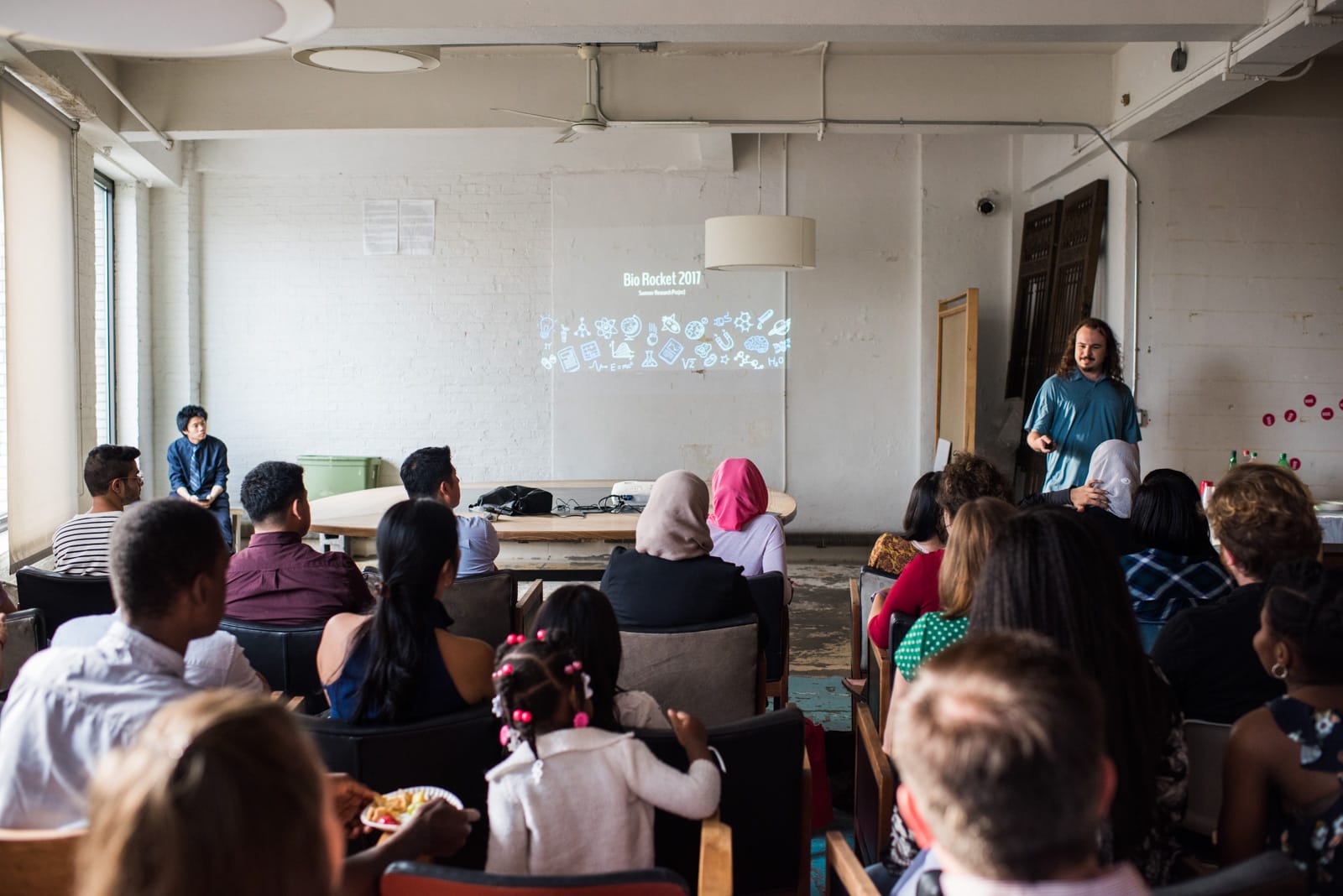
Since Genspace became part of the NYC Science Research Mentoring Consortium in 2017, Biorocket has changed our organization for the better in profound ways.
Every summer, for ten years, students have conducted research projects rooted in their real lives and interests–the purest expression of Genspace’s mission. Research projects like:
- Studying the air quality in post-industrial Sunset Park,
- Analyzing if historical redlining practices show up in the microbiota of tree pits around New York City, or
- Speculating on a gene editing tool to curb the scourge of bacterial leaf scorch disease in GreenWood Cemetery’s ancient oak trees.
These projects represent research questions that we otherwise wouldn’t have had a chance to ask, and they speak to rich partnerships that have been developed along the way too. Biorocket has benefitted from speakers, mentors, and research advisors from every possible scientific ilk – folks who work at funding agencies, senior scientists working at the bench, and representatives from every manner of industry, non-profit, and academic organizations.
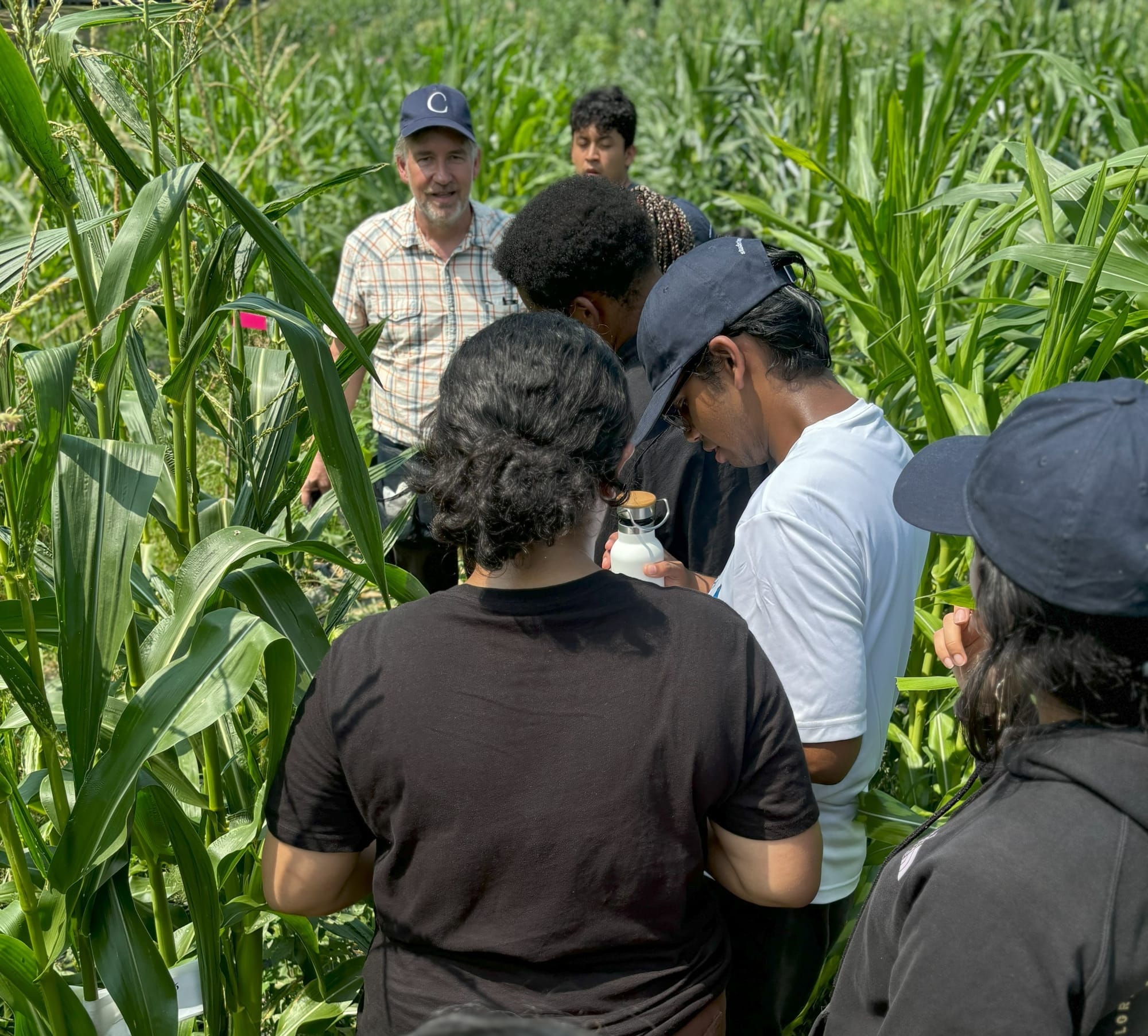
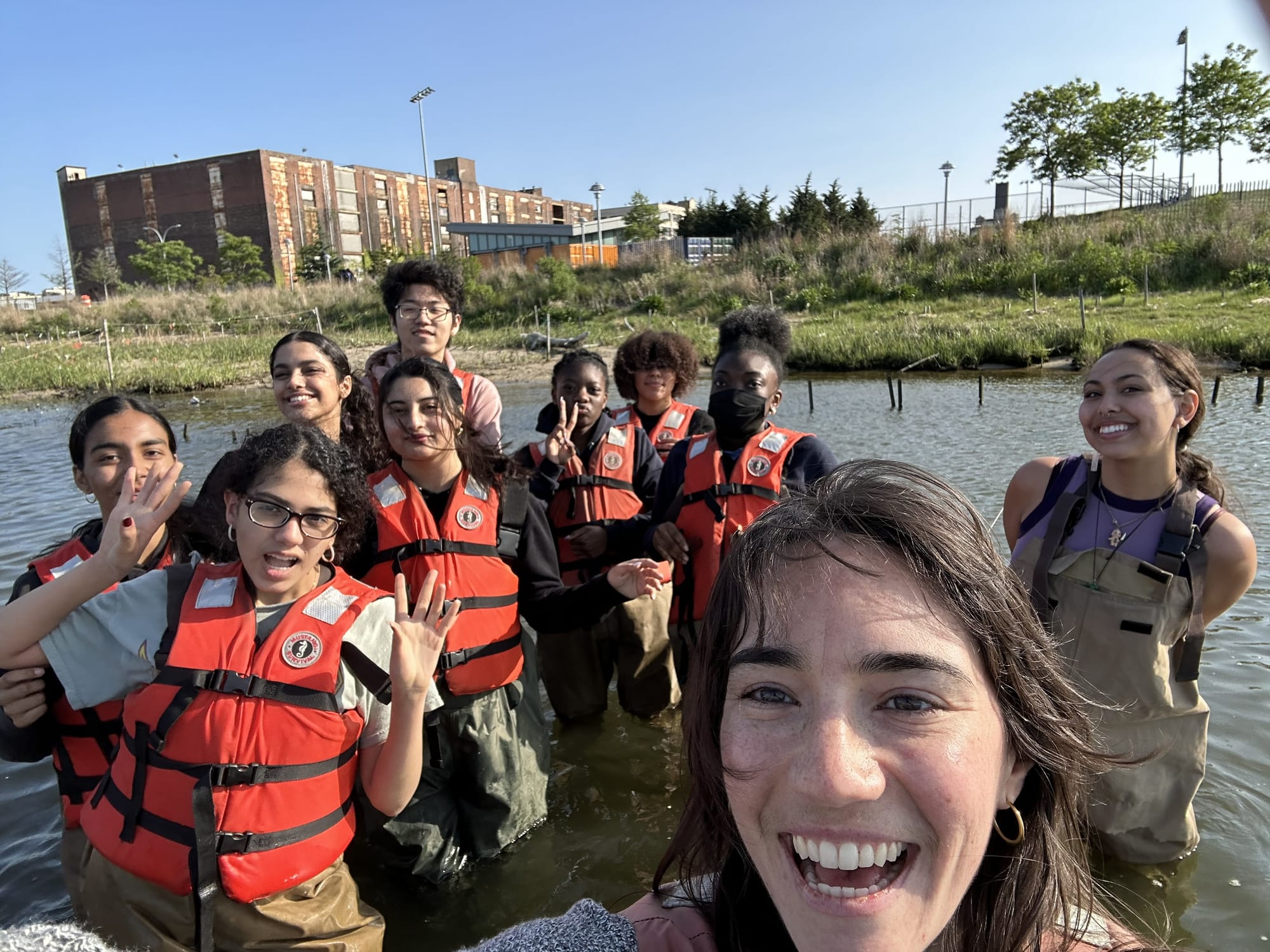
During the spring, students are at Genspace for 5 hours per week after school, learning the fundamentals: molecular and synthetic biology, field work 101, bioinformatics and data analysis. The spring “semester” wraps up at the end of May each year, and students go on a break for June before returning to the lab 10am to 4pm, Monday through Thursday, for ~ 6 weeks in July and August. Altogether, they complete over 160 hours of training and research and take on bench work most scientists don’t encounter until graduate school (myself included).
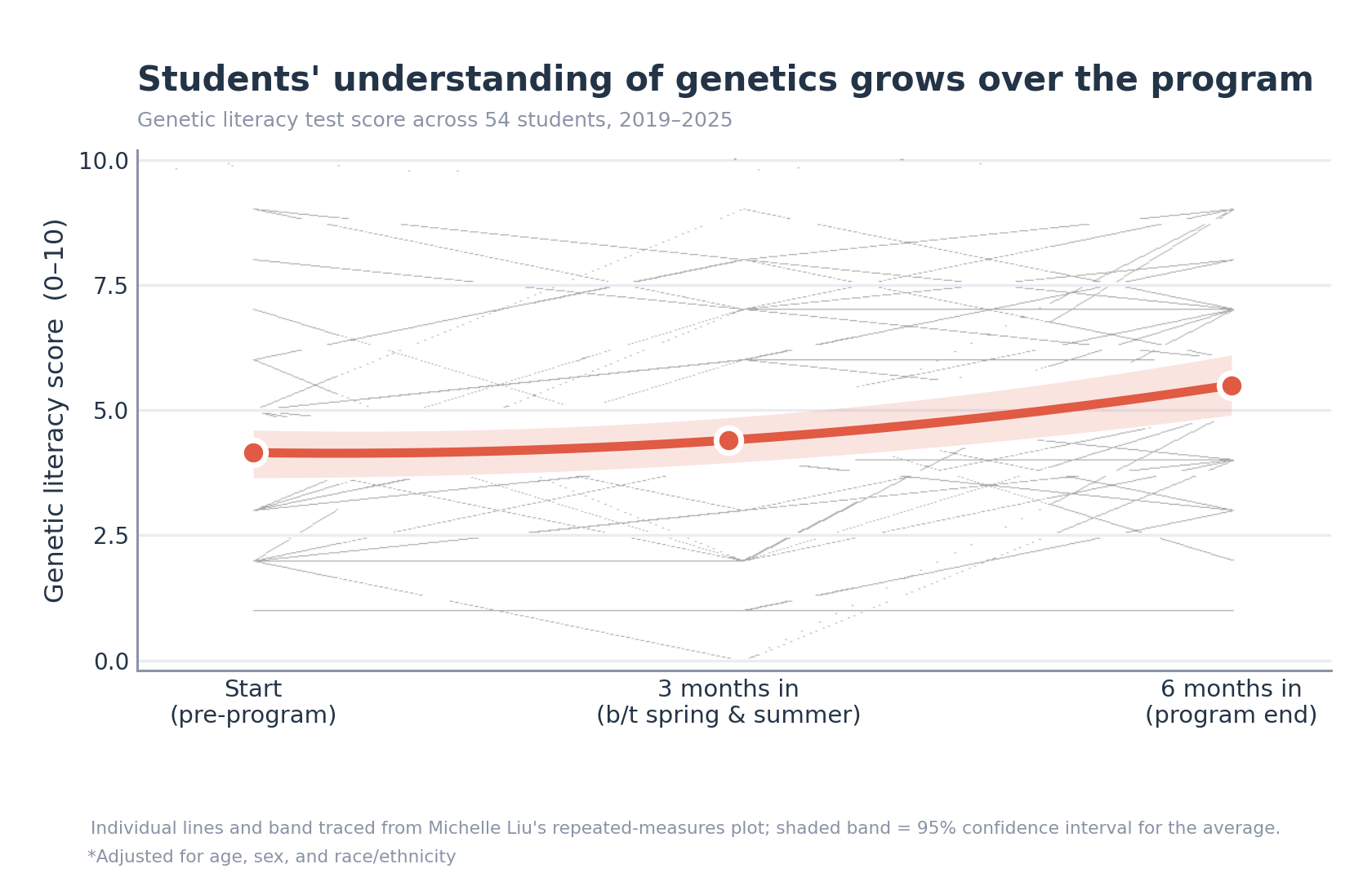
At a few points across the program – the start, at breaks during spring and summer, and the end – we evaluate students' understanding of genetics and their perceived self-efficacy. We do this because the transition students make over these months – from learning the fundamentals to designing and conducting their own research – is a critical part of learning to become a scientist. And we want to make sure that it's working.
Last year, we had the opportunity to work with data scientist Michelle Liu, a student at CUNY Graduate School of Public Health & Health Policy studying for a Master of Public Health in Epidemiology and Biostatistics, to evaluate six years of program data, and take a closer look at our hunch that something important was happening here in the program.
Across cohorts from 2019 to 2025, she examined outcomes for 54 students. Here's what the data showed.
First, they learned. Scores on a difficult genetic literacy test rose by more than a full point by month six, an increase unlikely to be chance.
Second, and more interesting, was the confidence curve. Self-efficacy actually dipped at three months, dipped again at five — and then, by month six, rose significantly above where students had started.
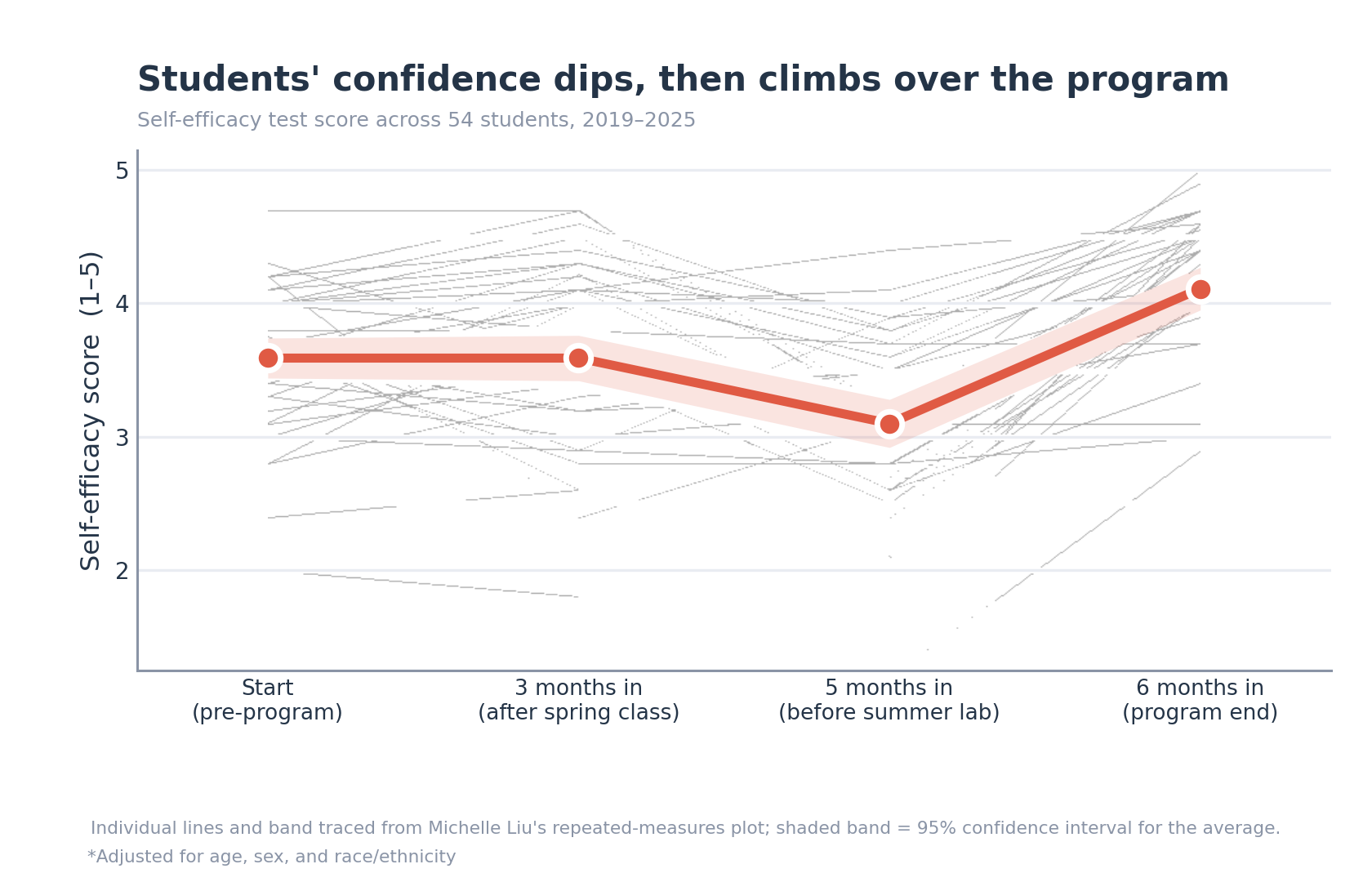
This dip – followed by an overall increase – is EVERYTHING. Every scientist has stood where these students stood at month three: competent enough to begin seeing the edges of their own understanding.
Dr. Anne Helen Toomey writes in Science with Impact on the importance of uncertainty in science: “It is this mentality of openness, humility, and growth that we can share with the public – that science isn’t about a body of facts, but rather a community of practice that is always trying to explore weaknesses in our own arguments.”
Michelle's research confirms what our team has suspected about Biorocket all along: the program helps students reach a critical point in their development as scientists-in-training: the precipice of directing their own ability to learn because they are able to know what they don’t know. This is what we're talking about when we talk about becoming a scientist.
Michelle also helped us understand the full breakdown of student demographics over the years. The cohorts were majority female, more than two-thirds from groups underrepresented in science, and nearly two-thirds low-income — these are the students the biotech workforce loses on more traditional pathways in.
Once she was done with her quantitative assessment, Michelle coded their written reflections. The single largest theme that emerged wasn't excitement or gratitude (though these were definitely present). Instead, it was practice: the hands-on doing of science, named 182 times, far ahead of anything else.
"This experiment was fun mostly because we had so much flexibility," one 2020 intern wrote. "We chose our own controls, factors, questions, variables." Another looked ahead: "It was great practice for what our future will look like. I'll be taking my new knowledge about biology and bioinformatics into the future."
After Learning & Practice, the next themes were Community & Collaboration in STEM & Inspiration for Future Career and Education. Ten years ago, Biorocket was an idea in a grant proposal. Today, it's 120+ young people who see themselves as now-and-future scientists, putting the ladder down for countless others behind them.
In recognition of the impact Biorocket has had on the young people we serve, and their reciprocal impact on Genspace as an organization, we are thrilled to share that Genspace co-founder and creator of Biorocket Dr. Ellen Jorgensen is the inaugural recipient of the Community Biology Impact Award.
Thank you, Ellen, for broadening who gets to call themselves a scientist.
We'll present Ellen with this award in absentia at this Friday's Biorocket celebration — more details below.
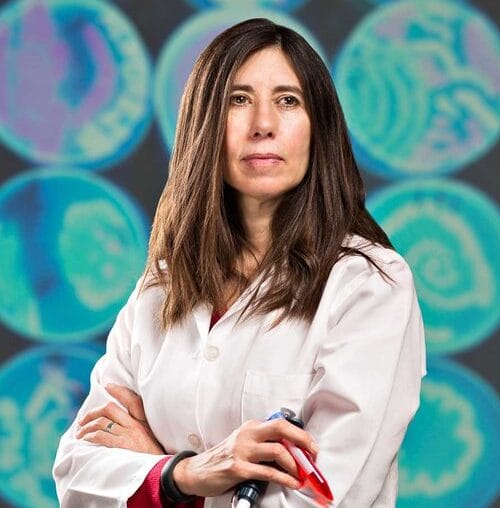
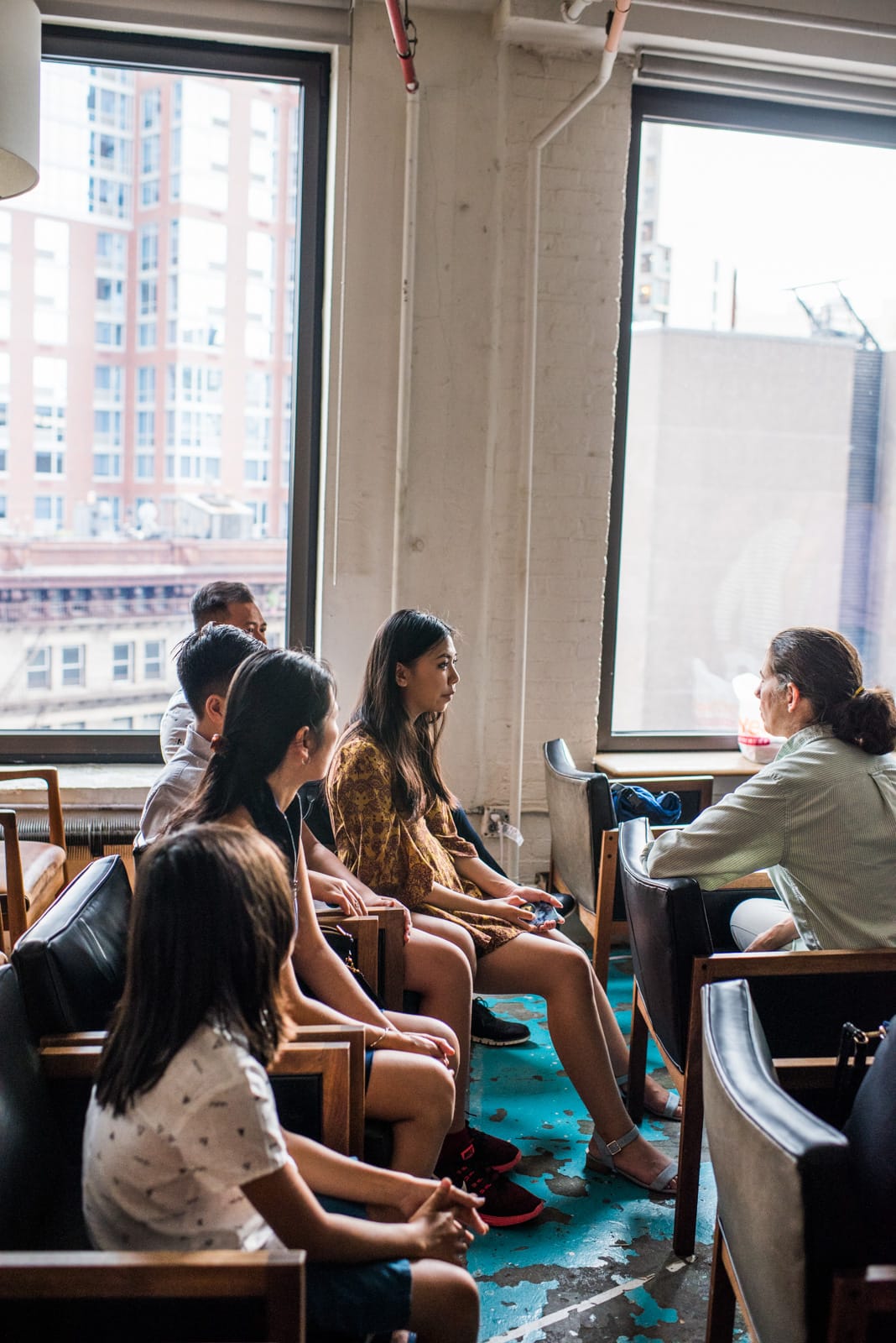
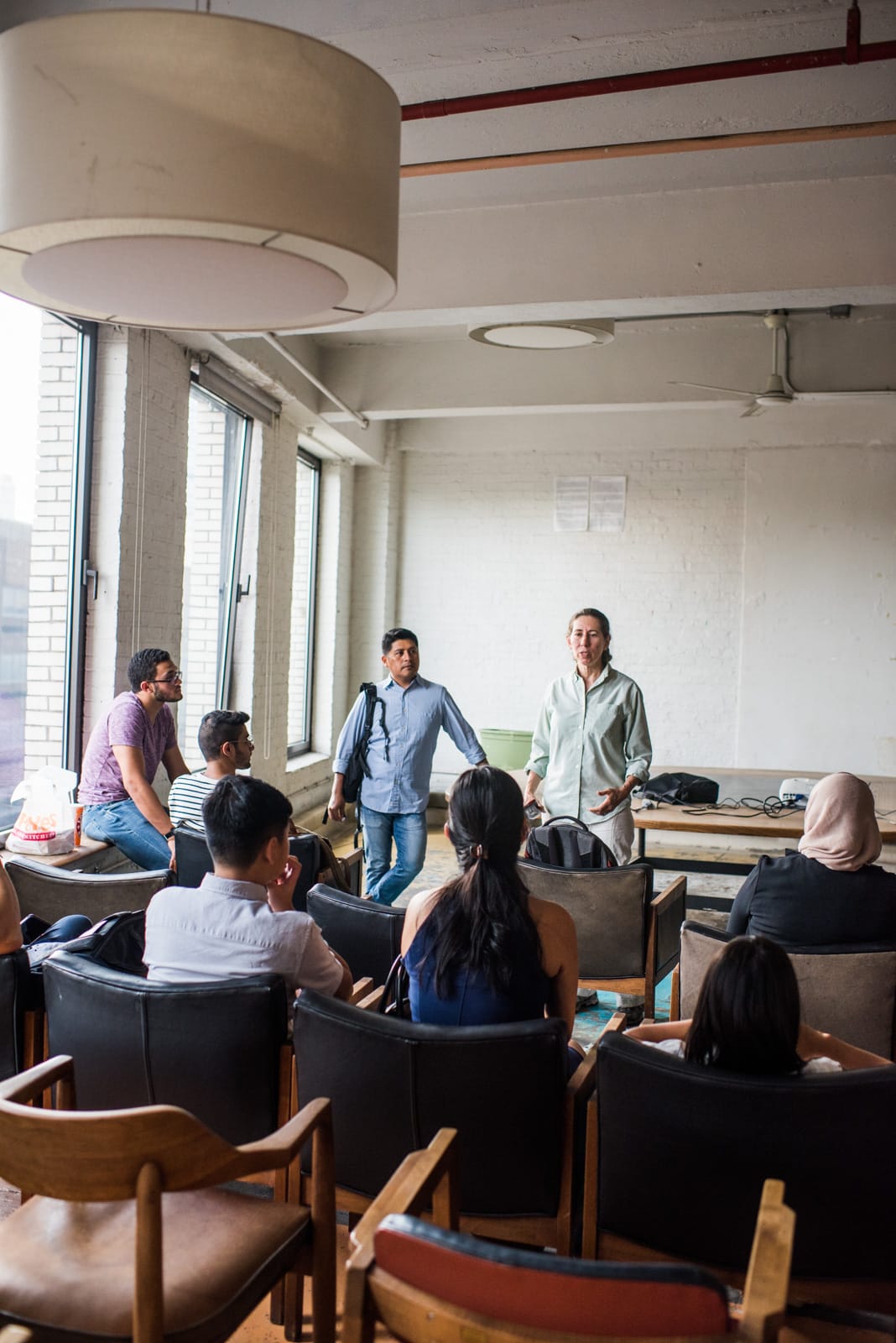
Genspace co-founder Dr. Ellen Jorgensen; with Biorocket students in 2017
Celebrate a decade of Biorocket with us this Friday (tomorrow!) by checking out this summer’s research projects and hearing from the students in their own words. It's a highlight of our public programs calendar – I promise. Can't make it in person this Friday? Reply and let me know; I'll send you our 10-year celebratory slide show.
See you in the lab–
Casey
Executive Director, Genspace
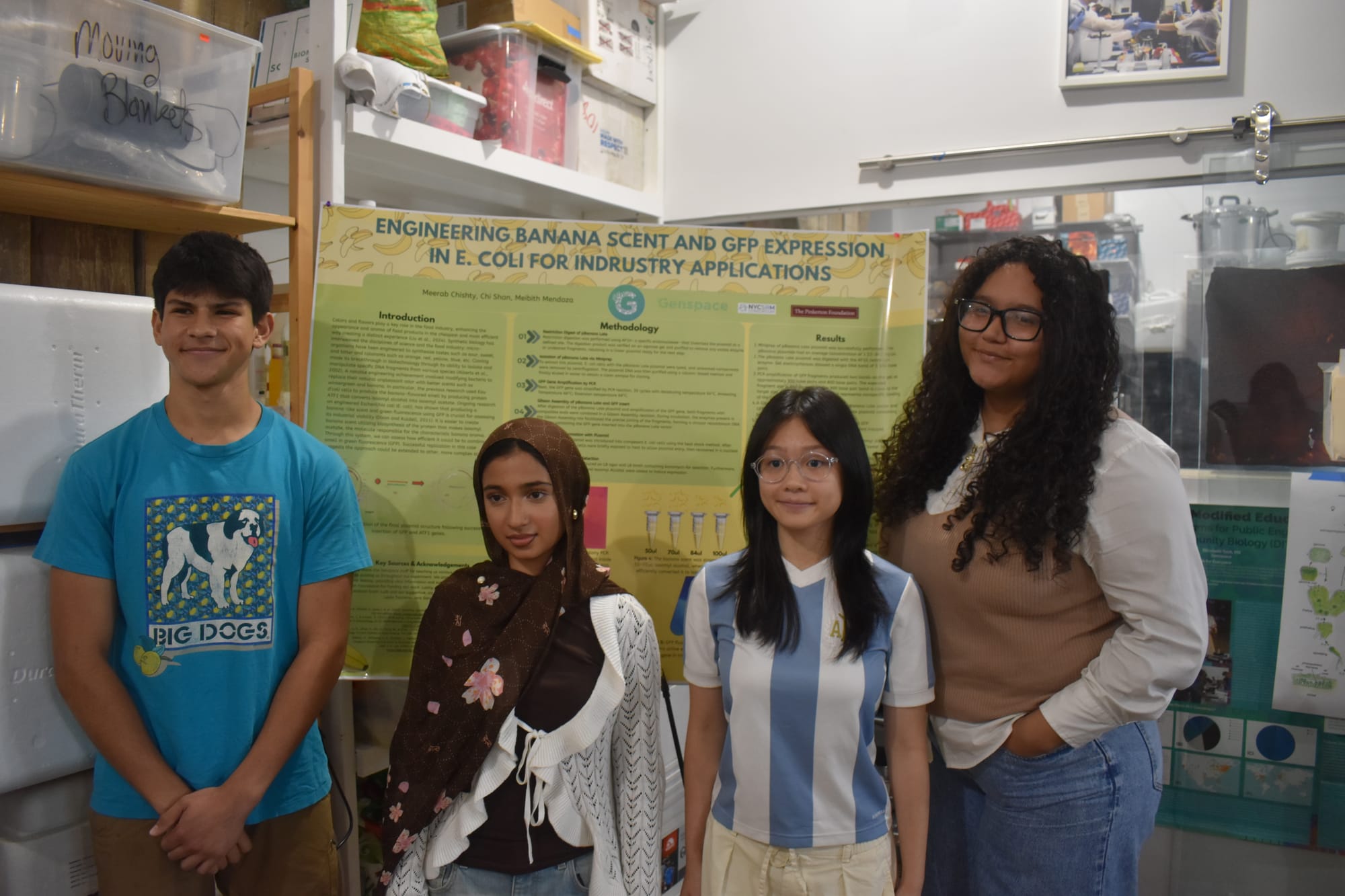
10 years, 10 cohorts: Join this Friday's Biorocket Celebration
Biorocket is made possible by the generous support of partners who believe that access to science should not be limited to traditional settings. Our thanks to: the Pinkerton Foundation, Life Science Cares NY, New England Biolabs, the NYC Summer Youth Employment Program, and the New York City Council & NYC Department of Youth and Community Development, in partnership with District 38 Council Member Alexa Avilés.
Coming Up at Genspace



Community Events • Opportunities • Jobs
Community Events
• 8/13 - Sips and Scholars, Brookyln Public Library
• 8/15 - Lectures on Tap - "The Future of Sound Is a Place"
• 8/20 - Ask a Scientist, Hudson River Park Trust
• 8/21 - Facts Machine, Caveat
• 8/22 - Foraged Fiber Arts Workshop, Randall's Island Park
• 8/27 - Women in Robotics NYC: Robotics, Research & Making Meetup
• 8/30 - Repair Cafe Brooklyn at Another World
Opportunities
• Science Illustration Intern, Xerces Society
• Quantitative Research Assistant, Glisten
• Herban Cura: NYC Fall Intro to Herbalism Immersion
• Cientifico Latino Academy Call for Mentors
• Rearc Institute Center for Planetary Pedagogies: 2026 Edition
• Biodesign Challenge 2027
• National Geographic and the Nature Conservancy Community Conservation, Data Visualization, and Mapping Externship
• Plexus Projects Studio Residency
Jobs
• Director of Science Education, Genspace
• Multiple Positions, Grow NYC
• STEAM Edu Instructor, Hypothekids
• Forest Resoration Site Coordinator, Natural Areas Conservancy
• Multiple Positions, Raising Health Partners
• Programs Associate, Arts in Education Roundtable
• Carbon Farm Planner Coordinator, NY Textile Lab
• Senior Bioinformatics Programmer, NYU Grossman
• Multiple Positions, Bridge to Enter Advanced Mathematics
• Part Time STEM Educator, Liberty Science Center
• Part Time Museum Educator, New York Foundation for the Arts
• Multiple Positions, Streetlab